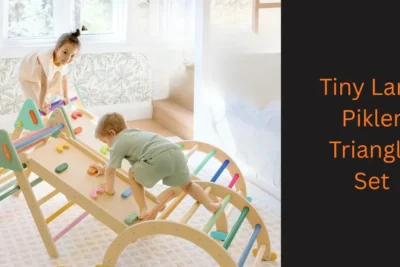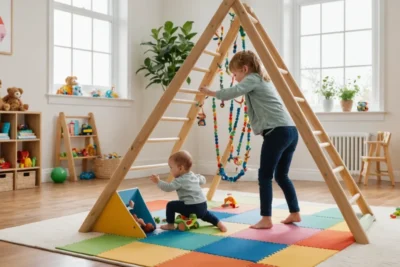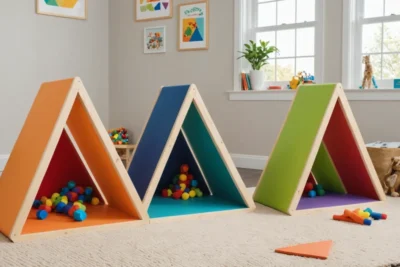
How to Play with Pikler Triangle: Complete Guide for Parents

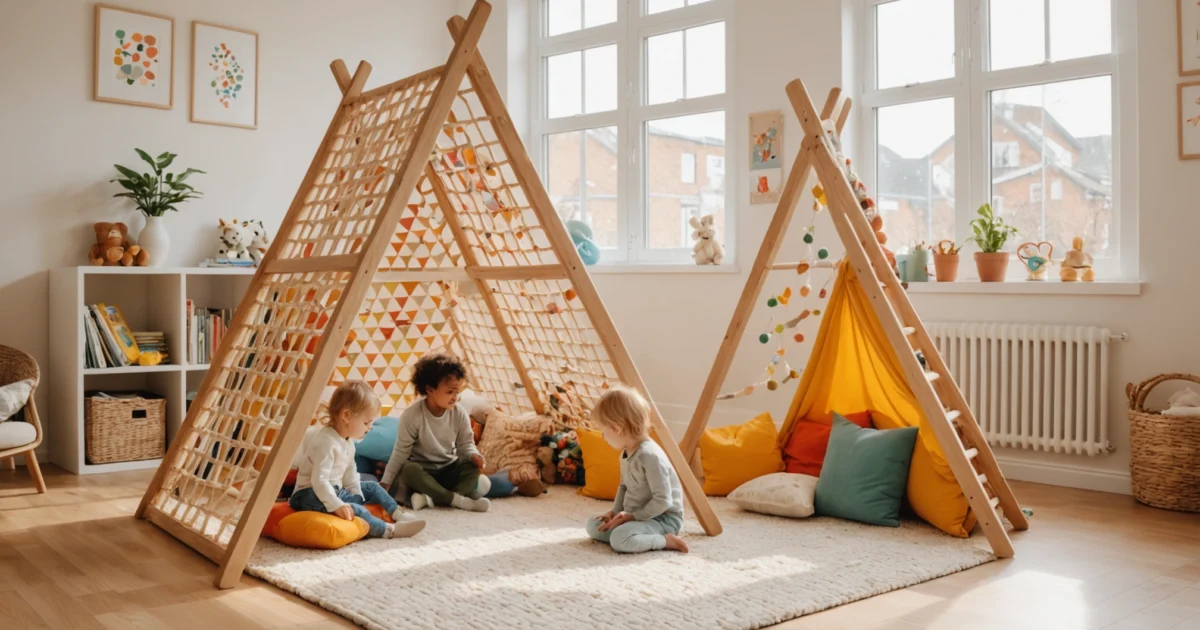
How to play with Pikler triangle involves encouraging natural movement development through climbing, exploring, and creative play activities that build strength, coordination, and confidence. This wooden climbing frame, developed by pediatrician Emmi Pikler, supports children from 6 months to 6+ years through progressive physical challenges and imaginative play opportunities.
Unlike traditional playground equipment, the Pikler triangle promotes self-directed exploration where children naturally discover their physical capabilities. Furthermore, this versatile climbing structure transforms into countless play scenarios, from simple fort-building with blankets to complex obstacle courses that grow with your child’s abilities.
The key to successful Pikler triangle play lies in understanding age-appropriate activities and creating a safe environment for exploration. Additionally, combining basic climbing movements with creative play ideas ensures long-term engagement and developmental benefits across multiple skill areas.
TL;DR
- Start with basic exploration around 6-12 months, progressing to climbing as motor skills develop
- Combine physical activities like climbing and descending with creative play using blankets, ramps, and imaginative scenarios
- Focus on safety and supervision while allowing natural movement development and self-directed exploration
- Adapt activities by age to maintain interest and challenge growing children through progressive skill-building
What is a Pikler Triangle and How Does It Work
The Pikler triangle represents a revolutionary approach to childhood movement development, designed by Hungarian pediatrician Dr. Emmi Pikler in the 1930s. Moreover, this innovative climbing structure emerged from Pikler’s groundbreaking research on natural motor development at the Lóczy Institute in Budapest.
Dr. Pikler believed children develop movement skills most effectively through self-directed exploration rather than adult-guided instruction. Consequently, her philosophy emphasized allowing infants and toddlers to move freely, climb naturally, and discover their physical capabilities at their own pace without external pressure or assistance.
Basic Structure and Design Elements
The triangular frame design features a series of horizontal wooden rungs spaced approximately 8-10 inches apart, creating a stable climbing surface. Additionally, most Pikler triangles measure between 24-36 inches in height, with the triangular shape providing inherent stability that prevents tipping during use.
High-quality Pikler triangles utilize smooth hardwood construction, typically birch or beech, with rounded edges and non-toxic finishes. Furthermore, the rung spacing follows specific measurements that accommodate small hands and feet while promoting proper grip development and climbing technique.
Key Design Features
How It Differs From Traditional Playground Equipment
Traditional playground equipment often features predetermined play patterns with specific intended uses, while Pikler triangles encourage open-ended exploration and creativity. However, conventional climbing structures typically include safety features like railings and enclosed platforms that limit natural movement development.
The Pikler triangle’s minimalist design intentionally lacks safety barriers, slides, or predetermined pathways, forcing children to develop proprioception and risk assessment skills. Consequently, this approach builds genuine confidence and body awareness rather than relying on external safety measures.
- Scale: Appropriately sized for home use versus large playground structures
- Materials: Natural wood construction versus plastic or metal components
- Flexibility: Adaptable positioning and accessories versus fixed installations
- Philosophy: Child-led exploration versus adult-directed activities
Age Range and Developmental Progression
Children begin interacting with Pikler triangles as early as 6 months when they can pull themselves to standing using the lower rungs. Subsequently, toddlers around 12-18 months typically start attempting their first climbing movements, developing crucial gross motor skills and spatial awareness.
The developmental progression continues through preschool years, with 3-4 year olds mastering complex climbing patterns and incorporating imaginative play elements. Additionally, school-age children up to 6+ years often use Pikler triangles for creative fort-building, obstacle courses, and collaborative play activities.
| Age Range | Typical Activities | Developmental Focus |
|---|---|---|
| 6-12 months | Pulling to stand, cruising | Balance and strength building |
| 12-24 months | First climbing attempts | Coordination and confidence |
| 2-4 years | Independent climbing, descending | Risk assessment and planning |
| 4-6+ years | Creative play, obstacle courses | Problem-solving and imagination |
The self-regulating nature of Pikler triangle play means children naturally attempt only movements within their current capability range. Therefore, this built-in safety mechanism reduces injury risk while promoting healthy physical development and intrinsic motivation for movement exploration.
Age-Appropriate Introduction and Safety Guidelines
Introducing a Pikler triangle requires careful assessment of your child’s developmental readiness rather than strict adherence to age milestones. Furthermore, establishing proper safety protocols ensures positive climbing experiences while minimizing injury risks throughout each developmental stage.
Recognizing Signs of Readiness
Children typically demonstrate readiness for Pikler triangle introduction between 6-12 months when specific motor skills emerge. Most importantly, babies must independently pull themselves to standing position using furniture or other supports before attempting triangle interaction.
- Physical indicators: Confident cruising along furniture, stable standing without support for 10+ seconds
- Motor development: Coordinated reaching and grasping, intentional climbing motions on stairs or furniture
- Cognitive signs: Understanding cause-and-effect relationships, following simple safety instructions
- Interest cues: Actively seeking climbing opportunities, showing curiosity about vertical surfaces
Additionally, children should demonstrate basic body awareness and respond appropriately to verbal safety cues before beginning supervised triangle exploration.
Essential Placement and Surface Requirements
Proper Pikler triangle placement creates the foundation for safe climbing experiences across all age groups. Moreover, surface considerations directly impact fall protection and overall play safety during active use.
Critical Safety Note
| Surface Type | Safety Rating | Recommended Ages | Additional Notes |
|---|---|---|---|
| Thick play mats | Excellent | 6 months+ | 2+ inch thickness preferred |
| Carpeted areas | Good | 12 months+ | High-pile carpet provides cushioning |
| Grass/outdoor | Good | 18 months+ | Check for holes, debris, level ground |
| Hard floors | Poor | Not recommended | Requires substantial padding |
Consequently, maintaining adequate clearance around the triangle prevents collisions with furniture, walls, or other hazards during climbing activities. Minimum clearance requirements include 3 feet on all sides for toddlers and 5 feet for preschoolers engaging in more dynamic movement patterns.
Supervision Levels by Developmental Stage
Effective supervision strategies adapt to children’s evolving capabilities while maintaining appropriate safety oversight. Nevertheless, even experienced climbers require adult presence during triangle play sessions to ensure immediate response to potential hazards.
- 6-18 months: Constant hands-on supervision with adult within arm’s reach during all climbing attempts
- 18 months-3 years: Close visual supervision with adult positioned nearby, ready to assist or intervene
- 3-5 years: General oversight with periodic check-ins, allowing independent exploration within established boundaries
- 5+ years: Minimal supervision for experienced climbers, with clear safety rules and emergency protocols established
Similarly, supervision intensity should increase when introducing new climbing challenges, adding accessories, or transitioning between developmental stages regardless of chronological age.
Critical Safety Inspections
Regular safety checks prevent equipment failures and ensure optimal climbing conditions throughout the triangle’s lifespan. Comprehensive safety protocols address structural integrity, dimensional specifications, and weight capacity considerations for different user groups.
Pros
- Perform daily visual inspections before each play session
- Check joint connections and hardware tightness weekly
- Verify weight limits match current user capabilities
- Measure rung spacing for age-appropriate gaps
Cons
- Loose bolts or screws compromise structural stability
- Worn or splintered wood surfaces create injury risks
- Excessive weight loads may cause equipment failure
- Improper rung spacing allows head or limb entrapment
Rung spacing specifications must fall between 8-12 inches to prevent head entrapment while allowing safe foot placement for various age groups. Furthermore, weight limits typically range from 60-150 pounds depending on construction materials and design specifications.
Creating a Protected Play Environment
Environmental safety extends beyond the triangle itself to encompass the entire play area and surrounding elements. Therefore, comprehensive safety planning addresses potential hazards, emergency access, and age-appropriate boundaries for different developmental stages.
Remove sharp-edged furniture, breakable objects, and small items that pose choking hazards from the immediate play zone. Additionally, ensure adequate lighting allows clear visibility of climbing surfaces and potential obstacles throughout all play sessions.
Emergency preparedness includes maintaining clear pathways for adult intervention, keeping first aid supplies accessible, and establishing communication protocols for multi-child play scenarios. Ultimately, consistent safety practices create confident climbers while protecting children during their developmental journey with Pikler triangle exploration.
Basic Climbing and Movement Activities
Children naturally progress through distinct movement phases when exploring their Pikler triangle, beginning with simple touches and advancing to complex climbing sequences. Initially, toddlers approach the triangle with curiosity, using their hands to explore the wooden rungs while maintaining ground contact for security.
First Explorations: Foundation Movements
Early interactions focus on tactile exploration as children touch, grasp, and pull against the triangle’s structure. During this phase, toddlers develop grip strength while learning how wooden surfaces feel under their palms and fingers.
Pulling up represents the next developmental milestone, where children use the triangle’s rungs to transition from sitting to standing positions. Moreover, cruising along the base allows toddlers to practice lateral movement while maintaining hand contact with the climbing frame for stability.
Beginning Climbs: Step-by-Step Progression
Once children master ground-level movements, they typically attempt one rung climbs using both hands and feet on the same side. This unilateral approach provides maximum security while building confidence in vertical movement patterns.
- Start with one foot placement on the lowest rung
- Maintain three points of contact during initial attempts
- Practice on both left and right sides equally
- Allow multiple attempts without rushing progression
Children naturally experiment with bilateral climbing once they feel secure with single-side movements. Consequently, this progression demonstrates their growing spatial awareness and improved motor planning abilities.
Developing Advanced Climbing Techniques
The hand-over-hand technique emerges as children gain upper body strength and coordination. This movement pattern involves alternating hand placements while feet remain positioned on lower rungs for support.
Alternating limb coordination represents the most sophisticated climbing pattern, where children move opposite hands and feet in synchronized sequences. Additionally, this cross-lateral movement enhances brain development while building full-body strength and balance.
Technique Development Tip
Descending Safely: Controlled Movement Down
Backing down requires different motor skills than ascending, as children must control their descent while maintaining visual contact with hand and foot placements. Furthermore, this reverse movement challenges proprioceptive awareness and spatial orientation abilities.
Controlled descending movements develop gradually as children learn to resist gravity’s pull through eccentric muscle contractions. Therefore, parents should expect longer learning periods for safe descent techniques compared to climbing up.
Free Play Versus Guided Activities
Free play exploration allows children to discover movement possibilities at their own pace, fostering intrinsic motivation and creative problem-solving skills. During unstructured time, toddlers experiment with unconventional climbing approaches and develop personal movement preferences.
Guided activities provide specific movement challenges that target particular developmental skills while maintaining safety boundaries. However, the balance between structured and unstructured play determines optimal learning outcomes for individual children.
Effective Pikler triangle usage combines both approaches, allowing children to lead their exploration while adults provide gentle encouragement and safety oversight. Ultimately, this balanced methodology supports natural development while building confidence in physical abilities.
Creative Play Ideas and Variations
Creative play transforms the Pikler triangle from a simple climbing structure into countless imaginative adventures. Moreover, these variations extend developmental benefits beyond basic motor skills while engaging children’s creativity and problem-solving abilities.
Fort Building Adventures
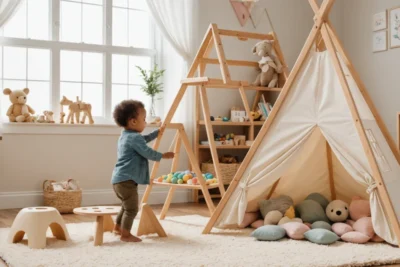
Draping blankets and sheets over the triangle creates cozy hideaways that spark imaginative play scenarios. Children develop spatial reasoning skills as they figure out how fabric drapes and where openings should be positioned for easy access.
Large lightweight fabrics work best for fort construction, allowing children to manipulate materials independently. Additionally, securing corners with clothespins or clips teaches practical problem-solving while maintaining structural integrity.
Dynamic Obstacle Courses
Combining the triangle with other equipment creates challenging obstacle courses that develop sequential movement planning and coordination. Furthermore, these multi-element setups encourage children to think strategically about movement pathways and timing.
- Crawling tunnels positioned at triangle base
- Balance beams leading to climbing entry points
- Stepping stones for approach sequences
- Soft mats for safe landing zones
Rotating obstacle elements weekly maintains novelty and prevents movement patterns from becoming too predictable. Consequently, children continue developing new motor skills rather than simply repeating familiar sequences.
Imaginative Play Transformations
The triangle’s geometric shape naturally suggests various imaginative scenarios that support cognitive and social development. Houses, caves, mountains, and ships represent common transformations that children discover through creative exploration.
Encouraging storytelling during play enhances language development while children navigate their imagined environments. Therefore, adults can support this process by asking open-ended questions about the child’s creative scenarios without directing the narrative.
Imaginative Play Tip
Accessory Additions
Adding compatible accessories expands play possibilities while targeting specific developmental areas. Ramps, slides, and climbing boards attach to many triangle designs, creating varied movement challenges and sensory experiences.
Ramps provide gentler inclines for younger children or those developing confidence with sloped surfaces. Meanwhile, climbing boards with different textures and grip patterns challenge proprioceptive awareness and fine motor control.
Slides offer controlled descent experiences that teach body positioning and speed regulation. However, ensure all accessories meet safety standards and attach securely before allowing independent use.
Seasonal Adaptations
Versatile indoor and outdoor use extends the triangle’s utility throughout changing seasons and weather conditions. Indoor placement during winter months maintains consistent gross motor development when outdoor play becomes limited.
Outdoor summer use introduces natural elements like grass textures and fresh air that enhance sensory experiences. Additionally, garden settings provide opportunities to incorporate natural loose parts like leaves, stones, and sticks into play scenarios.
Weather-resistant finishes protect wooden triangles during outdoor use, though covering or storing equipment during extreme conditions extends longevity. Ultimately, this adaptability ensures year-round developmental support regardless of environmental constraints.
Developmental Benefits and Skill Building
Pikler triangles serve as comprehensive developmental tools that simultaneously target multiple skill areas through natural movement and exploration. Furthermore, this multifaceted approach aligns with child development principles that emphasize integrated learning through physical activity.
Gross Motor Development
Strength building occurs naturally as children pull themselves up, support their body weight, and navigate different climbing positions. Additionally, repetitive climbing motions develop core stability and overall muscular endurance that supports future physical activities.
Coordination skills improve through cross-lateral movements that require opposite arm and leg combinations during climbing sequences. Moreover, these bilateral coordination patterns establish neural pathways essential for complex motor tasks like riding bicycles or swimming.
Balance development emerges from constant weight shifting and postural adjustments required during triangle navigation. Consequently, children develop both static balance while holding positions and dynamic balance during movement transitions.
Fine Motor Skills Enhancement
Grip strength increases as children grasp rungs of varying thicknesses and maintain holds during climbing activities. Similarly, this enhanced grip strength directly transfers to improved pencil control and manipulation of small objects in daily activities.
Hand-eye coordination develops through precise hand placement and visual tracking of movement paths during climbing sequences. Therefore, children learn to coordinate visual input with motor output, creating foundational skills for writing and sports participation.
Cognitive Development Through Movement
Problem-solving abilities strengthen as children analyze climbing routes, plan movement sequences, and adapt strategies when initial approaches prove unsuccessful. Subsequently, this trial-and-error process builds resilience and flexible thinking patterns.
Spatial awareness expands through three-dimensional navigation that requires understanding of body position relative to the climbing structure. Additionally, children develop concepts of distance, height, and directional relationships through repeated triangle interactions.
Cognitive Connection
Emotional Growth and Self-Regulation
Confidence building occurs gradually as children master increasingly challenging climbing sequences and overcome initial fears or hesitations. Furthermore, this self-directed achievement creates intrinsic motivation that extends beyond physical activities.
Risk assessment skills develop naturally as children evaluate their capabilities against climbing challenges and make safety decisions independently. Consequently, this internal risk calibration supports sound judgment in various life situations.
Emotional regulation improves through physical exertion that provides natural stress relief and mood enhancement. Moreover, the focused concentration required during climbing creates mindful experiences that support emotional balance.
Social Skills Development
Sharing behaviors emerge naturally when multiple children use the triangle simultaneously, requiring negotiation and patience while waiting for turns. Additionally, children learn to respect others’ climbing space and timing preferences.
Turn-taking skills develop through structured or spontaneous rotation systems that children often create independently during group play sessions. Therefore, these self-regulated sharing systems build fairness concepts and social cooperation.
Cooperative play flourishes as children create shared climbing games, assist younger peers, and collaborate on imaginative scenarios using the triangle as a prop. Ultimately, these collaborative experiences build empathy and communication skills essential for healthy relationships.
Understanding appropriate age ranges helps parents maximize these developmental benefits by introducing triangle play at optimal developmental windows when children can fully engage with these skill-building opportunities.
Troubleshooting Common Challenges
Even with careful preparation, parents encounter various challenges when children play with Pikler triangles. However, understanding these common issues and their solutions helps families maintain positive climbing experiences while addressing developmental hurdles effectively.
Fear or Hesitation: Building Confidence Gradually
Fear responses often manifest when children feel overwhelmed by the triangle’s height or climbing demands. Therefore, parents should start with ground-level exploration where children can touch, examine, and crawl under the structure without pressure to climb.
Gradual exposure works best through modeling behaviors where parents demonstrate simple movements like stepping on the first rung or placing hands on higher rungs. Additionally, allowing children to observe siblings or peers climbing often reduces anxiety through social learning mechanisms.
Positive reinforcement supports confidence building when parents celebrate small achievements like touching a rung or taking one step up. Consequently, these incremental successes create momentum that naturally progresses toward fuller climbing engagement.
Overconfidence and Risky Behavior: Setting Boundaries
Overconfident children may attempt dangerous maneuvers like jumping from high rungs or climbing beyond their developmental capabilities. Furthermore, this risky behavior requires immediate intervention through clear boundary setting and consistent enforcement.
Establishing climbing rules helps manage overconfidence through specific guidelines about maximum height, appropriate movements, and safety expectations. Moreover, parents should explain consequences clearly and follow through consistently when children exceed established limits.
Redirecting energy toward appropriate challenges maintains engagement while ensuring safety through alternative activities like creative climbing patterns or timed climbing games. Subsequently, these structured alternatives satisfy the child’s need for excitement within safe parameters.
Loss of Interest: Refreshing Activities and Challenges
Interest decline typically occurs when children master basic climbing skills and seek new challenges or stimulation. Therefore, parents can revitalize engagement through creative activity variations that transform familiar equipment into novel experiences.
Adding accessories like climbing ramps, fabric drapes, or balance boards creates fresh challenges that extend the triangle’s play value significantly. Additionally, rotating these accessories weekly maintains novelty while building diverse motor skills.
Incorporating imaginative themes transforms climbing into adventure scenarios where the triangle becomes a mountain, castle, or spaceship. Consequently, these narrative elements engage cognitive creativity alongside physical development.
Multiple Children: Managing Sharing and Safety
Sibling conflicts arise when multiple children want triangle access simultaneously, requiring structured sharing systems and safety protocols. However, establishing clear turn-taking rules and time limits prevents disputes while ensuring fair access.
Age-appropriate grouping helps manage safety when children of different developmental stages play together. Furthermore, older children should understand their responsibility to model safe behavior and assist younger siblings appropriately.
Supervision intensity increases with multiple children as collision risks and competitive behaviors emerge during group play sessions. Therefore, parents must maintain closer oversight while encouraging cooperative rather than competitive climbing interactions.
Space Limitations: Maximizing Small Area Use
Limited indoor space challenges many families who want to provide triangle climbing opportunities without overwhelming their living areas. Additionally, strategic placement and storage solutions help maximize small spaces effectively.
Foldable triangle designs offer space-saving solutions that allow storage when not in use while maintaining structural integrity during play sessions. Moreover, positioning triangles in corners or against walls reduces their spatial footprint significantly.
Multi-functional furniture integration helps small spaces by choosing triangles that serve as room dividers, reading nooks, or display structures when not used for climbing. Subsequently, these dual-purpose approaches justify the space investment while maintaining aesthetic appeal.
Quick Solutions
Maintaining Interest as Children Grow
Children naturally outgrow their initial fascination with basic triangle climbing as their motor skills advance and cognitive needs evolve. However, strategic adaptations and progressive challenges help maintain engagement throughout different developmental phases while maximizing the investment value.
Progressing Difficulty: Higher Climbs and Complex Movements
Advanced climbing challenges emerge when children master basic triangle navigation and seek more demanding physical activities. Additionally, height variations create progressive difficulty levels that match developing strength and coordination abilities.
Complex movement patterns like sideways traversing, backwards climbing, and single-limb challenges introduce new motor planning requirements. Furthermore, these advanced techniques develop spatial awareness and body control beyond simple up-down movements.
- Traversing challenges: Moving horizontally across rungs without touching the ground
- Balance beam walking: Using the triangle’s top edge for balance practice
- Hanging exercises: Developing upper body strength through supported suspension
- Obstacle courses: Incorporating the triangle into larger movement sequences
Combining with Other Pikler Equipment
Pikler equipment combinations create comprehensive movement environments that extend triangle functionality significantly. Moreover, modular systems allow families to build complex climbing structures that grow with children’s abilities.
Ramps, arches, and balance boards integrate seamlessly with triangles to form challenging obstacle courses. Subsequently, these combinations provide varied sensory experiences while developing different muscle groups and movement patterns.
| Equipment Combination | Age Range | Skills Developed |
|---|---|---|
| Triangle + Ramp | 12-36 months | Incline navigation, balance |
| Triangle + Arch | 18-48 months | Crawling, climbing variety |
| Triangle + Balance Board | 24-60 months | Core strength, coordination |
| Full Pikler Set | 18-72 months | Complex motor planning |
Transitioning to Outdoor Climbing Structures
Outdoor playground equipment becomes more accessible after children develop confidence and skills through triangle climbing practice. Additionally, the risk assessment abilities learned on triangles transfer directly to playground navigation and safety awareness.
Natural climbing opportunities like trees, rocks, and hills provide progressive challenges that build upon triangle-developed skills. Furthermore, outdoor climbing introduces weather variables and terrain differences that enhance adaptability and problem-solving capabilities.
Playground structures offer social climbing experiences where children apply their individual skills in group settings. Therefore, triangle training serves as preparation for more complex outdoor adventures and peer interactions.
When Children Outgrow the Triangle: Signs and Alternatives
Children typically outgrow triangles when they consistently complete all challenges without effort or interest. Moreover, physical size limitations become apparent when children’s height approaches the triangle’s maximum dimensions.
Behavioral indicators include seeking more complex challenges, showing boredom with familiar activities, or preferring other physical activities consistently. Additionally, children may express verbal disinterest or avoid triangle play despite previous enthusiasm.
Outgrowth Signs
Alternative equipment options include climbing walls, gymnastics equipment, or outdoor adventure gear that provides age-appropriate challenges. Subsequently, these transitions maintain physical development while introducing new skill sets and interests.
Long-term Value and Sibling Use
Pikler triangles demonstrate exceptional longevity through multiple children and extended family use patterns. Furthermore, sibling inheritance maximizes investment value while providing consistent play opportunities across age gaps.
Quality construction ensures triangles withstand years of intensive use while maintaining structural integrity and safety standards. Additionally, timeless design aesthetics allow triangles to complement evolving home decor without appearing outdated.
Resale value remains strong for well-maintained triangles due to growing awareness of Pikler benefits among parents. Therefore, families can recover significant investment costs when children outgrow the equipment permanently.
Quality Pikler triangles serve multiple children for 5-8 years on average, providing exceptional cost-per-use value.
Extended family sharing creates multi-generational value where grandparents, cousins, and family friends benefit from triangle access. Consequently, this community approach maximizes utility while strengthening family connections through shared play experiences.
Frequently Asked Questions
What age can babies start using a Pikler triangle?
Babies can begin interacting with a Pikler triangle as early as 6 months old. At this age, they typically use it for pulling themselves up to standing and exploring the structure. The triangle grows with your child and remains engaging through 6+ years as they develop more advanced climbing and creative play skills.
How does a Pikler triangle differ from regular playground equipment?
Unlike traditional playground equipment, Pikler triangles promote self-directed exploration without predetermined play patterns. They lack safety barriers, slides, or fixed pathways, encouraging children to develop natural proprioception and risk assessment skills. This minimalist design builds genuine confidence through child-led discovery rather than adult-directed activities.
What materials are Pikler triangles made from?
High-quality Pikler triangles are constructed from smooth hardwood, typically birch or beech, with rounded edges and non-toxic finishes. The rungs are spaced approximately 8-10 inches apart and the overall height ranges from 24-36 inches, providing stability while accommodating small hands and feet.
Is supervision required when children play with a Pikler triangle?
Yes, supervision is essential for safety, especially with younger children. However, the supervision should focus on creating a safe environment while allowing natural movement development. The goal is to observe and ensure safety without interfering with the child’s self-directed exploration and learning process.
What developmental benefits does a Pikler triangle provide?
Pikler triangles support comprehensive development including:
- Physical development: Strength, coordination, and balance
- Cognitive growth: Problem-solving and spatial awareness
- Confidence building: Self-directed achievement and risk assessment
- Motor skills: Gross and fine motor development through climbing
How can I make Pikler triangle play more engaging?
Enhance play by adding creative elements like blankets for fort-building, ramps for sliding, or incorporating the triangle into obstacle courses. The structure transforms into countless play scenarios that grow with your child’s imagination and abilities, from simple climbing to complex imaginative play opportunities.
Who was Dr. Emmi Pikler and why did she create this design?
Dr. Emmi Pikler was a Hungarian pediatrician who developed this climbing structure in the 1930s based on her research at the Lóczy Institute in Budapest. She believed children develop movement skills most effectively through self-directed exploration rather than adult-guided instruction, emphasizing natural motor development at the child’s own pace.
What safety considerations should I keep in mind?
Key safety considerations include:
- Placing the triangle on a soft surface like carpet or play mats
- Ensuring adequate space around the structure for safe movement
- Regular inspection for loose rungs or wear
- Age-appropriate supervision without over-intervention
- Allowing children to explore their limits naturally
How do I adapt activities as my child grows?
Start with basic exploration for 6-12 month olds, progress to climbing as motor skills develop, and add creative challenges for older children. Combine physical activities with imaginative scenarios, use accessories like ramps and blankets, and create progressive skill-building opportunities that maintain interest through age-appropriate challenges.
Can multiple children play on a Pikler triangle safely?
While Pikler triangles can accommodate multiple children, it’s important to consider the weight capacity and ensure children of similar ages and abilities play together. Supervision becomes even more critical with multiple users to prevent collisions and ensure each child has space for safe exploration and movement.
What accessories work well with Pikler triangles?
Popular accessories include climbing ramps for varied angles, blankets for fort creation, balance boards for additional challenges, and soft play mats for safety. These additions expand play possibilities while maintaining the core philosophy of open-ended, child-directed exploration and creative development.