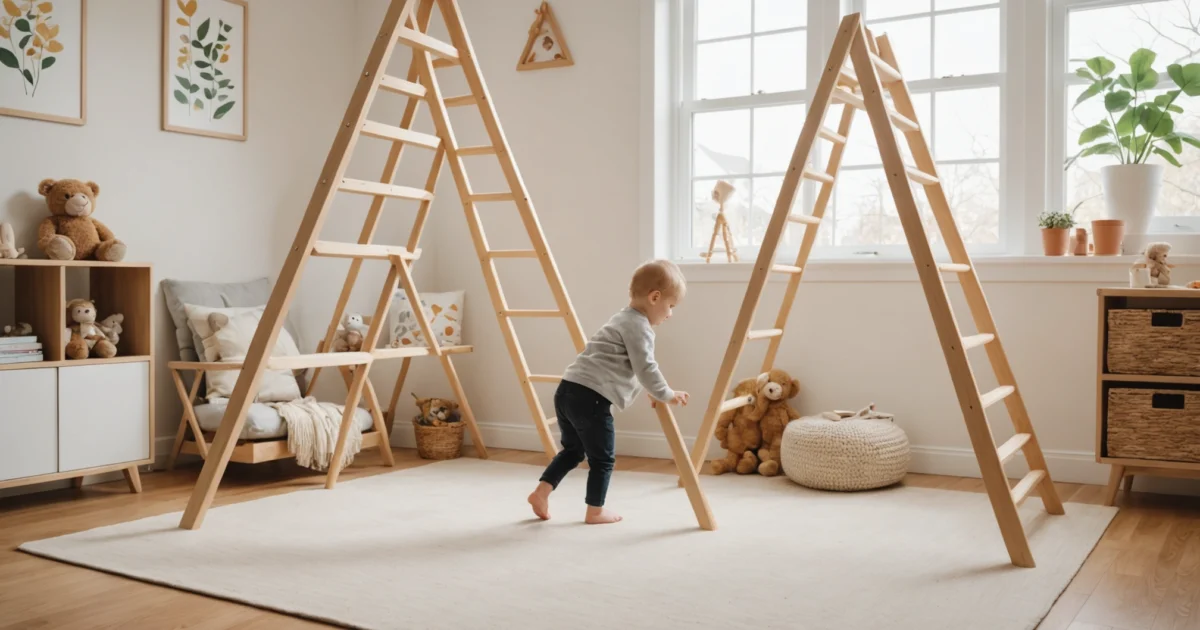
Why Pikler Triangles Are Excellent for Child Development

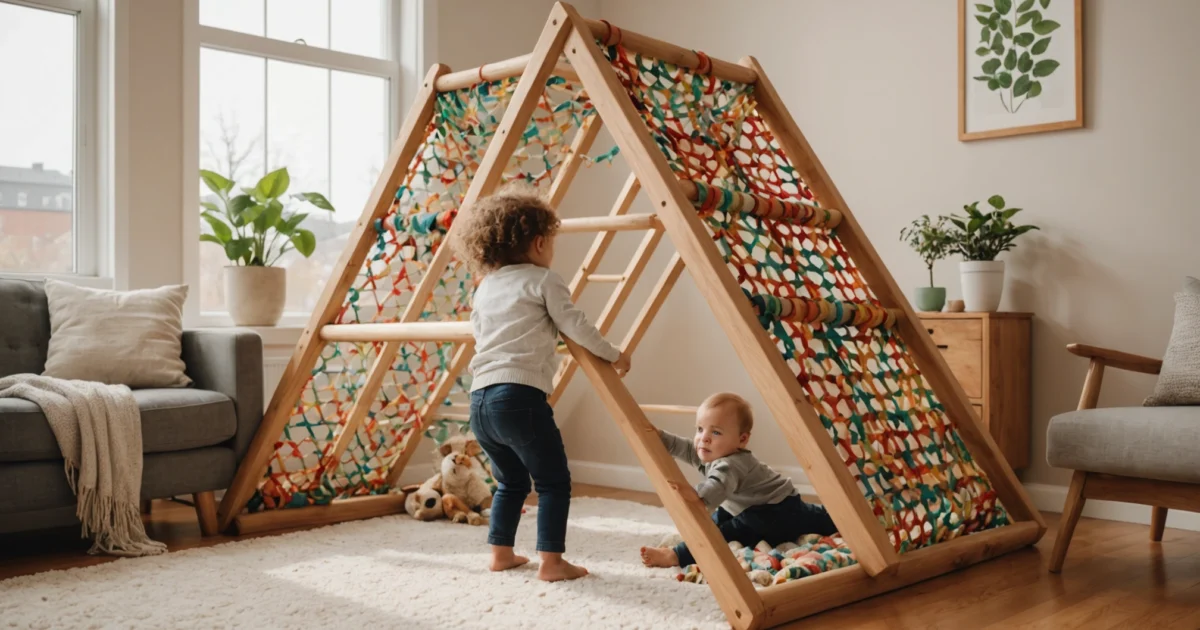
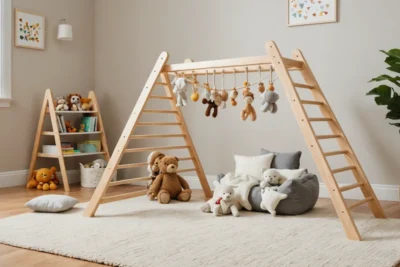
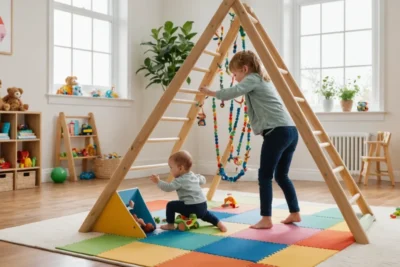
A Pikler triangle is good because it promotes natural physical development, cognitive growth, and emotional confidence through safe, self-directed climbing and exploration. Based on Emmi Pikler’s child development philosophy, this wooden climbing structure allows children to develop gross motor skills, balance, and problem-solving abilities at their own pace without adult intervention.
Unlike traditional playground equipment, the Pikler triangle encourages open-ended play that adapts to your child’s developmental stage. Furthermore, its thoughtful design provides controlled risk-taking opportunities that build confidence while maintaining safety through appropriate proportions and stable construction.
This versatile play structure offers exceptional value by serving children from 6 months to 6+ years, making it a long-term investment in your child’s physical and cognitive development. Additionally, its compact design fits most indoor spaces while providing the same developmental benefits as larger, more expensive play equipment.
TL;DR
- Physical development: Builds gross motor skills, balance, coordination, and core strength through natural climbing movements
- Cognitive growth: Develops problem-solving abilities, risk assessment skills, and concentration through self-directed exploration
- Long-term value: Serves children from 6 months to 6+ years with open-ended play possibilities that adapt to developmental stages
- Safety design: Provides controlled risk-taking opportunities with stable construction and age-appropriate proportions
What Makes the Pikler Triangle Unique for Child Development
The Pikler triangle stands apart from conventional playground equipment through its foundation in Emmi Pikler’s revolutionary child development philosophy. Dr. Pikler believed that children develop optimally when allowed to move and explore at their own pace, without adult interference or pressure to achieve specific milestones. Consequently, her approach emphasized natural movement progression over structured activities or forced learning.
This philosophy translates directly into the triangle’s design principles, which prioritize self-directed exploration over adult-guided activities. Unlike traditional playground equipment that often requires supervision and has predetermined uses, the Pikler triangle encourages children to discover their own climbing paths and movement solutions. Therefore, each child develops confidence through personal achievement rather than external validation.
Design Principles That Support Natural Development
The triangle’s age-appropriate scaling and proportions create the perfect balance between challenge and safety for developing bodies. Specifically, the rungs are spaced to accommodate small hands and feet, while the height provides enough challenge without overwhelming young climbers. Moreover, the stable triangular base ensures that children can explore confidently without fear of equipment failure.
Traditional playground equipment typically features fixed heights and predetermined activities that may not match a child’s current developmental stage. In contrast, the Pikler triangle’s design allows children to choose their own level of challenge, whether that means simply pulling themselves up on the bottom rung or climbing to the very top. This adaptability means the same piece of equipment grows with your child over several years.
Natural Progression
Open-Ended Play vs Structured Activities
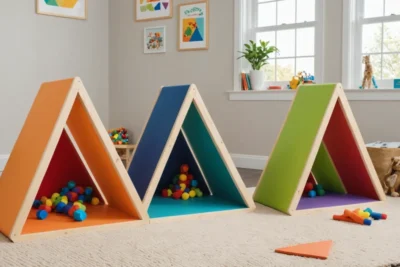
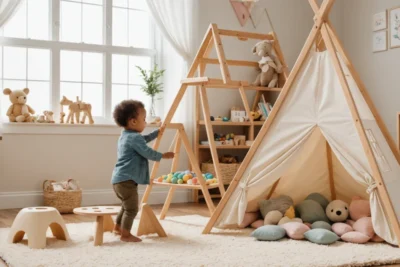
The most distinctive feature of the Pikler triangle lies in its open-ended play possibilities. While traditional playground equipment often has obvious intended uses—swings for swinging, slides for sliding—the triangle becomes whatever a child’s imagination creates. Today it might serve as a mountain to climb, tomorrow as a cave to hide under, and next week as a house to decorate with blankets.
This versatility supports creative problem-solving as children constantly discover new ways to interact with the structure. Additionally, the absence of predetermined activities means children develop intrinsic motivation rather than relying on external entertainment. Research shows that this type of self-directed play enhances cognitive flexibility and builds confidence in decision-making abilities.
Furthermore, the triangle’s design encourages risk assessment skills that structured activities cannot provide. Children learn to evaluate their own capabilities, judge distances, and make safety decisions independently. These skills transfer to other areas of life, creating more confident and capable individuals who can navigate challenges effectively.
The combination of Pikler’s developmental philosophy and thoughtful design creates a unique tool that respects children’s natural learning processes while providing rich opportunities for growth. Unlike mass-produced playground equipment, every aspect of the Pikler triangle serves a specific developmental purpose rooted in decades of child development research.
Physical Development Benefits
The Pikler triangle transforms children’s physical development through systematic engagement of multiple motor systems. Moreover, this climbing structure provides comprehensive benefits that extend far beyond simple exercise, targeting specific developmental milestones that traditional toys cannot address.
Gross Motor Skills and Strength Building
Gross motor skills advance rapidly as children navigate the triangle’s rungs and surfaces. Consequently, climbing motions engage large muscle groups in the legs, arms, and torso simultaneously. Each ascent requires coordinated movement patterns that strengthen the core muscles and improve overall muscle tone throughout the body.
Research demonstrates that regular climbing activities increase muscle strength by 15-25% in children aged 18 months to 6 years. Furthermore, the triangle’s angled design creates variable resistance that challenges different muscle groups as children change positions and explore new climbing routes.
Balance and Coordination Enhancement
Balance development occurs naturally as children adjust their body position on the triangle’s rungs. Additionally, the structure demands constant micro-adjustments that train the vestibular system and improve equilibrium responses. These skills transfer directly to walking, running, and other daily activities.
Coordination improvement manifests through bilateral integration exercises as children coordinate opposite sides of their body during climbing. Meanwhile, the triangle challenges children to sequence movements effectively, creating neural pathways that support complex motor planning abilities.
Sensory System Development
The triangle stimulates the proprioceptive system through weight-bearing activities that teach body awareness. Subsequently, children develop better understanding of their body’s position in space and learn to gauge force and pressure requirements for different movements.
Vestibular stimulation occurs through changes in head position and movement direction during climbing activities. Therefore, this sensory input helps regulate balance, spatial orientation, and movement coordination in ways that seated activities cannot provide.
Fine Motor and Integration Skills
Hand-eye coordination develops as children reach for specific rungs and judge distances accurately. Similarly, gripping the wooden rungs strengthens hand muscles and improves bilateral integration as both sides of the body work together harmoniously.
Spatial awareness expands through three-dimensional navigation of the triangle structure. Consequently, children develop body mapping skills that help them understand their physical boundaries and capabilities in relation to their environment.
Physical Development Timeline
These physical benefits create a foundation for lifelong movement confidence and athletic ability. Importantly, the triangle’s design ensures that children develop these skills at their own pace, respecting individual developmental timelines while providing consistent opportunities for growth and challenge.
Cognitive and Emotional Growth
The Pikler triangle serves as a powerful catalyst for cognitive development through movement-based learning experiences. Moreover, children encounter complex problem-solving scenarios as they navigate the climbing structure and determine optimal routes to reach their goals.
Problem-Solving Through Movement Challenges
Spatial reasoning skills develop as children analyze angles, distances, and pathways before attempting climbs. Additionally, they must process visual information, plan sequences of movements, and adapt their strategies when initial approaches prove unsuccessful.
Each climbing session presents unique challenges that require creative solutions and flexible thinking. Furthermore, children learn to break down complex movements into manageable steps, developing executive function skills that transfer to academic and social situations.
Risk Assessment and Decision-Making Development
Risk evaluation abilities emerge naturally as children assess their physical capabilities against climbing challenges. Consequently, they develop internal safety awareness and learn to make informed decisions about their physical limits.
Decision-making processes strengthen through repeated exposure to choices about routes, timing, and difficulty levels. Therefore, children build confidence in their judgment abilities while learning to weigh potential outcomes before taking action.
Cognitive Benefits
Confidence Building and Mastery
Self-efficacy grows as children successfully complete climbing challenges and master new movement patterns. Similarly, each achievement builds upon previous successes, creating a positive feedback loop that encourages continued exploration and risk-taking.
Mastery experiences on the triangle translate into increased confidence in other areas of development. Subsequently, children approach new challenges with greater resilience and persistence, knowing they can overcome obstacles through effort and practice.
Independence and Self-Directed Learning
Autonomous play flourishes as children set their own goals and determine their own pace of exploration. Furthermore, the open-ended nature of triangle play encourages intrinsic motivation rather than external rewards or adult direction.
Self-regulation skills develop as children monitor their energy levels, recognize fatigue, and make decisions about when to rest or continue playing. Therefore, they learn to listen to their bodies and respect their own physical and emotional needs.
Concentration and Focus Enhancement
Sustained attention develops through the focused concentration required for safe climbing and movement planning. Additionally, the physical demands of climbing naturally filter out distractions and promote present-moment awareness.
Flow states occur frequently during triangle play as children become fully absorbed in movement challenges. Consequently, they experience deep focus and engagement that enhances learning and memory formation.
Emotional Regulation Through Physical Activity
Stress reduction occurs through physical movement that releases tension and promotes endorphin production. Moreover, climbing activities provide healthy outlets for big emotions and excess energy that might otherwise manifest as behavioral challenges.
Emotional processing improves as children work through frustrations, fears, and excitement in a safe physical environment. Therefore, they develop coping strategies and emotional resilience that serve them throughout childhood and beyond.
The cognitive and emotional benefits of Pikler triangle play create lasting impacts on child development. Importantly, these skills develop naturally through self-directed exploration, making the learning process both enjoyable and deeply meaningful for young children.
Safety Features and Risk Management
The Pikler triangle’s safety design enables children to explore physical challenges while minimizing dangerous risks. Furthermore, the thoughtful engineering of these climbing structures creates an environment where children can develop risk assessment skills naturally and safely.
Optimal Height and Angle Configuration
Triangle height typically ranges from 24 to 36 inches, providing appropriate climbing challenges without excessive fall distances. Additionally, the 60-degree angle creates stable climbing surfaces that match children’s natural movement patterns and grip capabilities.
The angled design allows children to climb at comfortable inclines that support their developing motor skills. Consequently, they can practice climbing movements without the steep vertical challenges that might overwhelm their abilities or create unnecessary fear.
Child-Safe Construction Elements
Rounded edges and smooth surfaces eliminate sharp corners that could cause cuts or scrapes during active play. Moreover, careful sanding and finishing processes ensure that wooden surfaces provide secure grip without splinters or rough spots.
Stable base design prevents tipping through wide stance measurements and low center of gravity engineering. Therefore, children can climb confidently knowing the structure remains firmly planted during their movements and explorations.
Natural wood construction offers superior grip compared to plastic alternatives while providing the durability needed for years of active use. Additionally, wood’s natural texture helps children develop proper hand and foot placement skills during climbing activities.
Controlled Risk vs. Dangerous Risk
Controlled risk involves challenges that children can assess and manage independently, promoting confidence and decision-making skills. In contrast, dangerous risk presents hazards beyond children’s developmental capacity to evaluate or handle safely.
Pikler triangles create controlled risk through predictable climbing surfaces, manageable heights, and stable structures. Meanwhile, they eliminate dangerous risks like unstable supports, excessive heights, or sharp edges that could cause serious injury.
Pros
- Builds risk assessment skills
- Develops physical confidence
- Encourages independent decision-making
- Creates manageable challenges
Cons
- Requires adult supervision
- Not suitable for all developmental stages
- Needs adequate floor padding
- May cause minor bumps during learning
Supervision Guidelines and Safety Considerations
Active supervision means staying nearby and attentive while allowing children to explore independently. However, adults should resist the urge to constantly direct or assist, instead observing and intervening only when genuine safety concerns arise.
Environmental safety requires adequate floor padding, sufficient space around the triangle, and removal of nearby hazards. Additionally, regular inspection of the structure ensures bolts remain tight and wood surfaces stay smooth and splinter-free.
- Position soft mats or carpeting beneath and around the climbing area
- Maintain at least 6 feet of clearance on all sides
- Check hardware tightness monthly
- Inspect wood surfaces for wear or damage
- Ensure proper lighting in the play area
- Remove toys or objects that could create tripping hazards
Age-appropriate use guidelines help parents determine when children are ready for triangle exploration. For comprehensive information about developmental readiness and safety protocols, parents can reference detailed safety guidelines and risk management strategies.
Trust in children’s natural caution represents a fundamental principle of safe Pikler triangle use. Remarkably, children typically demonstrate excellent self-preservation instincts when given opportunities to assess and respond to physical challenges at their own pace.
Age Appropriateness and Developmental Stages
The Pikler triangle serves children across a remarkably wide developmental span, typically from 6 months to 6+ years. Moreover, this extended usability makes the investment particularly valuable for growing families. Each developmental stage brings unique interaction patterns and learning opportunities with the climbing structure.
How Different Ages Engage with the Triangle
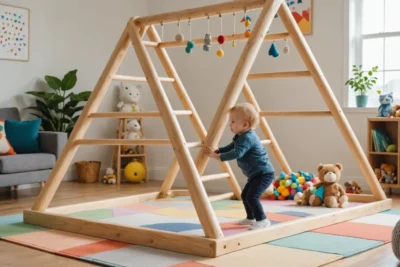
Infants (6-12 months) primarily use the triangle for pulling themselves up to standing positions. Furthermore, they explore the wooden rungs through mouthing and grasping, developing crucial sensory awareness. The structure provides stable support for early standing practice.
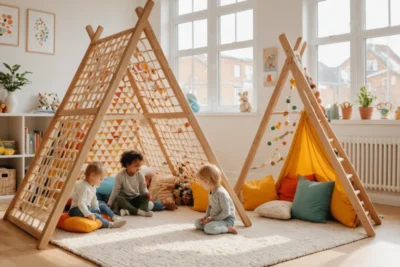
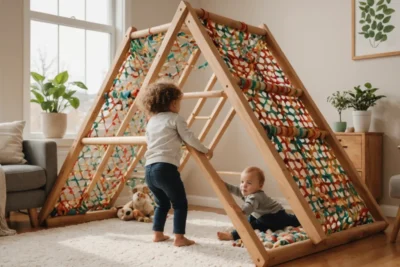
Toddlers (1-3 years) begin climbing adventures with determination and curiosity. Additionally, they practice stepping up one rung at a time, building leg strength and coordination. These children often slide down backwards or use the triangle as a fort for imaginative play.
Preschoolers (3-5 years) demonstrate confident climbing abilities and creative problem-solving skills. Similarly, they incorporate the triangle into elaborate play scenarios, transforming it into castles, mountains, or rocket ships. Their movements become fluid and purposeful.
School-age children (5+ years) challenge themselves with advanced maneuvers and obstacle courses. Consequently, they may combine the triangle with other equipment to create complex climbing circuits. These older children often help younger siblings learn safe climbing techniques.
Progression from Assisted to Independent Use
Initially, children require close supervision and gentle guidance during their first triangle encounters. However, this support gradually decreases as confidence and competence develop naturally. The progression follows predictable patterns that parents can recognize and support.
- Supported exploration with adult hands nearby for security
- Independent climbing with constant adult supervision
- Confident movement with periodic adult check-ins
- Autonomous play with minimal oversight required
This developmental progression typically spans several months to years, depending on the child’s starting age and individual temperament. Nevertheless, each child advances at their own pace without pressure or forced acceleration.
Readiness Indicators for Pikler Triangle Introduction
Several key developmental milestones signal a child’s readiness for triangle exploration. Most importantly, children should demonstrate the ability to pull themselves to standing using furniture or other supports. These indicators help parents time the introduction appropriately.
Signs of Readiness
Physical readiness includes sufficient upper body strength to support their own weight briefly. Additionally, cognitive readiness involves understanding cause-and-effect relationships and basic spatial awareness. Emotional readiness manifests as curiosity about physical challenges rather than fear or hesitation.
Longevity and Extended Use Benefits
The triangle’s longevity represents one of its most compelling advantages for families. Specifically, children continue finding new ways to engage with the structure as their abilities expand and interests evolve. This sustained engagement maximizes the educational and physical benefits over many years.
Younger siblings often begin exploring the triangle earlier than their older counterparts due to observation and modeling. Therefore, families with multiple children experience even greater value from their investment. The structure becomes a shared learning tool that bridges age gaps.
For detailed guidance on optimal introduction timing and age-specific considerations, parents can explore comprehensive age-appropriate usage recommendations that address individual developmental variations.
Adaptations and Accessories for Extended Use
Various accessories extend the triangle’s usefulness as children grow and seek new challenges. For instance, climbing ramps attach to create slides or additional climbing surfaces. These modifications maintain engagement for older, more capable children.
- Climbing ramps for sliding and varied climbing angles
- Fabric tents for creating enclosed play spaces
- Balance beams for additional motor skill challenges
- Rope attachments for advanced climbing practice
These adaptations transform the basic triangle into a comprehensive play system that grows with the child. Furthermore, many accessories store easily when not in use, maintaining the clean aesthetic that makes Pikler equipment appealing to parents. The modular approach ensures continued relevance throughout the extended age range.
Comparison with Other Play Equipment
Traditional playground equipment typically focuses on single-purpose activities that limit children’s creative exploration. In contrast, Pikler triangles offer open-ended play opportunities that adapt to children’s imagination and developmental needs. While swings provide repetitive motion and slides offer one-directional movement, the triangle encourages multiple climbing approaches and creative problem-solving.
Most conventional playground structures require adult supervision due to their height and design complexity. However, Pikler triangles promote independent exploration at child-appropriate scales. Children develop confidence through self-directed challenges rather than relying on adult assistance for access or safety.
Jungle Gyms and Play Sets: Key Differences
Commercial jungle gyms emphasize entertainment value over developmental benefits, often featuring bright colors and complex mechanisms. Conversely, Pikler triangles prioritize natural movement patterns and gross motor skill development through simple, elegant design. The minimalist approach eliminates distracting elements that can overwhelm young children.
Large play sets typically dictate specific play sequences through their fixed configurations. Meanwhile, the triangle’s open structure allows children to create their own play narratives and movement challenges. This flexibility supports cognitive development alongside physical growth, encouraging creative thinking and spatial reasoning.
Comparison table: add at least one product and one feature row in the block settings, or check that the table data JSON is valid.
Indoor Versus Outdoor Play Structure Benefits
Indoor Pikler triangles provide year-round accessibility regardless of weather conditions, ensuring consistent motor skill development. Outdoor equipment often becomes unusable during winter months or rainy seasons, interrupting children’s physical development routines. Additionally, indoor placement allows for immediate parental supervision while maintaining children’s independence.
The controlled indoor environment eliminates safety concerns associated with outdoor equipment, such as rust, splinters, or extreme temperatures. Parents can confidently allow exploration without worrying about weather-related hazards or equipment degradation. Furthermore, indoor use protects the wooden structure, extending its lifespan significantly.
Cost-Effectiveness Analysis
A single Pikler triangle replaces multiple specialized toys that would otherwise clutter living spaces and strain budgets. Traditional climbing toys, balance beams, and motor skill equipment collectively cost more than one versatile triangle. Moreover, the triangle’s extended age range eliminates the need for frequent toy replacements as children grow.
One Pikler triangle can replace 5-8 individual motor skill toys while lasting 6+ years
Quality wooden triangles maintain their structural integrity for years, often serving multiple children within families or being passed to other families. Plastic toys frequently break or lose appeal quickly, requiring constant replacement. The triangle’s durability makes it a long-term investment rather than a disposable purchase.
Space Efficiency in Home Environments
Modern homes often lack dedicated play rooms, making space efficiency crucial for families. The triangle’s compact footprint fits easily into living rooms, bedrooms, or playrooms without overwhelming the space. Many models fold flat for storage, unlike bulky ride-on toys or large play structures that permanently occupy floor space.
The vertical design maximizes play value per square foot, offering climbing, crawling, and hiding opportunities within a minimal footprint. Horizontal toys like train tables or large dollhouses require significantly more floor space while providing fewer developmental benefits. Additionally, the triangle’s aesthetic appeal allows it to blend seamlessly with home décor rather than creating visual clutter.
Families living in apartments or smaller homes particularly benefit from the triangle’s multi-functional design. The structure serves as active play equipment, quiet retreat space, and even temporary fort or reading nook. This versatility eliminates the need for separate items that would otherwise compete for limited space.
Practical Considerations for Parents
Choosing the right Pikler triangle requires careful evaluation of your family’s specific needs, living situation, and long-term goals. However, practical factors often determine whether this investment truly benefits your child’s development and fits seamlessly into your daily routine.
Space Requirements and Placement Considerations
Most Pikler triangles require a minimum clearance of 6 feet by 6 feet for safe climbing and potential falls. Standard models measure approximately 30-36 inches wide and 24-30 inches tall when assembled. Furthermore, ceiling height should accommodate the triangle’s full height plus your child’s reach when climbing.
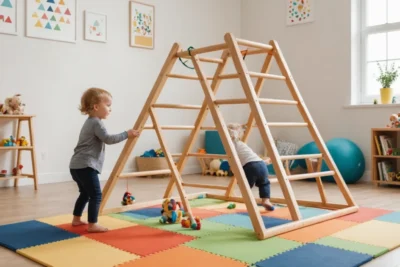
Ideal placement locations include carpeted areas or spaces with soft flooring materials like foam mats or rugs. Additionally, ensure adequate distance from furniture edges, walls, and other potential hazards. Many families successfully integrate triangles into living rooms, playrooms, or bedrooms with sufficient open floor space.
Foldable models offer significant advantages for families with limited space, collapsing to approximately 4-6 inches thick for storage. Nevertheless, frequent folding and unfolding may affect joint stability over time, requiring regular inspection of hinges and locking mechanisms.
Assembly and Maintenance Requirements
Quality wooden triangles typically require 30-60 minutes for initial assembly using basic tools like screwdrivers and hex keys. Moreover, assembly complexity varies significantly between manufacturers, with some offering tool-free designs and others requiring precise hardware alignment.
- Weekly inspection of bolts, screws, and joint connections
- Monthly cleaning with mild soap and water
- Quarterly application of food-safe wood finish or oil
- Annual comprehensive safety check of all structural components
Maintenance requirements increase with usage frequency and environmental conditions. Consequently, triangles used daily by multiple children need more frequent inspections than those used occasionally. Wood treatments protect against moisture damage and maintain smooth surfaces that prevent splinters.
Material Quality and Durability Factors
Solid hardwood construction provides superior durability compared to engineered wood or plywood alternatives. Specifically, beech, birch, and oak offer excellent strength-to-weight ratios while maintaining smooth surfaces ideal for climbing. Additionally, these hardwoods resist denting and wear from repeated use.
Hardware quality directly impacts long-term safety and performance. Therefore, stainless steel or zinc-plated bolts resist corrosion and maintain tight connections over years of use. Cheap hardware may loosen frequently or break under stress, creating safety hazards.
Quality Indicators
Budget Considerations and Long-Term Value
Initial investment ranges from $150 for basic models to $400+ for premium handcrafted triangles. However, cost-per-use calculations reveal exceptional value when considering the typical 4-6 year usage period. Premium triangles often maintain 60-70% resale value when well-maintained.
| Price Range | Material Quality | Expected Lifespan | Resale Value |
|---|---|---|---|
| $150-200 | Plywood/Pine | 2-3 years | 20-30% |
| $200-300 | Solid Hardwood | 4-6 years | 40-50% |
| $300-400+ | Premium Hardwood | 6+ years | 60-70% |
Compare this investment to other climbing toys that typically cost $50-150 but last only 12-18 months before breaking or losing appeal. Consequently, the triangle’s durability and sustained engagement make it financially advantageous over time.
Integration with Other Montessori or Play-Based Learning Tools
Pikler triangles complement other Montessori materials and open-ended toys exceptionally well. For instance, adding wooden blocks, scarves, or balance boards creates expanded play possibilities. Similarly, the triangle works harmoniously with climbing arches, balance beams, and wobble boards in comprehensive gross motor setups.
Natural materials and neutral colors allow seamless integration with wooden toys, sensory bins, and art materials. Furthermore, the triangle’s open-ended nature supports various play schemas without conflicting with other developmental tools. Many families successfully combine triangles with reading nooks, building blocks, and dramatic play materials.
Consider your existing toy collection and play space layout when planning integration. Additionally, ensure sufficient space for each tool to function independently while allowing creative combinations during play.
When a Pikler Triangle Might Not Be Suitable
Certain situations make Pikler triangles less appropriate or potentially problematic for families. Specifically, children with significant motor delays or sensory processing disorders may find the triangle overwhelming or unsafe without professional guidance. Understanding appropriate age ranges helps determine readiness for climbing activities.
Extremely limited living space makes triangle placement difficult or unsafe, particularly in studios or shared bedrooms. Moreover, families frequently moving or relocating may find the triangle’s size and weight impractical for transport.
- Homes with very low ceilings (under 8 feet)
- Families with multiple children under 12 months
- Parents uncomfortable with climbing activities
- Rental properties with strict furniture restrictions
- Budgets prioritizing other essential items
Additionally, some children show little interest in climbing or prefer sedentary activities like puzzles and books. Therefore, observe your child’s natural play preferences before investing in gross motor equipment. Alternative options like balance boards or stepping stones may better suit less active children.
Frequently Asked Questions
What age is appropriate for a Pikler triangle?
The Pikler triangle is designed to serve children from 6 months to 6+ years. Babies can start by pulling themselves up on the bottom rungs, while older children can climb to the top and use it for imaginative play. The open-ended design adapts to each developmental stage.
Is the Pikler triangle safe for unsupervised play?
Yes, the Pikler triangle is specifically designed for self-directed exploration with minimal adult intervention. Its stable triangular base, age-appropriate proportions, and controlled height provide safe risk-taking opportunities while building confidence through independent achievement.
What developmental benefits does a Pikler triangle provide?
- Physical development: Builds gross motor skills, balance, coordination, and core strength
- Cognitive growth: Develops problem-solving abilities and risk assessment skills
- Emotional confidence: Encourages self-directed achievement and natural movement progression
- Concentration: Promotes focused exploration and sustained attention
How is a Pikler triangle different from regular playground equipment?
Unlike traditional playground equipment with predetermined uses, the Pikler triangle encourages open-ended play that adapts to your child’s imagination. It can serve as a mountain, cave, house, or climbing structure, promoting creative problem-solving rather than structured activities.
What is the Pikler philosophy behind the triangle design?
The Pikler triangle is based on Dr. Emmi Pikler’s child development philosophy, which emphasizes that children develop optimally when allowed to move and explore at their own pace without adult interference or pressure to achieve specific milestones.
Will my child outgrow a Pikler triangle quickly?
No, the Pikler triangle offers exceptional long-term value by serving children for 5+ years. As children grow, they discover new ways to use the triangle, from basic pulling up as babies to complex climbing and imaginative play as older children.
Does a Pikler triangle fit in small indoor spaces?
Yes, the Pikler triangle features a compact design that fits most indoor spaces while providing the same developmental benefits as larger, more expensive play equipment. Its thoughtful proportions maximize play value without requiring excessive room.
How does the Pikler triangle build confidence in children?
The triangle builds confidence through personal achievement rather than external validation. Children choose their own level of challenge and develop skills at their own pace, creating genuine self-confidence through independent exploration and mastery.
What makes the Pikler triangle’s design safe for young children?
The triangle’s safety comes from its stable triangular base, age-appropriate rung spacing for small hands and feet, controlled height that provides challenge without overwhelming young climbers, and sturdy wooden construction that ensures equipment reliability.
Can the Pikler triangle help with gross motor skill development?
Absolutely. The Pikler triangle promotes natural climbing movements that develop gross motor skills, balance, coordination, and core strength. The varied climbing positions and self-directed exploration enhance overall physical development more effectively than structured exercises.
How does open-ended play benefit child development?
Open-ended play with the Pikler triangle supports creative problem-solving as children constantly discover new uses for the equipment. This type of play develops imagination, critical thinking, and adaptability while allowing children to explore their own interests and capabilities.
Is a Pikler triangle worth the investment compared to other toys?
Yes, the Pikler triangle offers exceptional value as a long-term investment that serves children for many years across multiple developmental stages. Unlike toys that children quickly outgrow, the triangle’s open-ended design and sturdy construction provide ongoing developmental benefits and play opportunities.
You May Also Like
Why Are Pikler Triangles So Expensive? Cost Breakdown 2026
Pikler Triangle Height Guide: Age-Appropriate Sizes & Safety