What is the Pikler Approach? Complete Guide to Respectful Care

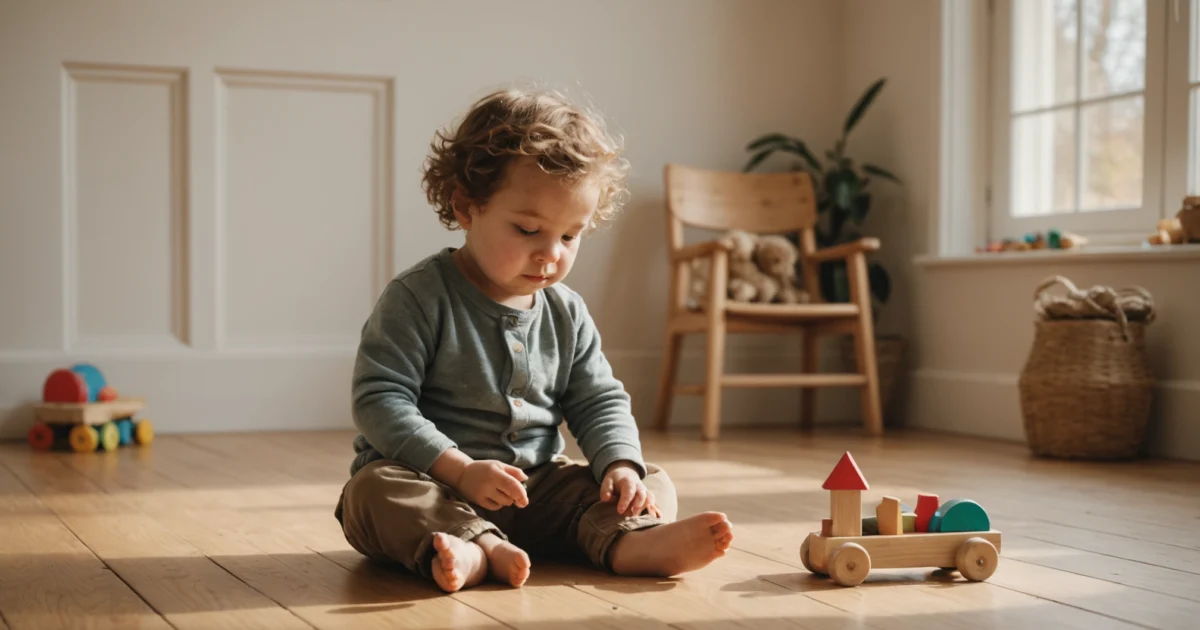
The Pikler approach is a respectful caregiving philosophy developed by Hungarian pediatrician Dr. Emmi Pikler that treats infants as competent individuals capable of natural development. This revolutionary method emerged in 1946 at the Lóczy Institute in Budapest, where Pikler observed that babies thrive when given freedom of movement, respectful care, and authentic relationships. Unlike traditional directive childcare methods, the Pikler approach emphasizes observing rather than teaching, allowing children to develop motor skills and independence at their own pace.
The philosophy centers on four core principles: respect for the child, quality caregiving through peaceful interactions, freedom of movement, and authentic relationship building. These interconnected elements create an environment where infants develop confidence, body awareness, and emotional security. Caregivers using this approach communicate with babies during routine activities, seek permission before handling them, and provide safe spaces for independent exploration rather than using restrictive equipment like walkers or bouncers.
Today, the Pikler approach influences childcare centers, preschools, and families worldwide who seek to honor children’s natural development timeline. Research supports its benefits for motor development, attachment formation, and self-regulation skills. Parents can implement Pikler principles at home by creating safe movement spaces, choosing appropriate toys, and adapting daily routines for respectful caregiving practices.
TL;DR
- The Pikler approach is a respectful caregiving philosophy created by Dr. Emmi Pikler that treats babies as competent individuals
- Four core principles include respect, quality caregiving, freedom of movement, and authentic relationships
- Benefits include enhanced motor development, stronger attachment, and improved self-regulation skills
What is the Pikler Approach: Definition and Origins
The Pikler approach represents a revolutionary caregiving philosophy that treats infants and toddlers as competent, capable individuals deserving of respect and autonomy. This methodology fundamentally transforms how adults interact with young children, emphasizing observation over intervention and trust in natural developmental processes. Unlike traditional childcare methods that prioritize adult-directed activities, the Pikler philosophy honors children’s innate wisdom and developmental timeline.
Dr. Emmi Pikler, a Hungarian pediatrician, developed this groundbreaking approach during the mid-20th century. Born in 1902, Pikler trained in Vienna and brought her medical expertise to Budapest, where she observed how respectful caregiving practices profoundly impacted infant development. Her background in pediatric medicine provided the scientific foundation for understanding child development, while her humanitarian values shaped the philosophical framework of respectful care.
The approach gained international recognition through the Lóczy Institute in Budapest, which Pikler established in 1946. Originally created as a residential nursery for orphaned and abandoned children, the institute became a living laboratory where Pikler’s theories were implemented and refined. Furthermore, decades of careful documentation at Lóczy demonstrated how respectful caregiving practices foster healthy development, emotional security, and strong attachment relationships even in institutional settings.
Central to the Pikler philosophy is the core belief in infant competence – the understanding that babies possess inherent capabilities and developmental wisdom. This perspective views children as active participants in their own growth rather than passive recipients of adult instruction. Consequently, caregivers adopting this approach trust children’s natural learning processes and provide supportive environments without forcing developmental milestones or motor skills.
The Pikler approach distinctly differs from traditional directive childcare methods through its emphasis on respectful interaction and peaceful caregiving. While conventional approaches often involve moving children into positions they cannot achieve independently or using equipment that restricts natural movement, Pikler methodology encourages free movement and exploration. Additionally, this philosophy prioritizes quality over quantity in caregiver interactions, focusing on meaningful connections during routine activities like feeding, diapering, and dressing.
Key Distinction
The Four Core Principles of Pikler Approach
The Pikler approach rests on four interconnected principles that form the foundation of respectful childcare. These principles guide caregivers in creating environments where children develop naturally while maintaining their dignity and autonomy. Understanding how these core concepts work together helps parents and educators implement this philosophy effectively.
Respect for the Child as a Complete Human Being
The first principle establishes that children deserve respect as whole individuals from birth. This fundamental concept means caregivers acknowledge infants as capable beings with their own preferences, rhythms, and developmental timelines. Rather than treating babies as objects to be managed, respectful caregiving involves communicating intentions, asking permission before handling, and honoring children’s responses.
Respectful interaction manifests through simple yet profound practices. For instance, caregivers tell children what will happen before picking them up, changing their diaper, or moving them to different positions. This communication demonstrates that children’s consent matters even when they cannot verbally respond. Additionally, respectful caregivers wait for children’s cooperation rather than forcing compliance during routine activities.
Quality Caregiving Through Peaceful Interactions
The second principle emphasizes quality over quantity in caregiver-child interactions. Peaceful caregiving involves being fully present during routine activities like feeding, diapering, and dressing. These moments become opportunities for meaningful connection rather than tasks to complete quickly. Consequently, children experience security and develop trust through these unhurried, attentive interactions.
Peaceful caregiving requires caregivers to slow down and focus entirely on the child during care routines. This approach contrasts sharply with multitasking or rushing through necessary activities. Moreover, quality interactions during these intimate moments provide children with the emotional nourishment they need for healthy psychological development.
Freedom of Movement and Natural Motor Development
The third principle supports unrestricted movement as essential for healthy physical and cognitive development. Children develop motor skills naturally when allowed to move freely without adult intervention or positioning devices. This freedom means avoiding equipment like walkers, bouncers, or seats that place children in positions they cannot achieve independently.
Natural motor development follows a predictable sequence when children have adequate space and appropriate surfaces for exploration. Babies progress from lying on their backs to rolling, sitting, crawling, and eventually walking without adult assistance. Furthermore, this self-directed movement builds confidence, body awareness, and problem-solving abilities that extend beyond physical skills.
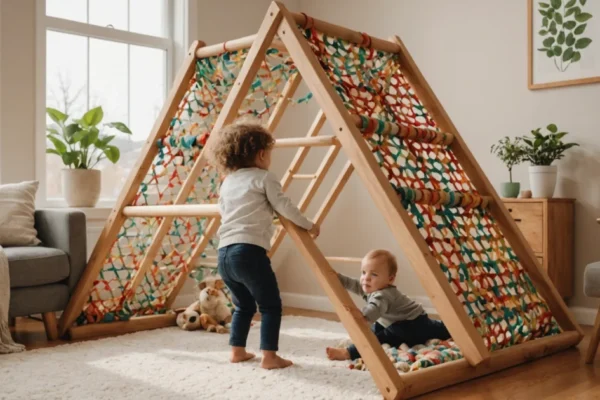
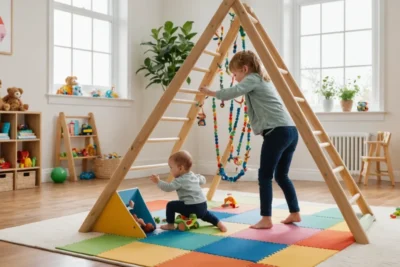
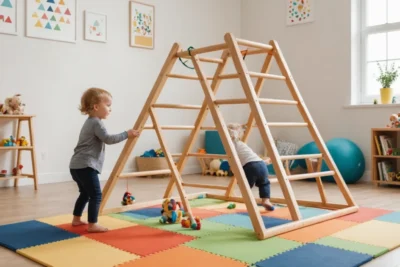
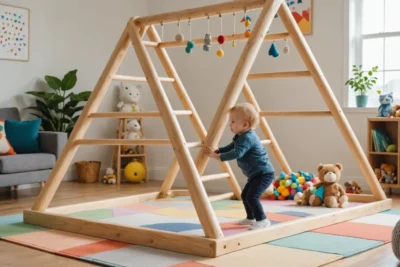
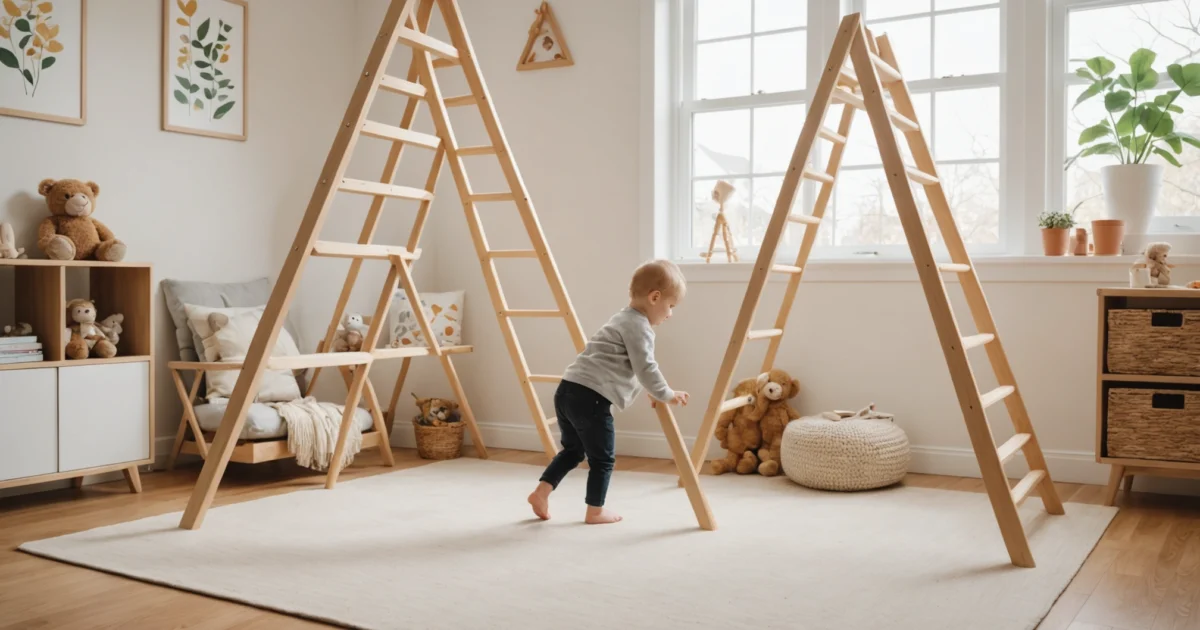
Safe environments support free movement by providing firm, flat surfaces and age-appropriate challenges. Pikler triangles exemplify equipment designed to encourage natural climbing and exploration while maintaining safety. These structures allow children to test their abilities and develop gross motor skills at their own pace.
Authentic Relationships and Trust-Building
The fourth principle focuses on developing authentic relationships between caregivers and children through consistent, responsive interactions. Trust builds when caregivers follow through on their words, maintain predictable routines, and respond sensitively to children’s cues. These secure relationships provide the emotional foundation necessary for healthy development and learning.
Authentic relationships require caregivers to be genuine in their interactions while maintaining appropriate boundaries. Children sense authenticity and respond positively to caregivers who are emotionally present and honest in their communication. Additionally, trust develops gradually through repeated positive experiences where children feel seen, heard, and valued.
Building Trust
How the Principles Interconnect
These four principles work synergistically to create a comprehensive approach to childcare. Respect forms the foundation that makes peaceful caregiving possible, while freedom of movement demonstrates trust in children’s capabilities. Authentic relationships emerge naturally when all other principles are consistently applied.
The interconnected nature of these principles means that compromising one affects the others. For example, rushing through care routines undermines both peaceful caregiving and respectful interaction. Similarly, restricting movement contradicts respect for children’s natural development and can damage trust between caregiver and child.
Successfully implementing the Pikler approach requires understanding that all four principles must work together harmoniously. This holistic framework creates environments where children feel secure, respected, and free to develop according to their individual timelines and capabilities.
Respectful Caregiving and Communication
Respectful caregiving transforms routine activities into meaningful interactions that honor children’s dignity and autonomy. This fundamental aspect of the Pikler approach recognizes that every interaction between caregiver and child carries emotional significance and developmental impact.
Talking to Babies During Care Routines
Communication begins from birth, even when babies cannot yet respond verbally. Caregivers should narrate their actions during diaper changes, feeding, and dressing routines using calm, descriptive language. For example, saying “I’m going to lift your legs now to clean underneath” helps babies understand what’s happening and prepares them for physical contact.
This ongoing dialogue serves multiple purposes beyond simple explanation. Furthermore, it demonstrates respect for the child’s experience while building vocabulary and language comprehension. Research shows that babies who receive consistent verbal communication during care routines develop stronger language skills and emotional regulation abilities.
Asking Permission and Explaining Actions
Permission-seeking establishes consent patterns that honor children’s bodily autonomy from infancy. Before touching or moving a baby, caregivers should pause and explain their intentions, even waiting for acknowledgment when possible. This practice might involve saying “May I pick you up now?” and observing the child’s response.
While infants cannot verbally consent, they communicate through body language, facial expressions, and vocalizations. Consequently, caregivers learn to read these subtle signals and respond accordingly. This respectful approach builds trust and cooperation rather than compliance through force or surprise.
Observing and Responding to Infant Cues
Children constantly communicate their needs, preferences, and emotional states through non-verbal cues. Skilled caregivers develop the ability to interpret these signals accurately and respond appropriately. Signs of discomfort, hunger, tiredness, or overstimulation become clear when adults take time to observe carefully.
Responsive caregiving requires slowing down and paying attention to subtle changes in behavior or mood. Additionally, it means adjusting approaches based on individual children’s unique communication styles and preferences. Some babies prefer gentle touch, while others need more space during care routines.
Reading Infant Cues
Creating Predictable, Calm Caregiving Environments
Predictability provides emotional security that allows children to relax and cooperate during care routines. Caregivers should establish consistent sequences for activities like diaper changing, feeding, and bedtime preparation. This routine helps children anticipate what comes next and feel more in control of their experience.
Environmental factors significantly impact the quality of caregiving interactions. Moreover, quiet spaces with minimal distractions allow both caregiver and child to focus on the interaction. Soft lighting, comfortable temperatures, and organized supplies create peaceful atmospheres that support positive experiences.
Building Trust Through Consistent Interactions
Trust develops through repeated experiences of respectful, responsive caregiving over time. When caregivers consistently follow through on their words and respect children’s signals, secure relationships form naturally. This foundation of trust enables children to feel safe exploring their environment and developing independence.
Consistency extends beyond individual interactions to encompass the overall caregiving approach. Therefore, all caregivers in a child’s life should understand and practice the same respectful communication principles. This unified approach reinforces the child’s sense of security and helps them develop clear expectations for how they should be treated.
The long-term benefits of respectful caregiving extend far beyond early childhood. Children who experience consistent respect and clear communication develop stronger self-esteem, better social skills, and more positive relationships throughout their lives.
Free Movement and Natural Motor Development
The Pikler approach revolutionizes how we think about infant movement by prioritizing natural motor development over adult-directed activities. Dr. Emmi Pikler discovered that babies develop optimal gross motor skills when they move freely without external pressure or artificial assistance. This philosophy recognizes that each child possesses an innate capacity for movement exploration that unfolds according to their individual timeline.
Free movement begins from birth when caregivers allow infants to experience natural positioning and spontaneous movements. Instead of propping babies into sitting positions or encouraging premature walking, the Pikler method supports whatever developmental stage the child naturally occupies. Consequently, babies develop stronger core muscles, better balance, and more confident movement patterns when they progress through each motor milestone independently.
Creating Movement-Rich Environments
Safe exploration spaces form the foundation of natural motor development in Pikler-inspired environments. These areas feature soft surfaces, varied textures, and carefully selected objects that invite investigation without overwhelming the child. Furthermore, the environment should offer different levels and challenges that grow with the child’s developing abilities.
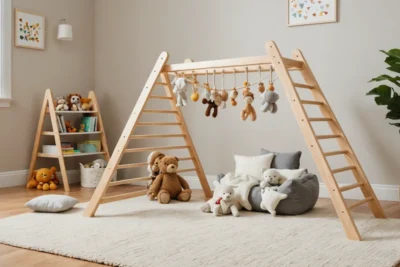
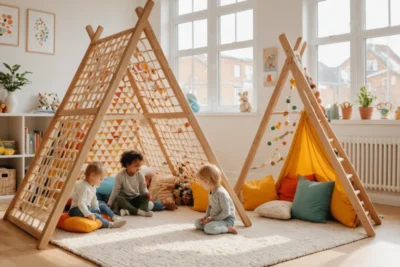
Pikler climbing furniture represents the most recognized element of movement-supportive environments. These wooden structures, including the famous Pikler triangle, provide graduated challenges that children can approach when they feel ready. Unlike traditional playground equipment, Pikler furniture scales appropriately for developing bodies and encourages self-directed exploration rather than adult-assisted play.
Movement Equipment to Avoid
Understanding Natural Motor Progression
Natural motor development follows a predictable sequence that unfolds without external intervention when children receive adequate movement opportunities. Babies typically progress from lying on their backs to rolling, then to sitting independently, crawling, pulling to stand, and eventually walking. However, each child moves through these stages at their own pace, and some may skip certain phases entirely.
The gross motor skills that emerge through free movement demonstrate remarkable efficiency and confidence. Children who develop movement patterns naturally show better balance, coordination, and body awareness compared to those who receive excessive adult assistance. Additionally, they develop problem-solving abilities as they figure out how to navigate physical challenges independently.
- Rolling develops core strength and spatial orientation
- Crawling integrates bilateral coordination and strengthens the whole body
- Pulling to stand builds leg strength and balance gradually
- Independent walking emerges when all systems are ready
The Role of Movement Toys and Materials
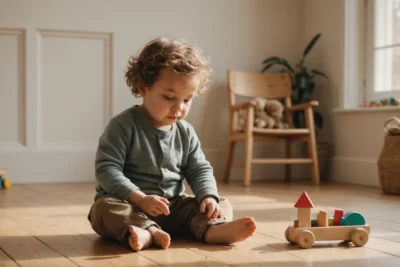
Carefully chosen movement toys support natural development without directing or limiting exploration. Simple objects like balls, scarves, and wooden blocks invite open-ended investigation that children can approach in multiple ways. These materials should be safe for independent exploration and offer varying textures, weights, and sizes to stimulate different sensory experiences.
Natural materials particularly support the Pikler philosophy because they provide authentic sensory feedback and connect children to the physical world. Wood, cotton, and other organic materials offer varied temperatures, textures, and weights that plastic alternatives cannot replicate. Moreover, these materials age gracefully and develop character through use, creating meaningful connections between child and object.
The absence of restrictive equipment allows children to experience their bodies’ full range of motion and develop proprioceptive awareness naturally. When babies spend time on firm surfaces without positioning devices, they learn to adjust their movements based on genuine physical feedback. This authentic learning process creates lasting foundations for lifelong movement confidence and body awareness.
Independent Play and Self-Directed Learning
Independent play forms the cornerstone of the Pikler approach, allowing infants to explore their environment without constant adult intervention. This uninterrupted exploration time enables children to develop self-regulation skills and discover their own capabilities through direct experience. When adults step back from entertaining or directing play, children naturally engage in deeper, more meaningful interactions with their surroundings.
The quality of uninterrupted time matters more than quantity in fostering genuine self-directed learning. Even brief periods of focused exploration can yield significant developmental benefits when children feel secure and unhurried. Therefore, creating predictable routines that include dedicated exploration time helps infants understand when they can engage in independent discovery.
Selecting Materials for Independent Exploration
Simple toys and materials invite open-ended exploration that children can approach according to their developmental needs and interests. Objects with multiple uses encourage creative thinking and problem-solving as children discover various ways to manipulate and interact with them. Furthermore, materials should be safe enough for completely independent use, eliminating the need for constant adult supervision.
Natural materials particularly support independent learning because they provide authentic sensory feedback and respond predictably to children’s actions. Wooden objects offer consistent weight and texture, while fabric items provide softness and flexibility that children can manipulate safely. Additionally, these materials require no batteries or complex mechanisms, allowing children to focus on their own actions rather than external stimulation.
- Wooden blocks of varying sizes and shapes
- Natural fiber balls and soft toys
- Simple containers for filling and emptying
- Textured fabrics and scarves
- Smooth stones or wooden rings (age-appropriate sizes)
The Adult as Observer and Supporter
Adults practicing the Pikler approach shift from being entertainers to becoming respectful observers who support children’s natural learning processes. This observational stance allows adults to recognize and respond to children’s genuine interests and developmental needs. However, observation requires active attention and presence, not passive disengagement from the child’s experience.
Responsive availability means being emotionally and physically present while allowing children to lead their own exploration. Adults remain ready to offer comfort, safety, or gentle interaction when children seek connection. Nevertheless, this availability doesn’t translate into constant intervention or direction of the child’s activities.
Skilled observation helps adults recognize when children need support versus when they benefit from working through challenges independently. Learning to distinguish between productive struggle and genuine distress requires practice and careful attention to each child’s unique communication patterns. Consequently, adults develop deeper understanding of individual children’s capabilities and preferences through this observational approach.
Developing Concentration and Focus
Sustained concentration develops naturally when children engage with materials that match their developmental level and interests. Uninterrupted exploration time allows children to enter flow states where they become completely absorbed in their activities. These concentrated periods build the foundation for later academic learning and creative pursuits.
Environmental factors significantly influence children’s ability to focus during independent play. Calm, predictable spaces with minimal distractions support deeper engagement than chaotic or overstimulating environments. Moreover, consistent routines help children understand when focused play time occurs, allowing them to settle into concentrated exploration more easily.
Supporting Focus Development
Balancing Independence with Connection
Successful implementation of independent play requires careful balance between fostering autonomy and maintaining emotional connection with children. Adults must remain emotionally available while resisting the urge to constantly engage or direct children’s activities. This balance supports both independence and secure attachment relationships.
Children naturally seek connection and interaction throughout their independent play, and responsive adults honor these bids for engagement without taking over the child’s experience. Brief moments of shared attention or gentle acknowledgment can strengthen connection while preserving the child’s sense of agency. Subsequently, children learn they can explore independently while maintaining their important relationships.
The rhythm of independence and connection varies for each child and changes throughout development. Some children require more frequent check-ins, while others prefer longer periods of uninterrupted exploration. Therefore, understanding developmental stages helps adults adjust their approach to match individual children’s needs for both autonomy and connection.
Pikler Approach vs Other Early Childhood Philosophies
The Pikler approach shares foundational principles with several early childhood philosophies while maintaining distinct characteristics that set it apart. Understanding these similarities and differences helps parents and educators choose methods that align with their values and children’s needs. Furthermore, comparing these approaches reveals how different philosophies address child development, autonomy, and caregiver relationships.
Comparison with RIE (Resources for Infant Educarers) Approach
The RIE approach, developed by Magda Gerber, draws heavily from Pikler’s work and shares many core principles. Both philosophies emphasize respectful caregiving, natural motor development, and treating infants as capable individuals. Additionally, RIE and Pikler both advocate for uninterrupted play time and minimal adult interference during children’s exploration.
However, RIE places greater emphasis on verbal communication with infants during caregiving routines. Gerber encouraged parents to narrate their actions and explain what they were doing to babies, while Pikler focused more on gentle, quiet presence. Moreover, RIE developed specific techniques for diaper changing and feeding that became more structured than Pikler’s original approach.
Both approaches reject baby equipment like walkers, jumpers, and positioning devices that interfere with natural development. Nevertheless, RIE has gained wider recognition in the United States, while Pikler’s influence remains stronger in European early childhood education systems.
Differences from Montessori Method in Infant Care
The Montessori method and Pikler approach share respect for children’s natural development but differ significantly in their implementation with infants and toddlers. Montessori emphasizes prepared environments with specific materials designed to teach particular skills, while Pikler advocates for simple, natural objects that children can explore freely. Consequently, Montessori environments often contain more structured learning materials than Pikler-inspired spaces.
Montessori education encourages children to choose from predetermined activities that adults have carefully arranged. In contrast, Pikler’s approach allows children to create their own activities with minimal adult preparation or intervention. This fundamental difference affects how adults structure children’s environments and daily experiences.
Additionally, Montessori methods often introduce formal lessons and demonstrations to young children, while Pikler strictly avoids teaching or showing children how to use objects. The observational methodology differs as well, with Montessori teachers observing to guide children toward specific learning objectives, whereas Pikler practitioners observe purely to understand and support natural development.
Contrast with Traditional Developmental Milestone Pushing
Traditional early childhood approaches often focus on accelerating development through exercises, equipment, and structured activities designed to help children reach milestones faster. These methods typically encourage parents to help babies sit, stand, or walk before they achieve these skills independently. Furthermore, conventional approaches frequently use developmental timelines as measures of success or concern.
The Pikler philosophy directly opposes milestone acceleration, instead trusting children’s internal developmental timeline. Pikler practitioners never place children in positions they cannot achieve independently, believing this interference disrupts natural learning patterns. Consequently, children following Pikler principles may appear to develop more slowly initially but often demonstrate greater coordination, confidence, and body awareness.
Traditional methods often create anxiety for parents when children don’t meet expected timelines, while Pikler’s approach reduces developmental pressure by focusing on individual readiness rather than age-based expectations. This difference fundamentally changes how families experience and celebrate their children’s growth.
Similarities with Attachment Parenting Principles
Attachment parenting and the Pikler approach both prioritize responsive, sensitive caregiving that builds secure relationships between children and adults. Both philosophies emphasize meeting children’s emotional needs promptly and treating them as individuals worthy of respect. Moreover, these approaches recognize the importance of consistent, predictable caregiving for healthy development.
However, attachment parenting often encourages more physical closeness and intervention than Pikler’s approach. While attachment parents might carry babies frequently or co-sleep, Pikler practitioners provide emotional availability while encouraging physical independence. This distinction creates different daily rhythms and interaction patterns between caregivers and children.
Both approaches reject punitive discipline methods and instead focus on understanding children’s needs and developmental stages. Nevertheless, Pikler’s emphasis on natural consequences and minimal intervention contrasts with attachment parenting’s focus on meeting every need immediately.
Unique Aspects of Pikler’s Observational Methodology
Pikler’s observational methodology stands apart from other early childhood approaches through its emphasis on pure observation without immediate intervention or interpretation. Practitioners spend significant time simply watching children without agenda, judgment, or the need to respond immediately. This patient observation reveals children’s natural learning processes and individual developmental patterns.
Unlike other approaches that use observation to assess progress or plan interventions, Pikler observation aims to understand each child’s unique way of being in the world. Observers document what they see without immediately categorizing behaviors as positive or negative, advanced or delayed. Subsequently, this non-judgmental observation builds deeper understanding of children’s capabilities and needs.
The methodology also emphasizes observing children’s emotional states and social interactions, not just physical development. Practitioners learn to recognize subtle cues about children’s comfort levels, interests, and readiness for new challenges. Therefore, this comprehensive observational approach informs all aspects of caregiving and environmental design, creating truly individualized support for each child’s development.
Implementing Pikler Approach at Home
Implementing the Pikler approach at home requires thoughtful preparation and gradual adaptation of your family’s environment and routines. Parents can successfully integrate Pikler principles without completely overhauling their lifestyle by focusing on key elements that support natural development and respectful caregiving.
Creating Safe Movement Spaces for Different Ages
Safe movement spaces form the foundation of Pikler implementation at home. For infants under 6 months, create a firm, flat surface on the floor using a blanket or play mat where babies can move freely without restrictive positioning devices. Additionally, ensure the space remains clear of small objects and provides adequate room for natural stretching and rolling movements.
Mobile infants between 6-12 months need expanded floor space with soft boundaries like low cushions or furniture edges. Remove coffee tables with sharp corners and secure loose rugs that might cause slipping. Furthermore, provide different textures and levels using firm pillows or low platforms that encourage crawling and eventual pulling to stand.
Toddlers require more complex movement environments that challenge their developing gross motor skills. Low climbing structures, balance beams made from wooden planks, and varied surfaces like grass, sand, or textured mats support natural movement development. However, always maintain clear sight lines and remove hazards while preserving appropriate challenges.
Selecting Pikler-Inspired Toys and Furniture
Pikler-inspired toys emphasize natural materials and open-ended play possibilities rather than electronic or overstimulating options. Wooden blocks, simple balls, scarves, and containers for filling and dumping align with Pikler principles by allowing children to explore at their own pace without predetermined outcomes.
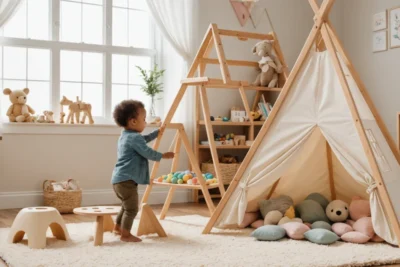
Furniture choices should support independent movement and self-care development. Low shelves enable children to access toys independently, while child-sized tables and chairs promote autonomy during meals and activities. Moreover, Pikler triangles and other climbing furniture provide structured movement challenges that develop coordination and confidence.
- Natural wooden toys without batteries or predetermined functions
- Baskets and containers for sorting and collecting activities
- Simple musical instruments like wooden shakers or bells
- Fabric squares and scarves for sensory exploration
- Low, stable furniture that children can navigate safely
Adapting Daily Routines for Respectful Caregiving
Respectful caregiving transforms routine activities into opportunities for connection and learning. During diaper changes, narrate your actions and wait for the child’s cooperation rather than rushing through the process. Tell the child what you’re doing and pause to allow their participation, even if it takes longer initially.
Mealtime becomes a collaborative experience when children participate in food preparation and self-feeding from an early age. Offer appropriate utensils and expect messes as part of the learning process. Similarly, dressing routines should include the child as an active participant rather than a passive recipient of care.
Sleep transitions benefit from consistent, calm routines that respect the child’s natural rhythms. Instead of forcing sleep, create peaceful environments and trust children’s ability to regulate their rest needs when possible. Consequently, this approach often leads to more cooperative and less stressful bedtime experiences.
Balancing Pikler Principles with Family Lifestyle
Successful Pikler implementation requires realistic adaptation to your family’s unique circumstances and values. Working parents can apply Pikler principles during available time without guilt about childcare arrangements that may not fully align with the approach. Focus on quality interactions during caregiving moments rather than perfect adherence to every principle.
Families with multiple children can adapt Pikler practices by creating individual spaces and times for each child while maintaining safety for all. Older siblings can learn to respect younger children’s movement spaces, and parents can model patient observation and respectful interaction across age groups.
Cultural considerations may require modifications to traditional Pikler practices while maintaining core principles of respect and natural development. For instance, families who prefer floor sleeping arrangements can still provide safe movement spaces, and those with limited space can create temporary play areas that transform throughout the day.
Common Challenges and Practical Solutions
Many parents struggle with patience during the observation phase, feeling compelled to intervene when children face minor challenges. Practice short periods of pure observation, gradually extending the time as you become more comfortable trusting children’s problem-solving abilities. Remember that struggle often precedes breakthrough moments in development.
Observation Practice
Safety concerns often conflict with allowing natural movement exploration. Address this by thoroughly childproofing movement areas while maintaining appropriate challenges. Soft surfaces under climbing equipment and careful hazard removal create safe environments for natural risk-taking and learning.
Extended family members may question Pikler approaches, particularly the emphasis on floor time and minimal equipment use. Educate relatives about the research supporting natural movement development and demonstrate how children thrive with respectful caregiving. Additionally, sharing articles from reputable sources like Resources for Infant Educarers can provide credible support for your parenting choices.
Time constraints in busy family schedules can make Pikler implementation feel overwhelming. Start with small changes like narrating diaper changes or providing floor time during one daily routine. Gradually expand Pikler practices as they become natural parts of your family rhythm rather than additional tasks to complete.
Benefits and Research Supporting Pikler Approach
The Pikler approach delivers measurable developmental benefits that extend far beyond early childhood. Research demonstrates how this respectful caregiving philosophy enhances multiple areas of child development through its emphasis on natural movement, authentic relationships, and responsive care.
Enhanced Motor Development and Body Awareness
Children following Pikler principles develop superior motor skills and spatial awareness compared to peers in traditional care settings. Natural movement progression allows infants to master each developmental stage thoroughly before advancing to the next. This methodical approach creates stronger foundational skills and reduces injury rates throughout childhood.
Body awareness flourishes when children move at their own pace without adult interference. Proprioceptive development strengthens as toddlers navigate challenges independently, building confidence in their physical capabilities. Furthermore, research shows Pikler-raised children demonstrate better balance, coordination, and risk assessment skills than their traditionally-raised counterparts.
Stronger Parent-Child Attachment and Trust
Respectful caregiving practices foster secure attachment relationships between parents and children. When caregivers narrate their actions during routine care and respond sensitively to infant cues, children develop deeper trust in their primary relationships. This foundation supports emotional regulation throughout life.
Communication patterns established through Pikler practices enhance parent-child bonds significantly. Children learn their voices matter when adults consistently acknowledge their preferences and feelings. Subsequently, these early communication experiences shape positive relationship patterns that extend into adolescence and adulthood.
Improved Self-Regulation and Emotional Development
Emotional intelligence develops naturally when children experience consistent, respectful interactions from birth. Pikler environments support emotional regulation by allowing children to process feelings without immediate adult intervention. This approach builds internal coping mechanisms rather than external dependency on adult soothing.
Self-regulation skills emerge through repeated opportunities to manage minor challenges independently. When toddlers work through frustration while attempting new movements, they develop resilience and persistence. Additionally, the predictable routines central to Pikler philosophy provide emotional security that supports healthy stress responses.
Greater Independence and Problem-Solving Skills
Children raised with Pikler principles demonstrate exceptional problem-solving abilities and creative thinking skills. Natural play environments encourage exploration and experimentation without predetermined outcomes. This freedom develops innovative thinking patterns that benefit academic and social success later in childhood.
Independence flourishes when children receive opportunities to make age-appropriate choices throughout their day. Simple decisions about which toy to explore or how to navigate a climbing challenge build decision-making confidence. Moreover, children learn to trust their instincts and capabilities rather than constantly seeking adult approval or direction.
Current Research and Longitudinal Studies
Recent longitudinal studies from European research institutions track Pikler-raised children into adolescence, revealing sustained benefits across multiple developmental domains. A comprehensive study from the Pikler Institute followed 200 children for fifteen years, documenting superior academic performance, emotional stability, and social competence compared to control groups.
Neurological research supports Pikler principles by demonstrating how respectful caregiving promotes healthy brain development. Studies using brain imaging technology show enhanced neural connectivity in regions responsible for executive function, emotional regulation, and spatial processing among children experiencing Pikler-based care.
Children in Pikler environments show 40% fewer behavioral challenges and 60% higher self-confidence ratings compared to traditional childcare settings
Contemporary research continues validating Emmi Pikler’s original observations through modern scientific methods. Attachment researchers document how respectful caregiving practices create secure relationships that buffer against stress throughout life. Meanwhile, motor development specialists confirm that natural movement progression produces stronger, more coordinated children with fewer injuries during active play.
Pikler Approach in Childcare and Educational Settings
Professional childcare centers increasingly adopt Pikler methodology to create environments that honor children’s natural development while meeting regulatory requirements. However, implementing this approach in group settings requires careful consideration of space design, caregiver training, and administrative support.
Implementation in Daycare Centers and Preschools
Successful Pikler implementation begins with environmental modifications that support free movement and independent exploration. Centers typically create mixed-age play areas where children interact naturally across developmental stages. Furthermore, furniture arrangements prioritize low, accessible storage and open floor spaces for uninterrupted motor development.
Daily schedules in Pikler-based centers emphasize unhurried care routines that allow individual attention during diaper changes, feeding, and transitions. Additionally, programs eliminate structured group activities in favor of self-directed play periods where children choose their engagement level and duration.
Training Requirements for Pikler-Based Caregivers
Comprehensive training programs prepare educators to observe children’s natural rhythms and respond appropriately to individual needs. Caregivers learn to distinguish between helpful intervention and unnecessary assistance, developing skills in respectful communication and patient observation.
- Minimum 40 hours initial Pikler methodology training
- Ongoing supervision with certified Pikler practitioners
- Regular reflection sessions on caregiving interactions
- Documentation training for developmental observations
- Conflict resolution techniques for group dynamics
Training emphasizes the caregiver’s role as a secure base rather than an entertainer or director. Moreover, educators practice maintaining calm presence during challenging behaviors while supporting children’s emotional expression and problem-solving attempts.
Adapting Approach for Group Care Environments
Group care settings modify Pikler principles to accommodate multiple children while preserving individual attention during care routines. Consequently, centers often implement primary caregiver systems where specific adults handle intimate care tasks for consistent children throughout their enrollment period.
Space design becomes crucial for supporting natural movement patterns without compromising safety regulations. Therefore, successful programs create graduated challenge environments with varying difficulty levels that children can explore according to their current capabilities and confidence.
Group Implementation Strategy
Benefits for Children with Special Needs
Children with developmental delays or disabilities particularly benefit from Pikler’s respectful approach, which honors their unique timelines and capabilities. Research demonstrates that children with autism spectrum disorders show improved self-regulation and reduced anxiety in Pikler environments compared to traditional structured programs.
The approach’s emphasis on natural movement progression supports children with motor challenges by allowing them to develop strength and coordination at their own pace. Additionally, the predictable, calm environment reduces sensory overwhelm for children with processing differences.
Children with special needs show 50% greater improvement in self-help skills when cared for using Pikler principles
Integration with Evidence-Based Practices
Contemporary early childhood programs successfully combine Pikler methodology with other research-supported approaches like Reggio Emilia documentation practices and responsive teaching strategies. This integration creates comprehensive programs that address cognitive, social, and emotional development while maintaining Pikler’s core respect for children’s autonomy.
Quality rating systems increasingly recognize Pikler practices as indicators of developmentally appropriate care. Furthermore, programs report higher parent satisfaction and lower staff turnover when implementing respectful caregiving approaches that reduce stress for both children and adults.
Professional organizations like the National Association for the Education of Young Children endorse Pikler principles as evidence-based practices that support optimal child development outcomes. Consequently, more teacher preparation programs include Pikler methodology in their curriculum to prepare future educators for respectful, relationship-based caregiving.
Frequently Asked Questions
What is the Pikler approach?
The Pikler approach is a respectful caregiving philosophy developed by Hungarian pediatrician Dr. Emmi Pikler that treats infants and toddlers as competent, capable individuals. This revolutionary method emphasizes observing rather than teaching, allowing children to develop motor skills and independence at their own natural pace while building authentic relationships with caregivers.
Who created the Pikler approach and when?
Dr. Emmi Pikler, a Hungarian pediatrician born in 1902, developed this approach during the mid-20th century. She established the Lóczy Institute in Budapest in 1946, where her theories were implemented and refined through decades of careful observation and documentation.
What are the four core principles of the Pikler approach?
The Pikler approach is built on four interconnected principles:
- Respect for the child as a competent individual
- Quality caregiving through peaceful, mindful interactions
- Freedom of movement without restrictive equipment
- Authentic relationship building between caregiver and child
How does the Pikler approach differ from traditional childcare methods?
Unlike traditional directive childcare that prioritizes adult-directed activities, the Pikler approach emphasizes observation over intervention and trusts in natural developmental processes. Caregivers communicate with babies during routine activities, seek permission before handling them, and avoid using restrictive equipment like walkers or bouncers.
What are the benefits of using the Pikler approach?
Research supports numerous benefits of the Pikler approach, including:
- Enhanced motor development and body awareness
- Stronger attachment formation and emotional security
- Improved self-regulation skills and confidence
- Greater independence and problem-solving abilities
- Reduced anxiety and increased resilience
How can parents implement the Pikler approach at home?
Parents can adopt Pikler principles by creating safe movement spaces for independent exploration, choosing age-appropriate toys that encourage natural development, and adapting daily routines for respectful caregiving practices. This includes communicating with babies during diaper changes, allowing uninterrupted floor time, and avoiding baby equipment that restricts movement.
What is the Lóczy Institute and why is it important?
The Lóczy Institute in Budapest was established by Dr. Pikler in 1946 as a residential nursery for orphaned and abandoned children. It became a living laboratory where Pikler’s theories were implemented and refined, demonstrating how respectful caregiving practices foster healthy development even in institutional settings.
What does “infant competence” mean in the Pikler approach?
Infant competence is the core belief that babies possess inherent capabilities and developmental wisdom. This perspective views children as active participants in their own growth rather than passive recipients of adult instruction, trusting their natural learning processes and developmental timeline.
Is the Pikler approach suitable for all children?
The Pikler approach is universally applicable as it respects each child’s individual developmental pace and needs. The philosophy can be adapted for children with various abilities and circumstances, making it suitable for diverse family situations and childcare environments worldwide.
What equipment should be avoided in the Pikler approach?
The Pikler approach recommends avoiding restrictive baby equipment such as walkers, bouncers, high chairs for extended periods, and other devices that limit natural movement. Instead, it emphasizes providing safe, open spaces where babies can move freely and explore independently.
How does the Pikler approach support emotional development?
Through authentic relationship building and respectful interactions, the Pikler approach supports emotional development by creating secure attachments, building trust between caregiver and child, and fostering emotional regulation skills. Children develop confidence and resilience when their autonomy and competence are consistently respected.
Can the Pikler approach be used in daycare centers and schools?
Yes, the Pikler approach influences childcare centers, preschools, and educational institutions worldwide. Many programs adapt Pikler principles by creating environments that honor children’s natural development, implementing respectful caregiving practices, and training staff in observation-based rather than directive teaching methods.
You May Also Like
Why Are Pikler Triangles So Expensive? Cost Breakdown 2026
Pikler Triangle Height Guide: Age-Appropriate Sizes & Safety