Pikler Triangle Age Guide: When Kids Can Start & Stop Using

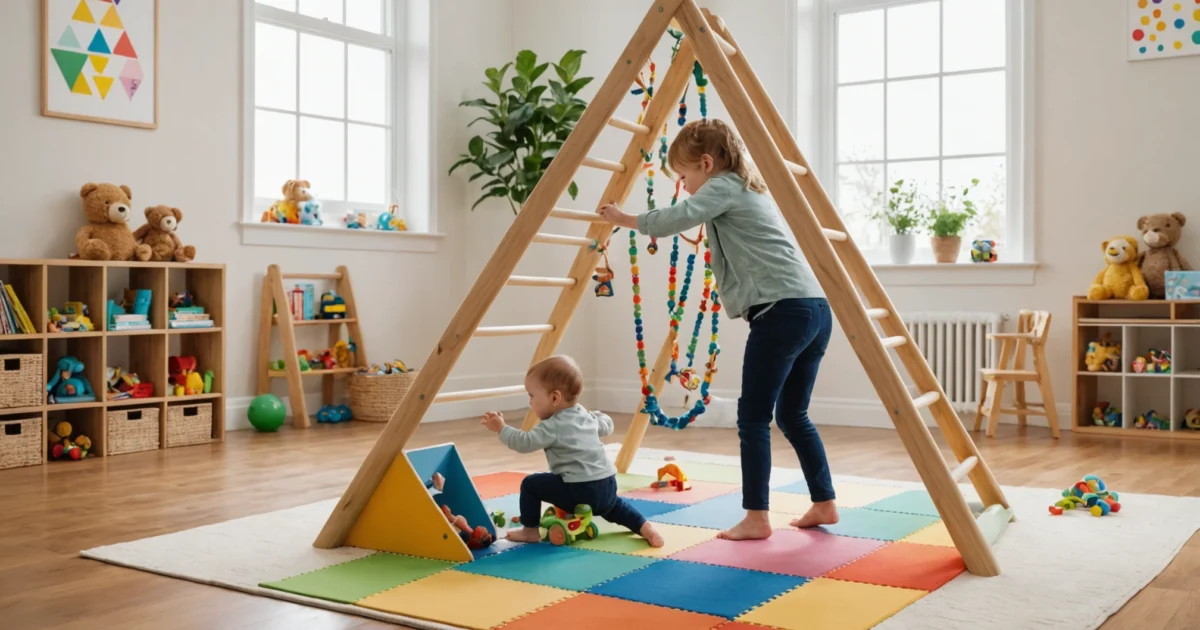
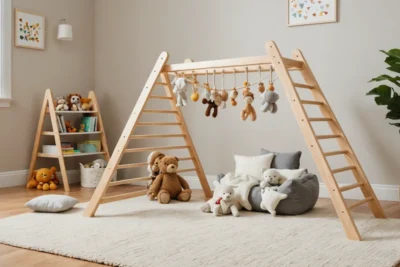
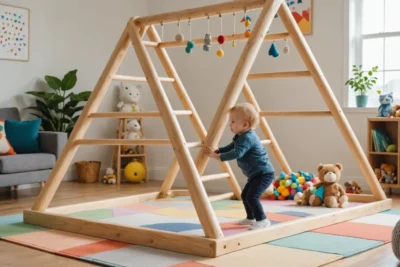
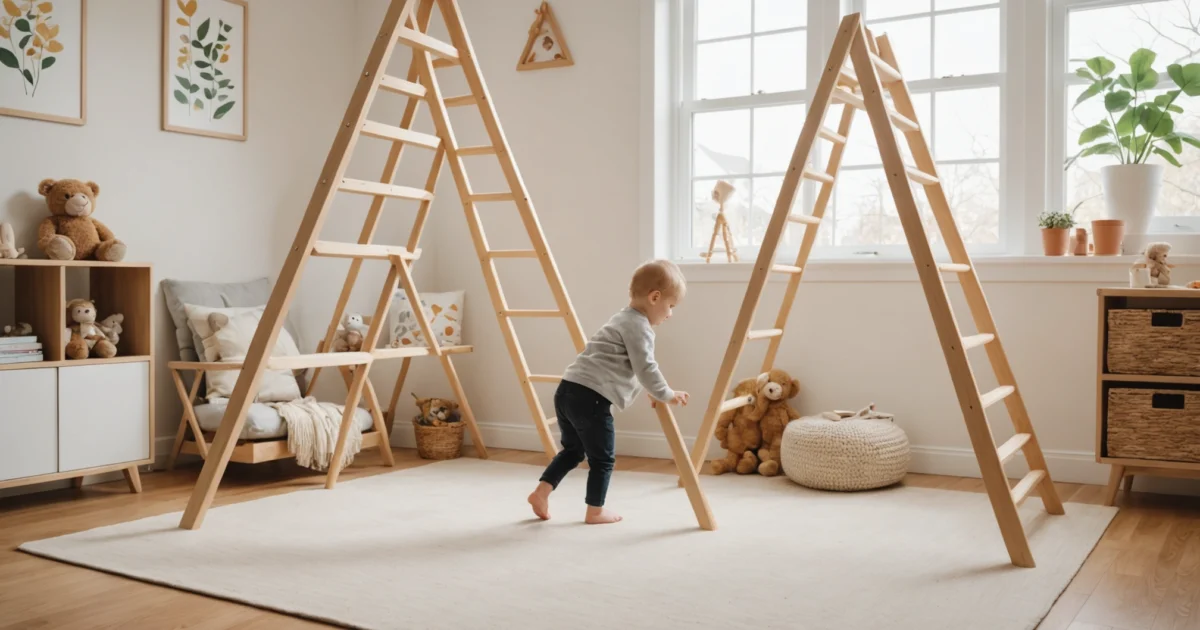
What age for pikler triangle use typically ranges from 6 months to 6 years, with the ideal starting point being when babies can sit independently and show interest in pulling themselves up. Most children experience peak benefits between 12 months and 4 years when their climbing abilities and gross motor skills are rapidly developing. However, the exact timing depends on your child’s individual developmental readiness rather than strict age guidelines.
The key is observing your child’s physical development milestones and interest in vertical movement. Furthermore, babies who can sit without support and demonstrate pulling-to-stand behaviors are typically ready to begin supervised exploration. Meanwhile, toddlers and preschoolers continue benefiting from increasingly complex climbing challenges that support their growing coordination and confidence.
Understanding the developmental readiness signs helps parents introduce this Montessori-inspired climbing tool safely and effectively. Additionally, proper timing ensures maximum benefits for gross motor development, spatial awareness, and independent play skills throughout your child’s early years.
TL;DR
- Age range: 6 months to 6 years, with peak usage from 12 months to 4 years
- Starting signs: Independent sitting, pulling to stand, and interest in vertical surfaces
- Individual readiness: Physical development matters more than exact age milestones
- Safety first: Constant supervision for infants, gradual independence for older children
Recommended Age Range for Pikler Triangle Use
The primary age range for Pikler triangle use spans from 6 months to 6 years, though individual developmental variations significantly influence the optimal timing. Consequently, parents should prioritize their child’s physical readiness over strict chronological age markers when determining introduction timing.
Starting Age Considerations
Babies typically become ready for Pikler triangle exploration when they achieve independent sitting and demonstrate pulling-up behaviors. Moreover, these developmental milestones usually emerge between 6 to 9 months, marking the earliest safe introduction period for supervised climbing activities.
Physical readiness indicators include sitting without support for several minutes, showing interest in vertical surfaces, and attempting to pull themselves upward on furniture. Additionally, babies must display sufficient core strength and balance control before beginning their climbing journey safely.
Peak Usage Period
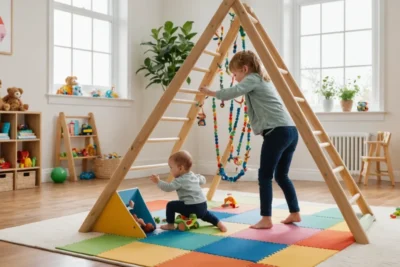
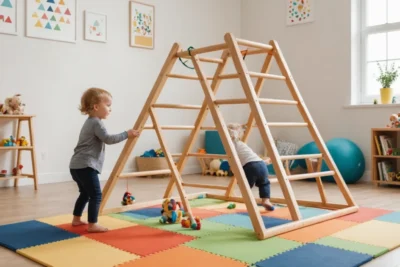
Most children experience their peak usage period between 12 months to 4 years when climbing abilities and gross motor coordination rapidly advance. During this timeframe, toddlers develop the strength, balance, and confidence necessary for increasingly complex climbing challenges.
| Age Range | Typical Activities | Development Focus |
|---|---|---|
| 12-18 months | Basic climbing, crawling through | Balance and coordination |
| 18-24 months | Climbing over, sliding down | Spatial awareness |
| 2-3 years | Complex movements, creative play | Problem-solving skills |
| 3-4 years | Advanced climbing patterns | Physical confidence |
Furthermore, this peak period coincides with natural curiosity about physical challenges and the development of risk assessment abilities. Toddlers during this stage benefit most from the open-ended exploration that Pikler triangles provide.
Extended Use Through Preschool Years
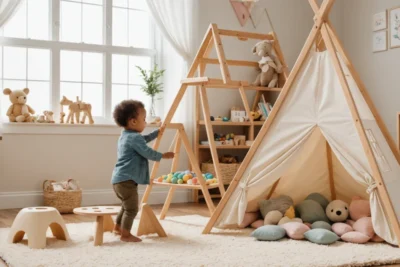
Preschool children from 4 to 6 years continue benefiting from Pikler triangle use through increasingly sophisticated gross motor challenges. Nevertheless, their play patterns shift toward imaginative scenarios where the triangle becomes a fort, mountain, or obstacle course component.
Extended use supports advanced motor planning, creative problem-solving, and physical confidence building. Additionally, older children often combine multiple climbing structures or add accessories to create more complex play environments that challenge their developing abilities.
Age Flexibility Tip
Developmental Readiness Signs by Age
Understanding developmental readiness helps parents determine when their child can safely explore climbing activities. Moreover, recognizing these milestones ensures that Pikler triangle introduction aligns with natural motor development progression.
6-12 Months: Foundation Building
Infants demonstrate readiness through independent sitting and pulling themselves to standing positions. Additionally, babies show curiosity about vertical surfaces by touching walls, furniture edges, and exploring upright objects with their hands.
During this phase, core strength develops rapidly while balance coordination improves significantly. Furthermore, infants begin understanding spatial relationships between their bodies and surrounding structures, preparing them for future climbing challenges.
12-18 Months: Early Climbing Attempts
Confident walking marks the transition into active climbing exploration for most toddlers. Subsequently, children attempt climbing on furniture, stairs, and low structures as their leg strength and coordination advance.
Toddlers display increased determination when facing physical obstacles during this period. Meanwhile, their risk assessment abilities begin developing, though supervision remains essential for safe exploration activities.
18 Months-3 Years: Active Climbing Phase
Children actively seek physical challenges and demonstrate improved balance coordination during complex movements. Therefore, this period represents optimal timing for introducing structured climbing equipment like Pikler triangles.
Enhanced motor planning allows toddlers to navigate increasingly difficult climbing patterns. Additionally, their spatial awareness expands significantly, enabling them to assess distances, heights, and movement sequences more accurately than younger children.
Readiness Indicator
3-6 Years: Advanced Motor Skills
Preschoolers develop complex climbing patterns that incorporate creative problem-solving and advanced motor coordination. Consequently, they use Pikler triangles for imaginative play scenarios while continuing to build physical confidence.
Advanced users demonstrate sophisticated movement sequences and often combine multiple structures for enhanced challenges. Furthermore, their improved risk assessment abilities allow for more independent exploration while maintaining appropriate safety awareness.
During this stage, children benefit from understanding the educational philosophy behind Pikler equipment as they engage in increasingly complex play patterns. Nevertheless, the triangle continues supporting their developing gross motor skills and creative expression throughout the preschool years.
Safety Considerations Across Different Ages
Safety requirements evolve significantly as children develop their motor skills and risk assessment abilities. Therefore, parents must adapt their supervision strategies and environmental setups to match each developmental stage appropriately.
Infants (6-12 Months): Foundation Safety
Constant supervision remains absolutely essential during initial exploration phases when infants lack developed spatial awareness. Moreover, caregivers should position themselves within arm’s reach to provide immediate assistance during climbing attempts.
Triangle settings require lower configurations to minimize fall distances and reduce injury risks. Additionally, the climbing angle should remain gentle to accommodate limited motor coordination and balance abilities.
Soft landing surfaces become critical safety elements that absorb impact energy during inevitable falls. Furthermore, thick play mats, foam padding, or carpeted areas provide essential cushioning beneath and around the climbing structure.
Toddlers (1-3 Years): Active Supervision
Close supervision transitions from constant physical proximity to attentive monitoring as toddlers develop improved balance and coordination. Nevertheless, caregivers must remain ready to intervene when children attempt movements beyond their current abilities.
Teaching safe climbing techniques helps establish proper movement patterns and body positioning during ascent and descent activities. Consequently, children learn to test handholds, maintain three-point contact, and control their descent speed effectively.
Challenge Level Balance
Preschoolers (3-6 Years): Independent Risk Assessment
Developing independent risk assessment allows preschoolers to evaluate climbing challenges and make informed decisions about their physical capabilities. However, safety boundaries must remain clearly established to prevent overconfident behavior.
Children demonstrate improved self-regulation abilities during this stage, recognizing when they feel uncertain or uncomfortable with specific movements. Additionally, they begin understanding consequences and can communicate their concerns effectively to caregivers.
Supervision evolves into environmental monitoring where adults ensure safe conditions while allowing children greater autonomy in their climbing decisions. Furthermore, this approach supports confidence building while maintaining appropriate safety oversight.
Universal Safety Rules
Proper assembly ensures structural integrity and prevents equipment failure during active use. Moreover, parents should regularly inspect all connections, joints, and hardware for signs of wear or loosening.
- Weight limits must never be exceeded to prevent structural damage
- Surface considerations include level placement and adequate clearance space
- Environmental setup removes hazards like sharp corners or hard surfaces nearby
- Regular maintenance includes checking for splinters, loose screws, or damaged components
Additionally, weather conditions affect safety when using triangles outdoors, as wet surfaces increase slip risks and extreme temperatures may affect material properties. Therefore, environmental assessment becomes part of pre-use safety checks.
Emergency preparedness includes having first aid supplies readily available and establishing clear protocols for injury response. Furthermore, teaching children basic safety communication helps them alert adults when problems arise during independent play sessions.
Age-Specific Benefits and Motor Development
Each developmental stage brings unique advantages when children interact with climbing structures. Furthermore, understanding these age-specific benefits helps parents maximize their investment while supporting optimal motor skill progression.
Early Infancy Benefits (6-12 Months)
Core muscle strengthening occurs naturally as infants pull themselves up using the triangle’s lower rungs. Additionally, this foundational movement pattern develops the deep stabilizing muscles essential for future mobility milestones.
Spatial awareness development emerges as babies explore different angles and positions around the structure. Moreover, they begin understanding their body’s relationship to objects in three-dimensional space, which supports cognitive mapping abilities.
Movement encouragement happens organically as the triangle’s design invites exploration without forcing specific actions. Consequently, infants develop intrinsic motivation for physical activity that continues throughout childhood.
Toddler Advantages (12-24 Months)
Gross motor skill refinement accelerates as toddlers master climbing, balancing, and transitioning between different positions. Furthermore, these complex movements integrate multiple muscle groups while improving coordination patterns.
Confidence building occurs through repeated successful attempts at increasingly challenging movements. Additionally, toddlers develop self-efficacy as they overcome physical obstacles independently.
Independent play development flourishes when children can safely explore without constant adult intervention. Therefore, parents observe increased focus and problem-solving abilities during extended play sessions.
Preschooler Gains (2-5 Years)
Complex motor planning emerges as children sequence multiple movements to achieve specific goals. Moreover, they begin anticipating the physical requirements of different climbing routes before attempting them.
Physical problem-solving develops when preschoolers encounter obstacles that require creative movement solutions. Consequently, they learn to adapt their approach based on their current physical capabilities and environmental conditions.
Creative play integration transforms the triangle into various imaginative scenarios, from mountain climbing to fort building. Additionally, this flexibility supports cognitive development while maintaining physical engagement.
Long-Term Developmental Impact
Coordination improvements compound over years of regular use, creating fluid movement patterns that transfer to sports and daily activities. Furthermore, children who use climbing structures consistently show superior proprioceptive awareness compared to their peers.
Balance development progresses from basic stability to dynamic equilibrium across various surfaces and positions. Moreover, this enhanced balance reduces injury risk during other physical activities throughout childhood and adolescence.
Body awareness cultivation helps children understand their physical capabilities and limitations accurately. Therefore, they make safer decisions during play while pushing appropriate boundaries for continued growth and development.
Children who regularly use climbing structures show 40% better proprioceptive awareness than peers who don’t engage in similar activities.
Choosing the Right Time to Introduce
Determining the optimal introduction timing requires careful observation of your child’s unique developmental trajectory. Individual readiness indicators vary significantly between children, even within the same age range. Therefore, parents must assess multiple factors before making this important decision.
Observing Physical Development and Interest
Physical development milestones provide the foundation for safe triangle exploration. Pulling to stand represents the minimum motor skill requirement, typically emerging around 9-12 months. However, sustained standing balance and confident cruising indicate better readiness for climbing activities.
Interest levels manifest through specific behaviors that signal climbing readiness. Children who attempt to scale furniture, stairs, or playground equipment demonstrate natural climbing motivation. Additionally, those who show persistence when encountering physical challenges typically adapt well to triangle exploration.
Attention span directly correlates with safe triangle use, as sustained focus prevents impulsive movements. Moreover, children who can follow simple safety instructions show greater readiness for supervised climbing sessions.
Environmental Considerations
Space requirements significantly impact introduction timing and success rates. Adequate floor space around the triangle prevents injury during falls while allowing natural movement patterns. Furthermore, ceiling height must accommodate the triangle’s dimensions plus additional clearance for safety.
Supervision availability determines when parents can safely introduce triangle activities. Consistent adult presence during initial sessions ensures immediate intervention when needed. Consequently, families with limited supervision time may need to delay introduction until circumstances improve.
Sibling dynamics influence introduction timing, particularly when multiple children share play spaces. Older siblings may inadvertently encourage premature climbing attempts in younger children. Therefore, parents must consider age gaps and individual temperaments when planning introduction schedules.
Gradual Introduction Strategy
Supervised exploration begins with simple interactions that build familiarity and confidence. Initial sessions should focus on touching, crawling under, and standing beside the triangle. Subsequently, children naturally progress to more complex movements as comfort levels increase.
- Allow exploration of the triangle while it’s lying flat on the ground
- Introduce the triangle at its lowest setting with constant supervision
- Gradually increase height as confidence and skills develop
- Extend independent play time as safety awareness improves
Independence building occurs through systematic reduction of adult intervention over time. Parents initially provide physical support and verbal guidance during climbing attempts. Eventually, children develop autonomous decision-making skills regarding their climbing capabilities and safety limits.
Readiness Signs vs. Warning Indicators
Pros
- Pulls to stand confidently without assistance
- Shows interest in climbing furniture or stairs
- Follows simple safety instructions consistently
- Demonstrates good balance during standing play
- Exhibits persistence when facing physical challenges
Cons
- Frequently falls during standing activities
- Shows no interest in climbing or physical challenges
- Cannot follow basic safety directions
- Displays impulsive behavior during active play
- Lacks sufficient attention span for structured activities
Positive readiness signs indicate that children possess the foundational skills necessary for safe triangle use. These indicators suggest that introduction will likely succeed with appropriate supervision and gradual progression.
Warning indicators suggest that children may benefit from additional development time before triangle introduction. Waiting until these concerns resolve prevents negative experiences that could discourage future climbing activities. Furthermore, premature introduction may increase injury risk and create anxiety around physical challenges.
Professional pediatric occupational therapists recommend waiting if children show multiple warning indicators simultaneously. Assessment by qualified professionals can provide personalized guidance when parents feel uncertain about readiness timing.
Maximizing Age-Appropriate Use
Successful Pikler triangle adaptation requires ongoing adjustments that match children’s evolving developmental capabilities. Moreover, thoughtful modifications ensure that this climbing structure remains engaging and appropriately challenging throughout different growth phases.
Adapting Triangle Configuration for Different Developmental Stages
Developmental stage adaptation involves systematic configuration changes that align with children’s growing physical and cognitive abilities. Initially, toddlers benefit from the triangle positioned at its lowest height setting with additional floor padding for safety. Subsequently, preschoolers can handle moderate height increases that introduce new climbing challenges without overwhelming their capabilities.
Triangle positioning creates different difficulty levels that support progressive skill development. Furthermore, angle adjustments allow parents to customize the climbing experience based on individual comfort levels and abilities. Configuration flexibility ensures that the same equipment serves multiple developmental purposes over time.
| Age Range | Optimal Configuration | Key Focus Areas |
|---|---|---|
| 12-18 months | Lowest setting, flat placement | Crawling, pulling up, basic exploration |
| 18-24 months | Low angle, close supervision | Stepping up, balance development |
| 2-3 years | Medium angle, extended play | Climbing coordination, independence |
| 3-5 years | Variable angles, creative use | Complex movements, problem-solving |
Incorporating Accessories and Modifications as Children Grow
Accessory integration transforms basic triangle structures into comprehensive play systems that evolve with children’s interests. Additionally, climbing ramps, slides, and fabric attachments create new movement opportunities that maintain engagement over extended periods.
Modification strategies include adding textured grips for enhanced stability and removable platforms for varied climbing experiences. Accessory rotation prevents boredom while introducing fresh challenges that support continued skill development. Parents can introduce new elements gradually to avoid overwhelming children with too many options simultaneously.
- Climbing ramps for gentler ascent options
- Fabric drapes for imaginative play integration
- Balance beams for advanced coordination challenges
- Storage nets for toy organization and climbing practice
- Removable steps for customized difficulty levels
Transitioning from Assisted to Independent Use
Independence transition occurs through gradual reduction of adult support while maintaining appropriate safety oversight. Initially, parents provide physical assistance and constant verbal guidance during climbing attempts. However, children progressively develop autonomous decision-making abilities regarding their climbing capabilities and safety awareness.
Transition timing varies significantly based on individual development patterns and comfort levels with physical challenges. Supervised independence allows children to explore their limits while adults remain nearby for emergency intervention. This approach builds confidence while maintaining essential safety protocols throughout the learning process.
Independence Indicators
Recognizing When Children Have Outgrown the Triangle
Outgrowth recognition requires careful observation of children’s engagement levels and physical relationship with the climbing structure. Typically, children begin showing disinterest when the triangle no longer provides adequate physical challenges for their advanced capabilities.
Physical indicators include easy completion of all climbing variations without effort or excitement. Additionally, children may begin using the triangle inappropriately or seeking more challenging climbing opportunities elsewhere. Transition timing usually occurs between ages 5-7, depending on individual development and available alternatives.
Alternative considerations include larger climbing structures, outdoor playground equipment, or organized sports activities that provide age-appropriate physical challenges. Furthermore, many families successfully transition to more complex climbing systems that accommodate older children’s advanced motor skills and adventure-seeking behaviors.
Most children naturally outgrow Pikler triangles between ages 5-7, transitioning to more complex climbing challenges that match their advanced physical capabilities.
Frequently Asked Questions
What is the best age to start using a Pikler triangle?
The best age to start using a Pikler triangle is typically between 6 to 9 months when babies can sit independently and show interest in pulling themselves up. However, individual developmental readiness is more important than exact age. Look for signs like sitting without support, attempting to pull up on furniture, and showing curiosity about vertical surfaces.
How long can children use a Pikler triangle?
Children can typically use a Pikler triangle from 6 months to 6 years old. The peak usage period is between 12 months and 4 years when climbing abilities and gross motor skills are rapidly developing. Preschoolers continue to benefit through imaginative play and advanced motor challenges.
What developmental signs indicate my baby is ready for a Pikler triangle?
Key readiness signs include:
- Sitting independently without support for several minutes
- Pulling themselves up on furniture or other surfaces
- Showing interest in vertical movement and climbing
- Demonstrating sufficient core strength and balance control
- Curiosity about exploring different heights and angles
Is constant supervision required when using a Pikler triangle?
Yes, constant supervision is essential for infants and young toddlers using a Pikler triangle. As children develop confidence and climbing skills, they can gradually gain more independence, but adult supervision should always be nearby, especially for children under 2 years old.
What skills does a Pikler triangle help develop?
A Pikler triangle supports multiple developmental areas:
- Gross motor skills through climbing and movement
- Balance and coordination as children navigate different angles
- Spatial awareness by understanding body position in space
- Problem-solving abilities through movement planning
- Physical confidence and risk assessment skills
- Independent play and self-directed exploration
Can my 6-month-old baby safely use a Pikler triangle?
A 6-month-old can begin using a Pikler triangle only if they meet specific developmental milestones and with constant adult supervision. The baby must be able to sit independently and show interest in pulling up. Start with the lowest setting and allow only supervised exploration of crawling through or around the base.
How do toddlers typically use a Pikler triangle differently than babies?
Toddlers (12-24 months) use Pikler triangles more actively than babies. They can climb over the structure, slide down, and navigate complex movements. Their play focuses on developing spatial awareness and problem-solving skills, while babies primarily explore crawling through and basic pulling-up movements.
What activities can preschoolers do with a Pikler triangle?
Preschoolers (3-6 years) use Pikler triangles for imaginative play and advanced physical challenges. They might turn it into a fort, mountain, or obstacle course component. They can combine multiple structures, add accessories, and create complex play scenarios that challenge their developing motor planning and creativity.
Should I wait until my child can walk to introduce a Pikler triangle?
No, you don’t need to wait until walking. Babies can safely begin using a Pikler triangle before walking, as long as they can sit independently and show pulling-up behaviors. The triangle actually supports the development of skills that contribute to walking readiness, including balance, coordination, and leg strength.
How do I know if my child has outgrown their Pikler triangle?
Children typically outgrow a Pikler triangle when they lose interest in climbing challenges and prefer other physical activities, usually around 5-6 years old. However, many children continue using it for imaginative play or as part of obstacle courses even beyond the traditional age range. The key is whether it still provides developmental benefits and engagement.
Is there a weight limit for Pikler triangle use?
Most quality Pikler triangles have weight limits between 60-100 pounds, which typically accommodates children through the recommended age range of 6 years. Always check the manufacturer’s specifications for your specific model and ensure the structure remains stable during use.
Can multiple children use a Pikler triangle at the same time?
Multiple children can use a Pikler triangle simultaneously if they are similar in size and development level, and with appropriate supervision. However, be mindful of the weight limit and ensure children understand safe sharing practices. For very young children or significant age gaps, individual use is safer.
You May Also Like
Why Are Pikler Triangles So Expensive? Cost Breakdown 2026
Pikler Triangle Height Guide: Age-Appropriate Sizes & Safety