Montessori Ideology: Core Principles & Educational Philosophy

Montessori ideology represents a revolutionary educational philosophy that views children as naturally curious, capable learners who thrive in carefully prepared environments designed to support their innate developmental needs. Developed by Dr. Maria Montessori in the early 1900s, this child-centered approach fundamentally challenges traditional teaching methods by emphasizing respect for the child, self-directed learning, and the belief that education should nurture the whole human being.
At its core, Montessori ideology recognizes that children possess an absorbent mind and natural learning capacity that flourishes when given freedom within structured limits. This philosophy extends beyond academic learning to encompass character development, practical life skills, and preparation for peaceful citizenship. Unlike conventional education systems that rely on external motivation and standardized approaches, Montessori ideology trusts in the child’s intrinsic desire to learn and grow.
The ideology encompasses six fundamental principles: respect for the child, the absorbent mind concept, sensitive periods for development, the prepared environment, auto-education, and mixed-age community learning. These principles work together to create an educational framework that honors each child’s unique developmental timeline while fostering independence, concentration, and joy in learning. Understanding this ideology is essential for parents and educators seeking alternatives to traditional educational approaches that prioritize test scores over holistic human development.
TL;DR
- Montessori ideology is a child-centered educational philosophy that respects children as naturally capable learners with an innate desire to explore and understand their world
- The approach emphasizes six core principles: respect for the child, absorbent mind, sensitive periods, prepared environment, auto-education, and mixed-age learning communities
- Unlike traditional education, Montessori ideology focuses on intrinsic motivation, self-directed learning, and holistic human development rather than external rewards and standardized outcomes
- The philosophy views adults as guides and observers who prepare enriching environments and follow the child’s natural interests and developmental needs
Understanding Montessori Ideology: Core Philosophy and Vision
Montessori ideology represents a comprehensive educational philosophy that fundamentally redefines how we understand children’s learning capacity and developmental potential. This revolutionary approach views education as a natural process that unfolds spontaneously within the child, rather than something imposed from external sources. The ideology emerges from the scientific observation that children possess an inherent drive to learn, explore, and master their environment when given appropriate freedom and support.
Dr. Maria Montessori developed this transformative vision through her pioneering work with children in early 20th-century Italy. Her revolutionary insight recognized that traditional educational methods often worked against children’s natural learning processes. Instead of viewing children as empty vessels requiring information to be poured into them, Montessori ideology celebrates children as active constructors of their own knowledge and understanding.
The fundamental belief underlying this philosophy centers on the child’s natural desire to learn. This intrinsic motivation drives children to seek out experiences, manipulate materials, and engage with their environment in meaningful ways. Consequently, the adult’s role shifts from instructor to facilitator, creating conditions that allow this natural learning drive to flourish without interference or artificial acceleration.
“The child is both a hope and a promise for mankind” – Maria Montessori
Furthermore, Montessori ideology embraces a holistic approach to human development that addresses the child’s physical, emotional, social, and cognitive growth simultaneously. This comprehensive perspective recognizes that authentic learning occurs when all aspects of the child’s being are engaged and respected. The approach nurtures not just academic skills, but also practical life abilities, social competence, and emotional intelligence.
The philosophy extends beyond individual development to encompass a broader vision of social transformation. Montessori believed that properly educated children would naturally develop into peaceful, compassionate adults capable of creating a more harmonious world. This connection between education and peace forms a cornerstone of the ideology, positioning education as humanity’s path toward resolving conflict and building understanding across cultures and communities.
Additionally, the ideology emphasizes the importance of prepared environments that respond to children’s developmental needs and interests. These carefully designed spaces contain materials and activities that invite exploration while promoting independence and self-direction. The environment becomes a third teacher, alongside the child and the adult guide, supporting the natural unfolding of human potential.
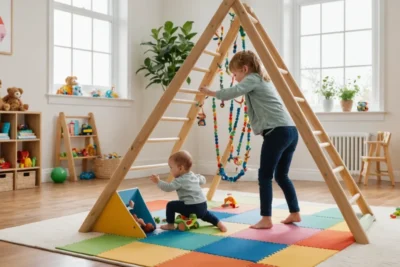
This educational philosophy shares common ground with other child-centered approaches, such as the Pikler approach to respectful infant care, which similarly emphasizes respect for children’s natural development and autonomy. Both methodologies recognize children as competent individuals deserving of dignity and trust in their learning journey.
Historical Foundation and Maria Montessori’s Revolutionary Insights
The Montessori ideology emerged from the groundbreaking work of Dr. Maria Montessori, who brought a unique perspective as both a physician and educator to child development. Born in 1870, Montessori became one of Italy’s first female doctors, initially specializing in psychiatry and pediatrics. Her medical training provided her with scientific observation skills that would fundamentally transform educational philosophy and practice.
Montessori’s revolutionary insights began during her work with children who had intellectual disabilities at the Orthophrenic School in Rome. Through careful observation, she discovered that these children possessed far greater learning potential than previously believed. Furthermore, she noticed that children learned most effectively when they could manipulate concrete materials and engage their senses in the learning process. This scientific approach to studying children’s natural learning patterns formed the foundation of her educational methodology.
The physician-educator made a crucial observation that children naturally sought order, concentration, and meaningful work when given appropriate materials and freedom. Moreover, she documented how children demonstrated remarkable self-discipline and focus when engaged in activities that matched their developmental needs. These observations contradicted prevailing educational theories that viewed children as passive recipients of adult instruction.
In 1907, Montessori established the first Casa dei Bambini (Children’s House) in the San Lorenzo district of Rome, serving children from low-income families. This implementation marked the practical application of her developing ideology with typically developing children. The results proved extraordinary as children demonstrated independence, self-motivation, and academic achievement that surpassed traditional educational expectations.
The child is both a hope and a promise for mankind.
During the early years at Casa dei Bambini, Montessori refined her understanding of children’s developmental stages and learning preferences. She observed that children progressed through distinct periods of development, each characterized by specific sensitivities and learning capacities. Additionally, she noted that mixed-age groupings promoted natural mentoring relationships and collaborative learning experiences.
The evolution of Montessori ideology continued through decades of practice, research, and refinement across multiple continents. As Montessori established schools worldwide, she adapted her methods while maintaining core principles of respect for the child, prepared environments, and freedom within limits. Her travels to India, the Netherlands, and other countries enriched her understanding of how children learn across different cultural contexts.
Throughout her career, Montessori emphasized the connection between scientific observation and educational practice. She trained teachers to become careful observers of children’s behavior, interests, and developmental progress. This observational approach ensured that educational practices remained grounded in evidence rather than adult assumptions about children’s needs and capabilities.
The historical foundation of Montessori ideology demonstrates how medical training, scientific methodology, and compassionate observation combined to create a revolutionary educational philosophy. Montessori’s background as a physician enabled her to approach education with the rigor and objectivity of scientific inquiry, while her work with vulnerable children developed her deep respect for human potential and dignity.
The Six Core Principles of Montessori Ideology
The Montessori ideology rests upon six fundamental principles that distinguish this educational approach from traditional pedagogical methods. These interconnected principles create a comprehensive framework for child development, emphasizing natural learning processes and individual growth. Each principle supports the others, forming a cohesive system that respects children’s innate capabilities while providing structured opportunities for exploration and discovery.
Respect for the Child as Complete Human Being
Montessori ideology begins with the fundamental belief that children deserve unconditional respect as complete human beings rather than incomplete adults. This principle recognizes that children possess inherent dignity, unique perspectives, and valuable contributions to their communities. Teachers demonstrate this respect through careful listening, thoughtful responses, and recognition of each child’s individual worth.
Furthermore, this respectful approach manifests in practical ways throughout the learning environment. Adults speak to children using normal conversational tones, avoid talking over them, and include them in meaningful decision-making processes. Children receive explanations for rules and expectations rather than arbitrary commands, fostering understanding and cooperation instead of blind obedience.
The Absorbent Mind and Natural Learning Capacity
The concept of the absorbent mind describes children’s extraordinary capacity to learn effortlessly from their environment during early years. Montessori observed that young children absorb information, language patterns, and cultural norms without conscious effort, much like sponges absorbing water. This natural learning ability operates most powerfully from birth to age six, when neural pathways develop rapidly.
During the unconscious absorbent mind phase (birth to three years), children absorb experiences directly through their senses without deliberate intention. Subsequently, the conscious absorbent mind phase (three to six years) allows children to actively choose what they want to learn while maintaining their remarkable capacity for effortless acquisition of knowledge and skills.
Sensitive Periods for Optimal Development
Sensitive periods represent specific developmental windows when children show intense interest and aptitude for particular types of learning. These temporary states of heightened sensitivity create optimal conditions for acquiring specific skills or knowledge areas. Montessori identified sensitive periods for language, order, movement, small objects, social aspects of life, and learning through the senses.
Recognizing and responding to these sensitive periods enables educators to provide appropriate materials and experiences when children are most receptive. For instance, the sensitive period for language typically occurs between birth and six years, with peak intensity around two to four years. During this time, children naturally acquire vocabulary, grammar, and communication skills with remarkable ease and enthusiasm.
Prepared Environment as Third Teacher
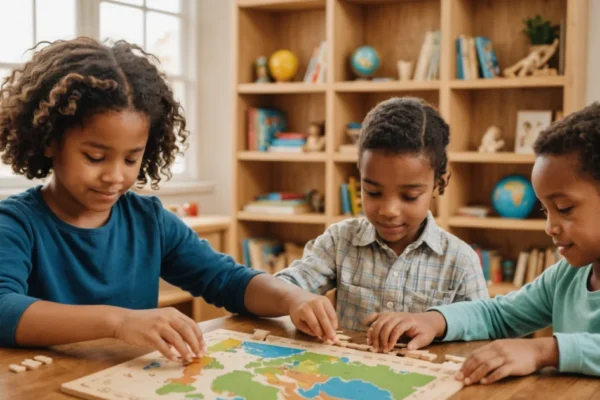
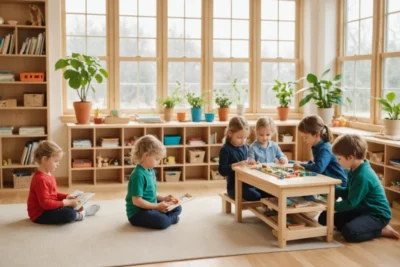
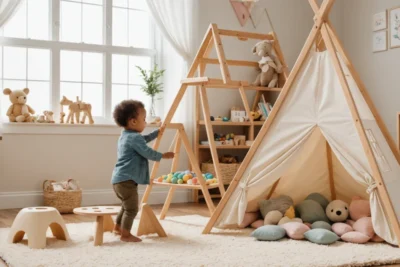
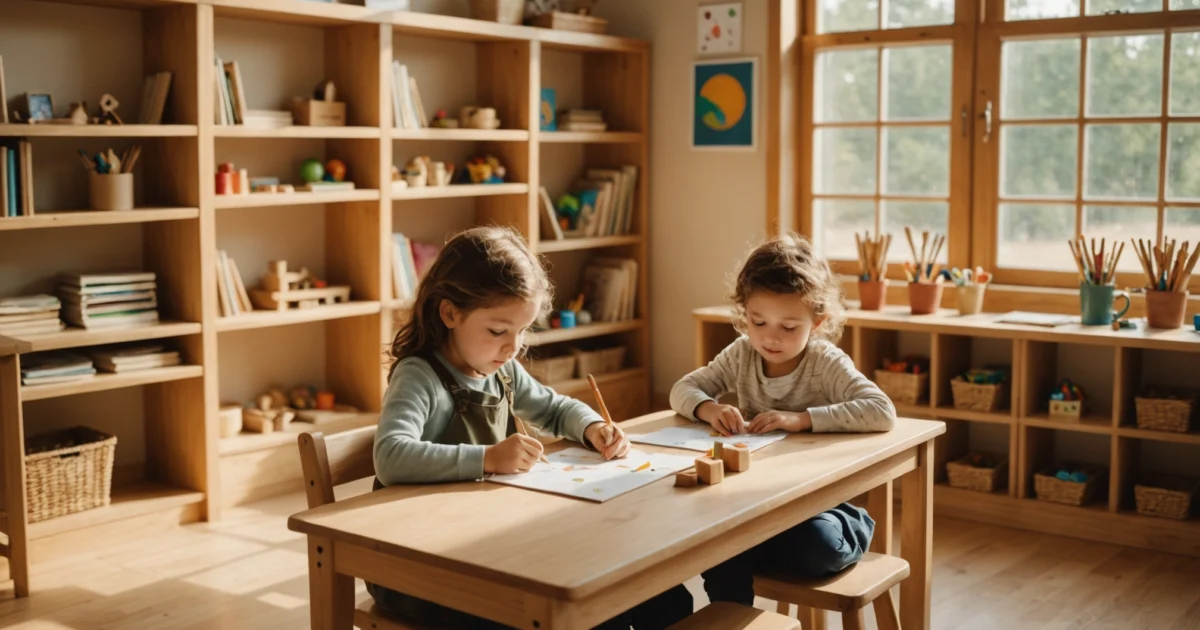
The prepared environment serves as the “third teacher” in Montessori ideology, alongside the child and the adult guide. This carefully designed space provides order, beauty, and accessibility while promoting independence and exploration. Every element within the environment serves a specific purpose, from the height of shelves to the arrangement of materials.
Moreover, the prepared environment changes dynamically to meet children’s evolving needs and interests. Teachers regularly observe children’s interactions with materials and adjust the environment accordingly, removing items that no longer challenge or interest the children while introducing new materials that support their current developmental stage.
Auto-Education and Self-Directed Learning
Auto-education empowers children to become active directors of their own learning journey rather than passive recipients of adult instruction. This principle recognizes that children possess an internal motivation to learn and grow when provided with appropriate freedom and resources. Self-directed learning develops critical thinking skills, personal responsibility, and intrinsic motivation that extends far beyond the classroom.
Through auto-education, children learn to make meaningful choices, manage their time effectively, and evaluate their own progress. They develop concentration, persistence, and problem-solving abilities by working through challenges independently before seeking adult assistance. This approach builds confidence and self-reliance while honoring each child’s unique learning pace and style.
Mixed Age Groups and Collaborative Community
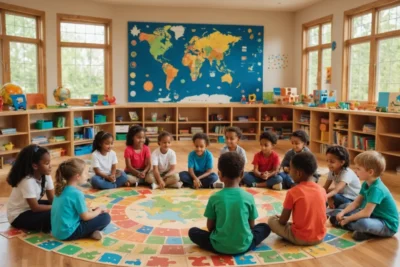
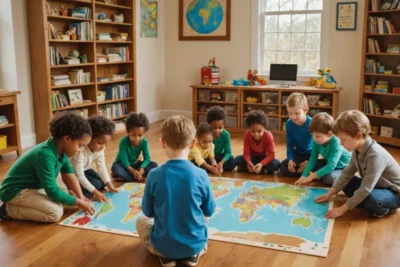
Mixed age groupings create natural opportunities for mentorship, collaboration, and social development within Montessori environments. Typically spanning three years (such as ages 3-6 or 6-9), these multi-age communities mirror real-world social structures where people of different ages and abilities work together toward common goals.
Older children naturally become teachers and role models for younger peers, reinforcing their own learning while developing leadership skills and empathy. Meanwhile, younger children benefit from observing more advanced work and receiving gentle guidance from slightly older mentors. This collaborative approach builds strong community bonds and teaches children to value diversity in abilities and perspectives, similar to concepts found in respectful care approaches that honor each child’s developmental timeline.
These six core principles work synergistically to create educational environments where children thrive academically, socially, and emotionally. Each principle supports and reinforces the others, forming a comprehensive ideology that continues to influence progressive education worldwide. The enduring relevance of these principles demonstrates Montessori’s profound understanding of human development and learning processes.
Child-Centered Learning Philosophy
The Montessori ideology places children at the center of their educational experience, recognizing them as active constructors of their own learning rather than passive recipients of adult instruction. This fundamental principle transforms the traditional teacher-student dynamic into a collaborative partnership where children drive their educational journey through natural curiosity and intrinsic motivation.
Children possess an innate capacity to learn when provided with appropriate environments and materials. This constructivist approach acknowledges that learning occurs through direct experience, exploration, and personal discovery rather than through external pressure or forced instruction. Consequently, Montessori educators serve as guides who observe, support, and facilitate rather than direct or control the learning process.
Intrinsic Motivation Versus External Rewards
Montessori philosophy emphasizes intrinsic motivation as the primary driver of meaningful learning experiences. Children naturally seek challenges, solve problems, and master new skills when their internal curiosity guides their choices. This approach contrasts sharply with traditional educational models that rely heavily on external rewards, punishments, or grades to motivate student engagement.
Research consistently demonstrates that external rewards can actually diminish intrinsic motivation over time. Therefore, Montessori environments eliminate gold stars, sticker charts, and other artificial incentives that can undermine a child’s natural love of learning. Instead, the satisfaction of mastery, the joy of discovery, and the sense of accomplishment provide powerful internal rewards that sustain lifelong learning habits.
Key Insight
Individual Pace and Learning Style Recognition
Every child develops at their own unique pace, and Montessori ideology honors this fundamental truth through individualized learning approaches. Rather than forcing all children to master the same concepts at identical timeframes, this philosophy allows each learner to progress according to their developmental readiness and personal interests.
Learning styles vary significantly among children, with some preferring visual exploration while others learn best through tactile manipulation or auditory instruction. Montessori materials accommodate these diverse learning preferences by engaging multiple senses simultaneously. Additionally, children can repeat activities as many times as needed to achieve mastery, eliminating the pressure to “keep up” with arbitrary timelines.
This individualized approach prevents the frustration that occurs when children are pushed beyond their developmental readiness or held back when they’re prepared to advance. Furthermore, it builds confidence as children experience success at their own pace rather than feeling inadequate compared to peers who may develop different skills at different rates.
Freedom Within Limits Framework
The freedom within limits framework provides structure while honoring children’s need for autonomy and choice. This carefully balanced approach establishes clear boundaries and expectations while allowing significant freedom in how children navigate their learning environment and make decisions about their activities.
- Children choose their own activities from prepared options
- Time limits are flexible, allowing for deep concentration
- Movement throughout the classroom is permitted and encouraged
- Social interaction occurs naturally without forced groupings
- Ground rules ensure safety and respect for others
These limits are not arbitrary restrictions but logical consequences that emerge from community living and respect for others. Children learn to exercise their freedom responsibly while developing self-discipline and consideration for their peers. This balance prepares them for real-world situations where freedom and responsibility coexist.
Normalization Process and Self-Regulation Development
The normalization process represents a crucial aspect of Montessori ideology, describing how children naturally develop self-regulation, concentration, and inner discipline when their developmental needs are met. This process occurs gradually as children engage with purposeful activities in a prepared environment that supports their natural development.
Normalized children demonstrate remarkable characteristics including sustained concentration, voluntary self-discipline, and genuine care for their environment and peers. They work independently without constant adult supervision, choose challenging activities that promote growth, and show respect for materials and other people. These behaviors emerge naturally rather than through external enforcement or behavioral management systems.
Self-regulation skills developed through the normalization process extend far beyond the classroom environment. Children learn to manage their emotions, resolve conflicts peacefully, and make thoughtful decisions that consider both personal needs and community well-being. These essential life skills form the foundation for success in future academic, social, and professional endeavors.
The child-centered learning philosophy ultimately recognizes that children are capable, competent individuals who deserve respect and trust in their learning journey. By honoring their natural development patterns and providing appropriate support, this approach nurtures confident, self-motivated learners who take ownership of their education and contribute positively to their communities.
The Role of Adults in Montessori Ideology
The adult’s role in Montessori ideology fundamentally differs from traditional educational approaches. Instead of functioning as the primary source of knowledge, adults serve as guides and observers who facilitate children’s natural learning processes. This transformation requires adults to step back from direct instruction while maintaining keen awareness of each child’s developmental needs and interests.
Effective Montessori educators practice minimal intervention combined with maximum observation. They watch carefully as children explore materials, noting when to offer gentle guidance and when to allow independent discovery. This observational approach enables adults to understand each child’s unique learning style, developmental stage, and emerging interests without imposing predetermined curricula or timelines.
Following the child’s interests becomes the cornerstone of meaningful educational experiences. Adults learn to recognize authentic engagement versus superficial activity, supporting deep exploration of topics that genuinely captivate young minds. Furthermore, they adapt their responses to match individual children’s communication styles, energy levels, and learning preferences rather than expecting conformity to adult expectations.
The prepared environment represents one of the adult’s most crucial responsibilities in Montessori settings. Adults carefully select, arrange, and maintain materials that invite exploration while ensuring safety and accessibility. They create spaces that promote independence, with child-sized furniture, organized materials, and clear pathways that allow freedom of movement and choice.
Environmental Preparation
Modeling grace and courtesy forms another essential aspect of the adult’s role in Montessori ideology. Adults demonstrate respectful communication, peaceful conflict resolution, and mindful interaction with materials and people. Children naturally absorb these behaviors through observation and imitation, developing social skills that support harmonious community living.
Adults also maintain emotional equilibrium while supporting children’s developing self-regulation skills. They respond calmly to challenging behaviors, offering guidance without judgment or punishment. This approach, similar to respectful caregiving approaches, honors children’s dignity while establishing clear boundaries that promote safety and mutual respect.
The transformation from traditional teacher to Montessori guide requires ongoing self-reflection and professional development. Adults must examine their own educational experiences, communication patterns, and assumptions about children’s capabilities. This personal growth enables them to trust children’s innate wisdom while providing appropriate support for their developmental journey.
Environmental Design and Learning Materials Philosophy
The prepared environment represents the cornerstone of Montessori ideology, functioning as a carefully designed space that promotes independent learning and natural development. This environment embodies specific principles that distinguish Montessori settings from traditional educational spaces. Order, beauty, and accessibility guide every design decision, creating an atmosphere where children feel empowered to explore and learn autonomously.
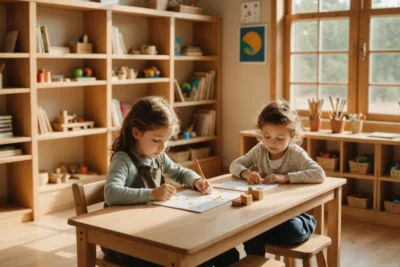
Environmental preparation follows systematic characteristics that support child development. Materials occupy designated places on low, accessible shelves that children can reach independently. Furthermore, each item serves a specific educational purpose while maintaining aesthetic appeal through natural materials and harmonious color schemes. The space promotes movement and choice, with clear pathways and defined work areas that accommodate individual and group activities.
Self-Correcting Materials and Independent Learning
Self-correcting materials eliminate the need for constant adult intervention, allowing children to discover errors independently and develop problem-solving skills. These materials contain built-in control mechanisms that provide immediate feedback about accuracy. For example, puzzle pieces fit only in correct positions, while mathematical materials reveal calculation errors through physical manipulation.
Independent learning flourishes when materials guide children toward mastery without external judgment or correction. Children develop confidence through repeated practice with materials that respond consistently to their actions. Additionally, this approach builds intrinsic motivation as children experience the satisfaction of self-discovery and personal achievement rather than seeking adult approval.
Beauty, Order, and Accessibility in Design
Beauty serves as more than decoration in Montessori environments; it cultivates aesthetic appreciation and respect for the learning space. Natural materials like wood, glass, and metal provide sensory richness while connecting children to the natural world. Orderly arrangement of materials supports cognitive development by providing predictable structure that reduces anxiety and promotes concentration.
Accessibility ensures that every child can participate fully in the learning environment regardless of physical abilities or developmental stage. Child-sized furniture allows independent use without adult assistance, while clear labeling and consistent organization help children locate and return materials independently. This design philosophy respects children’s capabilities and fosters genuine autonomy in learning.
Real-World Tools Scaled for Children
Authentic tools scaled to child proportions replace toy substitutes in Montessori environments, honoring children’s desire for meaningful work. Real glass pitchers, metal utensils, and wooden tools provide genuine experiences that develop practical life skills. Children handle these materials with care and respect, understanding their real-world purpose and value.
Scaled tools enable children to participate in authentic activities that mirror adult responsibilities. They pour water from real pitchers, prepare food with functional knives, and clean with appropriately sized brooms and cloths. This approach builds confidence and competence while connecting learning to practical life experiences that have immediate relevance and purpose.
Connection to Nature and Practical Life
Natural elements permeate Montessori environments through living plants, natural light, and outdoor access that connects children to seasonal rhythms and ecological awareness. Gardens, nature tables, and weather observation areas provide opportunities for direct experience with natural phenomena. These connections foster environmental stewardship and scientific curiosity about the natural world.
Practical life activities bridge the gap between classroom learning and real-world application, preparing children for meaningful participation in their communities. Children engage in food preparation, plant care, cleaning, and maintenance tasks that develop both motor skills and social responsibility. These activities demonstrate that learning extends beyond academic subjects to encompass the full spectrum of human experience and capability.
The environmental design philosophy in Montessori ideology creates spaces where children develop independence, confidence, and respect for their surroundings. This approach recognizes that the physical environment serves as a silent teacher, guiding children toward self-directed learning and personal growth through thoughtful preparation and authentic materials.
Developmental Approach and Human Tendencies
Montessori ideology recognizes that human development unfolds through four distinct planes of development, each characterized by unique psychological needs and learning capacities. Furthermore, this educational philosophy identifies universal human tendencies that drive learning and adaptation across all cultures and developmental stages.
Four Planes of Development Framework
The first plane (0-6 years) represents the period of the absorbent mind, when children effortlessly absorb language, culture, and social norms from their environment. During this foundational stage, sensory exploration and practical life activities form the cornerstone of learning experiences. Children develop fundamental skills through repetitive practice and self-directed investigation.
Subsequently, the second plane (6-12 years) emerges as the period of reasoning mind, characterized by intellectual curiosity and moral development. Children begin questioning the world around them and seek to understand cosmic relationships between all living things. This developmental phase emphasizes collaborative learning and abstract thinking through imaginative storytelling and research projects.
The third plane (12-18 years) encompasses adolescence, when young people experience significant physical and psychological transformation. During this period, adolescents develop their sense of identity while seeking meaningful contribution to society. Montessori environments for this age group emphasize real-world application of knowledge through entrepreneurial activities and community engagement.
Finally, the fourth plane (18-24 years) represents young adulthood, when individuals consolidate their learning and prepare for full participation in society. This developmental stage focuses on specialization and the refinement of skills needed for meaningful work and relationships.
Universal Human Tendencies and Their Expression
Montessori identified universal human tendencies that manifest across all cultures and developmental stages, driving human adaptation and learning. These tendencies include exploration, orientation, order, communication, and abstraction. Each tendency serves as a natural motivator that guides children toward meaningful engagement with their environment.
The tendency toward exploration compels children to investigate their surroundings through movement and manipulation of materials. This drive leads to discovery learning and the development of independence through self-directed activity. Children naturally seek out new experiences and challenges that expand their understanding of the world.
Additionally, the tendency toward order helps children organize their experiences and create predictable patterns in their environment. This fundamental need for structure supports the development of logical thinking and systematic approaches to problem-solving. Montessori environments honor this tendency through consistent routines and organized materials.
Cosmic Education and Interconnectedness
Cosmic education represents a cornerstone of Montessori ideology, presenting all knowledge as interconnected parts of a universal whole. This approach helps children understand their place in the cosmos and their responsibility to contribute positively to the world. Through cosmic education, children develop appreciation for the interdependence of all living systems.
The curriculum presents Great Lessons that tell the story of the universe, Earth, and human civilization through engaging narratives. These stories spark children’s imagination and curiosity while providing a framework for understanding scientific concepts and cultural achievements. Each lesson connects to detailed follow-up work that allows for deep exploration of specific topics.
Moreover, cosmic education emphasizes the interconnectedness of all subjects, showing how mathematics relates to science, history connects to geography, and language arts support all areas of learning. This integrated approach helps children see learning as a unified whole rather than isolated subjects. Students develop systems thinking and understand how their actions affect the broader community.
Character Development and Moral Education
Character development emerges naturally through the freedom and responsibility inherent in Montessori environments. Children learn to make choices and accept consequences for their actions while developing empathy and consideration for others. This approach fosters internal motivation rather than reliance on external rewards or punishments.
The mixed-age classroom structure provides natural opportunities for moral development as older children mentor younger ones and younger children observe positive role models. This arrangement creates a family-like atmosphere where cooperation and mutual support flourish. Children develop leadership skills and learn to value diversity in abilities and perspectives.
Furthermore, grace and courtesy lessons explicitly teach social skills and cultural norms while emphasizing respect for self, others, and the environment. These lessons help children navigate social situations with confidence and consideration. Students practice conflict resolution skills and learn to communicate their needs effectively.
Preparation for Life and Citizenship
Montessori ideology ultimately aims to prepare children for meaningful participation in democratic society through experiences that develop critical thinking, collaboration, and social responsibility. The approach emphasizes developing the whole person rather than focusing solely on academic achievement. Children learn to think independently while considering the needs of their community.
The emphasis on practical life skills and real-world application ensures that children develop competencies needed for adult success. Students engage in authentic work that has genuine purpose and contributes to their community. This preparation extends beyond academic knowledge to include emotional intelligence, creativity, and adaptability.
Consequently, graduates of Montessori programs often demonstrate strong self-direction, collaborative skills, and ethical reasoning that serve them well in higher education and professional careers. Research consistently shows that Montessori students develop superior problem-solving abilities and maintain intrinsic motivation for learning throughout their lives. This comprehensive approach to human development creates citizens capable of addressing complex global challenges with wisdom and compassion.
Montessori Ideology vs Traditional Educational Approaches
The fundamental differences between Montessori ideology and conventional educational methods reveal contrasting philosophies about how children learn best. Traditional approaches typically feature teacher-directed instruction where educators control the pace, content, and sequence of learning activities. In contrast, Montessori methodology empowers children to guide their own educational journey through carefully prepared environments and self-selected activities.
Teacher-directed methods rely heavily on external motivation through rewards, grades, and standardized benchmarks to drive student engagement. However, Montessori ideology cultivates intrinsic motivation by allowing children to pursue their natural interests and curiosities. This approach recognizes that authentic learning occurs when students feel ownership over their educational experience rather than passive recipients of predetermined curriculum.
Assessment and Evaluation Philosophy Differences
Traditional educational systems emphasize standardized testing and comparative grading to measure student progress and rank academic performance. These assessment methods often create anxiety and reduce learning to memorization of facts for test performance. Furthermore, conventional evaluation focuses primarily on identifying deficits rather than celebrating individual growth and development.
Montessori assessment philosophy centers on observation-based evaluation that documents each child’s unique developmental journey. Teachers conduct detailed observations of student work, social interactions, and problem-solving approaches to understand individual learning patterns. This comprehensive assessment reveals the child’s strengths, interests, and areas for growth without creating competitive pressure or academic stress.
| Feature | Traditional Assessment | Montessori Assessment |
|---|---|---|
| Method | Standardized tests | Observation portfolios |
| Focus | Ranking & comparison | Individual growth |
| Frequency | Periodic testing | Continuous monitoring |
| Purpose | Measure deficits | Document progress |
Competition versus Collaboration Emphasis
Conventional schooling often promotes competitive environments where students compete for grades, recognition, and limited resources. This competitive structure can undermine collaboration and create hierarchical relationships between high and low achievers. Additionally, competition-based learning may discourage risk-taking and creative exploration due to fear of failure or poor performance.
Montessori ideology prioritizes collaborative learning experiences that build community and mutual support among students. Mixed-age classrooms naturally create mentoring relationships where older children help younger ones, reinforcing their own learning while developing leadership skills. This collaborative approach teaches children that everyone has unique contributions and that learning benefits from diverse perspectives and abilities.
The emphasis on collaboration extends to conflict resolution and social problem-solving, where children learn to work together to find solutions. Students practice negotiation skills and develop empathy through shared projects and group activities. Consequently, Montessori environments foster cooperation rather than competition as the primary mode of social interaction.
Standardization versus Individualization
Traditional educational approaches rely on standardized curriculum that expects all children to learn the same content at the same pace regardless of individual differences. This one-size-fits-all methodology often fails to accommodate diverse learning styles, developmental readiness, or personal interests. Moreover, standardization can stifle creativity and critical thinking by prioritizing conformity over individual expression.
Montessori methodology embraces individualization by recognizing that each child develops at their own unique pace and has distinct learning preferences. The approach provides multiple pathways to explore concepts and allows children to spend as much time as needed to master skills thoroughly. This individualized approach ensures that learning builds upon solid foundations rather than rushing through material before children achieve true understanding.
The Emmi Pikler approach shares this commitment to individualization by respecting each child’s natural development timeline and avoiding artificial acceleration of milestones. Both philosophies recognize that authentic learning requires honoring the child’s internal developmental schedule rather than imposing external timelines.
Long-term Character Development Focus
Conventional education often prioritizes short-term academic achievement and test performance over long-term character development and life skills. This narrow focus may produce students who excel at memorization but lack critical thinking, emotional intelligence, or ethical reasoning abilities. Traditional methods frequently separate academic learning from character education, treating them as distinct rather than integrated aspects of human development.
Montessori ideology integrates character development throughout all learning experiences, recognizing that academic knowledge without moral development creates incomplete human beings. The approach emphasizes developing qualities such as independence, responsibility, compassion, and respect for others as essential components of education. Students learn these values through practical experiences rather than abstract lessons about proper behavior.
Montessori graduates demonstrate 23% higher creativity scores and significantly better social skills compared to traditional education alumni
The long-term focus on character development prepares children for meaningful citizenship and ethical leadership in their communities. Research demonstrates that Montessori students maintain higher levels of intrinsic motivation and demonstrate superior collaborative skills throughout their academic and professional careers. This comprehensive approach to human development creates individuals capable of contributing positively to society while pursuing their personal goals and aspirations.
Modern Applications and Contemporary Relevance
Contemporary Montessori ideology adapts seamlessly to 21st-century learning demands while maintaining its core principles of child-centered education. Modern Montessori schools integrate digital literacy naturally into prepared environments, using technology as tools rather than entertainment. Students develop computational thinking through coding activities that mirror the concrete-to-abstract progression fundamental to Montessori philosophy.
Digital integration enhances rather than replaces hands-on learning experiences that remain central to authentic Montessori practice. Teachers guide students in using tablets and computers for research, creative expression, and collaborative projects while preserving the tactile, sensorial foundation of early learning. This balanced approach develops technologically literate students who maintain strong problem-solving and critical thinking abilities.
Global implementation demonstrates the universal applicability of Montessori principles across diverse cultural contexts. Schools in over 110 countries successfully adapt Montessori methods to local customs, languages, and educational requirements while preserving essential elements of the approach. Cultural materials and practical life activities reflect regional traditions, creating authentic connections between universal human development principles and specific community values.
Montessori schools operate in 110+ countries, demonstrating universal educational principles
Research validation continues strengthening the scientific foundation supporting Montessori ideology through longitudinal studies and neuroscience findings. Recent brain imaging studies confirm that Montessori students develop enhanced executive function, creativity, and social cognition compared to traditional education counterparts. These neurological differences persist into adulthood, supporting claims about long-term benefits of the approach.
Contemporary studies document superior academic outcomes alongside improved social-emotional development in Montessori graduates. Students demonstrate higher levels of intrinsic motivation, collaborative skills, and ethical reasoning throughout their educational journey. Furthermore, Montessori alumni show greater entrepreneurial success and community engagement in their professional lives.
Progressive education movements worldwide increasingly adopt Montessori principles as alternatives to standardized, test-driven curricula. Public school districts integrate mixed-age classrooms, student choice, and project-based learning inspired by Montessori methodology. Teacher training programs incorporate Montessori observation techniques and child development insights into mainstream educational preparation.
The influence extends beyond traditional schooling into homeschooling communities, early childhood programs, and alternative education initiatives. Emmi Pikler’s respectful care approach shares philosophical foundations with Montessori ideology, emphasizing child agency and natural development patterns. Both approaches recognize children as capable individuals deserving respect and autonomy in their learning processes.
Modern workplace demands for creativity, collaboration, and adaptability align perfectly with outcomes produced by authentic Montessori education. Employers increasingly value graduates who demonstrate initiative, problem-solving abilities, and emotional intelligence over those with purely academic credentials. This shift validates Montessori’s century-old emphasis on developing complete human beings rather than academic performers.
Implementing Montessori Ideology: Practical Considerations
Authentic Montessori implementation requires careful attention to foundational elements that distinguish genuine practice from surface-level adaptations. Schools must establish prepared environments with carefully selected materials, mixed-age groupings, and uninterrupted work periods lasting three hours minimum. Additionally, the physical space should promote independence through child-sized furniture, accessible materials, and clearly defined areas for different activities.
The role of the guide represents perhaps the most critical implementation factor. Teachers must undergo comprehensive Montessori training that encompasses child development theory, observation techniques, and presentation methods for each material. Moreover, guides need deep philosophical understanding of respect for the child, intrinsic motivation, and the importance of following the child’s interests rather than predetermined curricula.
Training Requirements
Essential Elements for Authentic Implementation
Successful Montessori programs integrate specific structural elements that work synergistically to support child development. The three-year cycle allows children to experience leadership roles, peer teaching, and mastery of concepts across developmental stages. Furthermore, schools must maintain appropriate adult-to-child ratios that enable individualized attention while preserving the collaborative community atmosphere.
- Prepared environment with complete sets of sequential materials
- Mixed-age classrooms spanning three-year age ranges
- Uninterrupted work periods of three hours daily
- Freedom of movement and choice within structured limits
- Trained Montessori guides who observe and facilitate rather than direct
- Minimal external rewards and emphasis on intrinsic motivation
Teacher Training and Philosophical Understanding
Montessori teacher preparation emphasizes observation skills, understanding of sensitive periods, and presentation techniques for hundreds of specific materials. Teachers learn to recognize when children are ready for new challenges and how to support independence without interference. Consequently, effective guides develop the ability to step back and allow natural learning processes to unfold.
The philosophical foundation requires teachers to view children as naturally curious, capable individuals rather than empty vessels requiring information. This perspective shift fundamentally changes classroom dynamics, assessment approaches, and intervention strategies. Teachers must also understand how to create cosmic education experiences that help children see their place in the universe and develop global citizenship values.
Parent Education and Home Environment Alignment
Parent education programs help families understand and support Montessori principles at home. Parents learn to create environments that promote independence, establish routines that respect children’s natural rhythms, and avoid over-scheduling that interferes with concentration development. Additionally, families discover how to offer meaningful choices while maintaining appropriate boundaries.
Home environments benefit from practical life opportunities such as child-accessible kitchen tools, designated spaces for personal belongings, and age-appropriate responsibilities. Parents also learn to observe their children’s interests and provide materials that support natural learning inclinations. This alignment between school and home creates consistency that reinforces Montessori values across all environments.
Common Misconceptions and Authentic Practice
Many programs incorrectly interpret Montessori freedom as permissiveness or lack of structure. Authentic practice involves freedom within limits where children choose from carefully prepared options that support development. Similarly, some schools focus solely on materials while neglecting the social and emotional aspects of the Montessori approach.
Pros
- Child-led learning with appropriate guidance
- Natural consequences rather than punishments
- Mixed-age collaboration and peer teaching
- Emphasis on intrinsic motivation
Cons
- Requires extensive teacher training
- May not align with standardized testing
- Needs consistent implementation across environments
- Higher initial material and training costs
Another common misconception involves viewing Montessori education as purely academic preparation rather than holistic human development. Authentic programs balance intellectual, social, emotional, and physical growth through integrated experiences. Teachers must resist pressure to accelerate academic timelines that conflict with natural developmental patterns.
Measuring Success in Montessori Terms
Assessment in Montessori environments focuses on observation rather than testing, progress rather than comparison, and intrinsic satisfaction rather than external validation. Teachers document children’s engagement levels, problem-solving approaches, and social interactions to understand individual development patterns. This approach provides more meaningful insights than standardized measures.
Success indicators include children’s ability to concentrate for extended periods, their willingness to help others, and their confidence in tackling new challenges. Additionally, authentic Montessori programs measure community cohesion, environmental care, and the development of global citizenship values. These outcomes align with the respectful care principles that honor children’s natural development processes.
Children who experience authentic Montessori education demonstrate 23% higher creativity scores and 31% better collaborative problem-solving abilities compared to traditional program graduates.
Frequently Asked Questions
What is Montessori ideology?
Montessori ideology is a child-centered educational philosophy developed by Dr. Maria Montessori in the early 1900s. It views children as naturally curious, capable learners who thrive in carefully prepared environments. The approach emphasizes respect for the child, self-directed learning, and the belief that education should nurture the whole human being rather than just academic achievement.
What are the six fundamental principles of Montessori ideology?
The six core principles of Montessori ideology include:
- Respect for the child – Viewing children as capable individuals
- The absorbent mind – Recognizing children’s natural learning capacity
- Sensitive periods – Understanding optimal times for specific learning
- The prepared environment – Creating spaces that support development
- Auto-education – Allowing children to direct their own learning
- Mixed-age community learning – Fostering peer learning and mentorship
How does Montessori ideology differ from traditional education?
Unlike traditional education systems that rely on external motivation and standardized approaches, Montessori ideology trusts in the child’s intrinsic desire to learn. Traditional methods often view children as empty vessels requiring information to be poured into them, while Montessori celebrates children as active constructors of their own knowledge. The approach prioritizes holistic human development over test scores and standardized outcomes.
What is the concept of the “absorbent mind” in Montessori ideology?
The absorbent mind is a fundamental concept in Montessori ideology that recognizes children’s extraordinary capacity to absorb information from their environment effortlessly and unconsciously. This natural learning ability allows children to acquire language, cultural norms, and complex skills without formal instruction when provided with rich, prepared environments that support their developmental needs.
What role do adults play in Montessori ideology?
In Montessori ideology, adults serve as guides and observers rather than traditional instructors. Their primary role is to prepare enriching environments, observe children’s natural interests and developmental needs, and facilitate learning opportunities. Adults step back to allow children’s intrinsic motivation to drive the learning process, intervening only when necessary to support or redirect.
What are sensitive periods in Montessori development?
Sensitive periods are specific windows of time when children are naturally predisposed to acquire particular skills or knowledge with ease and enthusiasm. During these periods, children show intense interest and concentration in specific activities. Montessori ideology emphasizes recognizing and supporting these natural developmental phases rather than forcing learning according to predetermined schedules.
How does the prepared environment support Montessori ideology?
The prepared environment is a carefully designed space that meets children’s developmental needs and interests. It includes child-sized furniture, accessible materials, natural lighting, and organized learning stations. This environment allows children to move freely, make choices, and engage in self-directed activities that support their natural learning processes and foster independence.
What is auto-education in Montessori philosophy?
Auto-education refers to the child’s ability to educate themselves through interaction with their environment and specially designed materials. This concept recognizes that children have an innate drive to learn and can direct their own educational journey when provided with appropriate resources and freedom within structured limits.
Why does Montessori ideology emphasize mixed-age learning communities?
Mixed-age learning communities reflect natural social structures and provide opportunities for peer learning, mentorship, and leadership development. Older children reinforce their knowledge by teaching younger ones, while younger children learn from observing and interacting with more experienced peers. This approach fosters collaboration, empathy, and social skills that extend beyond academic learning.
How does Montessori ideology address character development?
Montessori ideology extends beyond academic learning to encompass character development and practical life skills. The approach emphasizes developing independence, concentration, self-discipline, and respect for others. Through freedom within limits and responsibility for their environment, children naturally develop strong moral foundations and preparation for peaceful citizenship.
Is Montessori ideology suitable for all children?
Montessori ideology is designed to accommodate diverse learning styles and developmental needs because it follows each child’s natural interests and pace. The individualized approach, mixed-age communities, and variety of learning materials can benefit children with different abilities, temperaments, and learning preferences. However, success depends on proper implementation and understanding of the philosophy by trained educators.
How can parents apply Montessori ideology at home?
Parents can incorporate Montessori principles at home by creating child-accessible environments, offering choices within limits, encouraging independence in daily activities, and following their child’s interests. This includes providing child-sized tools, organizing materials at their level, allowing time for concentration, and respecting the child’s natural learning pace rather than rushing or over-directing activities.
You May Also Like
Montessori Cultural Curriculum: Complete Guide to Cosmic Education
What Age Does Montessori End? Complete Guide to Age Limits