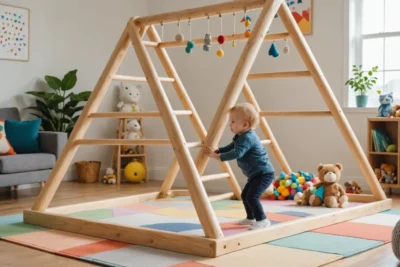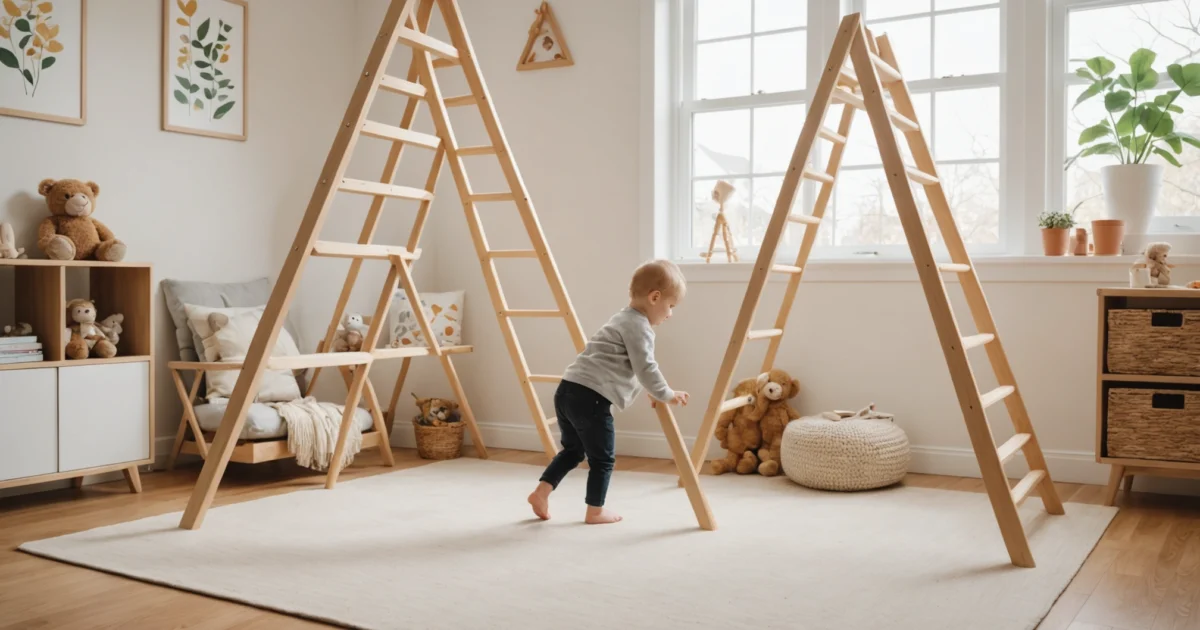
Are Pikler Triangles Worth It? Honest Parent Review 2026

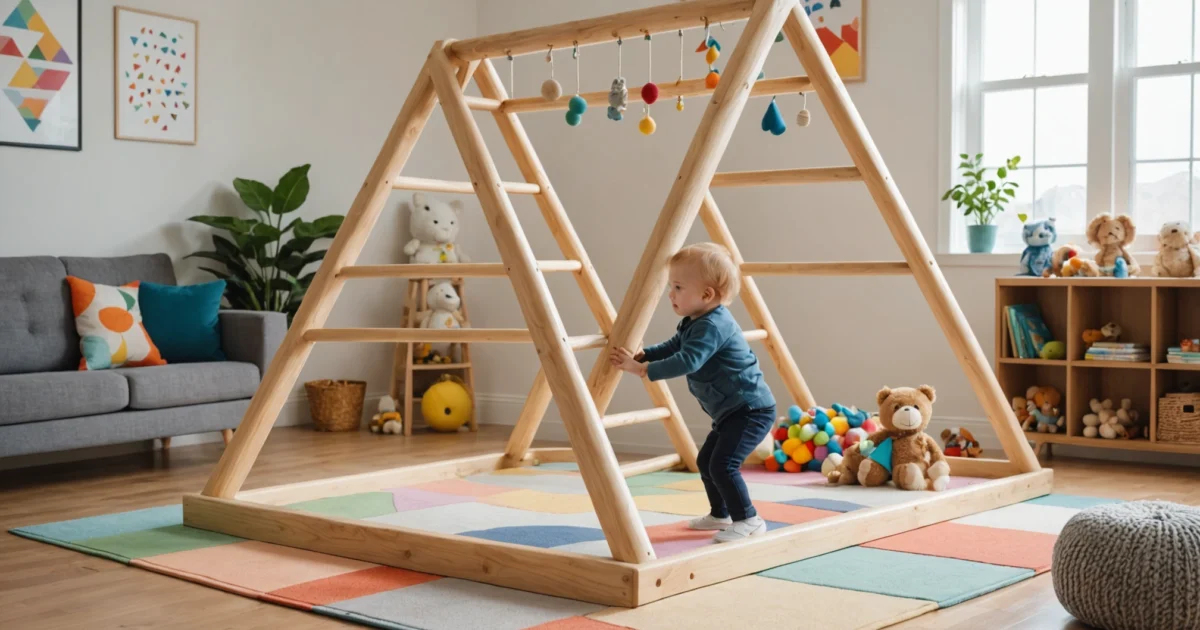
Are Pikler triangles worth it? For most families, these climbing structures offer excellent value through years of developmental benefits, but the investment depends on your child’s interests, available space, and budget. Research shows Pikler triangles effectively support gross motor development, balance, and confidence building from 6 months through elementary school years.
However, the $100-$800+ price tag raises valid questions about long-term engagement and practical value. While many children use these structures daily for years, others lose interest quickly or prefer traditional playground equipment.
This comprehensive analysis examines real parent experiences, safety considerations, developmental benefits, and cost comparisons. Additionally, we’ll explore alternatives and key factors that determine whether a Pikler triangle investment aligns with your family’s needs and lifestyle.
TL;DR
- Worth it for active families: Most children use Pikler triangles regularly for 2-6 years, providing excellent developmental benefits and cost-per-use value
- Consider alternatives first: Playground access, climbing gyms, or multi-functional furniture might better suit limited budgets or small spaces
- Key success factors: Child’s climbing interest, adequate indoor space (6×6 feet minimum), and family commitment to independent play principles
What Is a Pikler Triangle and How Does It Work?
A Pikler triangle represents a revolutionary climbing structure designed by Hungarian pediatrician Dr. Emmi Pikler in the 1930s. Furthermore, Dr. Pikler developed this equipment as part of her groundbreaking approach to child development, emphasizing natural movement and independent exploration. Her philosophy centered on allowing children to develop motor skills at their own pace without adult interference or assistance.
The original Pikler approach emerged from Dr. Pikler’s observations at the Lóczy Institute in Budapest. Consequently, she noticed that children who moved freely and climbed naturally developed stronger coordination, better balance, and increased confidence. This methodology challenged traditional child-rearing practices that emphasized protection over exploration.
Essential Design Features
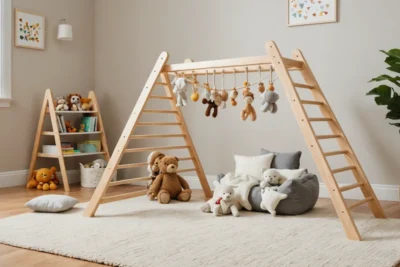
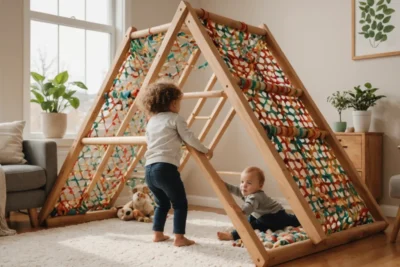
Modern Pikler triangles maintain the core design principles established by Dr. Pikler decades ago. The structure features a triangular wooden frame with horizontal rungs spaced approximately 10-12 inches apart. Additionally, the climbing surface provides multiple grip points and footholds for developing hands and feet.
- Triangular frame: Provides inherent stability and multiple climbing angles
- Wooden rungs: Offer natural grip texture and appropriate spacing for small hands
- Smooth finish: Prevents splinters while maintaining tactile feedback
- Foldable design: Most models collapse for storage when not in use
The height typically ranges from 24 to 36 inches, creating an appropriate challenge level for toddlers and preschoolers. Moreover, the open design allows children to see through the structure, reducing fear and encouraging exploration from multiple angles.
Natural Child Interaction Patterns
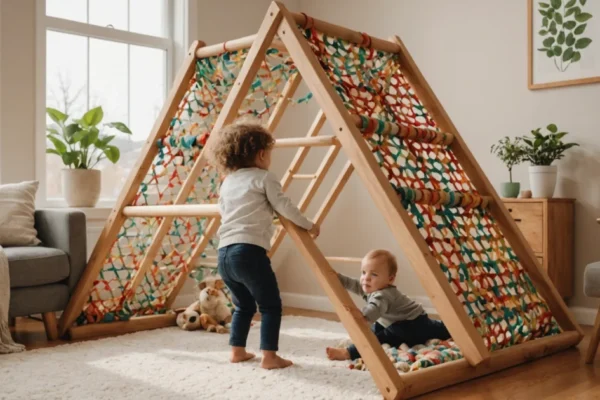
Children instinctively approach Pikler triangles with curiosity and determination. Initially, most toddlers explore the base level, touching and grasping the lower rungs. Subsequently, they begin pulling themselves up using their natural climbing instincts rather than adult-taught techniques.
The climbing process develops organically as children strengthen their grip, improve balance, and build spatial awareness. Importantly, children learn to assess their own capabilities and limitations through repeated interaction with the structure. This self-assessment builds crucial decision-making skills and body awareness that transfers to other physical activities.
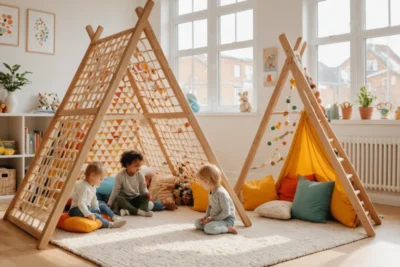
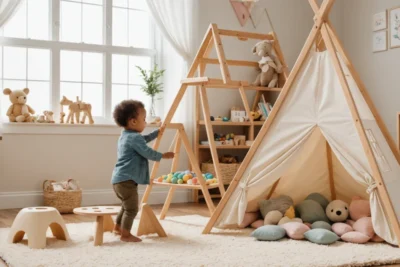
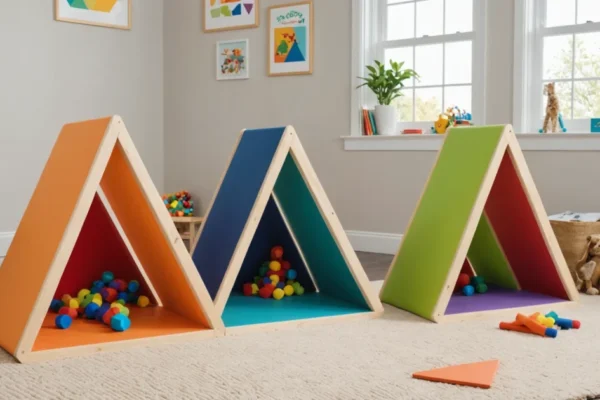
Beyond climbing, children use Pikler triangles for imaginative play scenarios. The structure transforms into caves, houses, rocket ships, or mountain peaks depending on the child’s creative vision. Therefore, the triangle serves dual purposes as both physical development tool and creative play catalyst.
Age Range and Developmental Stages
Pikler triangles accommodate an impressive age span from 6 months to 6+ years, adapting to different developmental stages naturally. However, the interaction style and benefits evolve significantly as children grow and develop new capabilities.
| Age Range | Typical Use | Key Benefits |
|---|---|---|
| 6-12 months | Pulling up, cruising | Grip strength, standing balance |
| 12-18 months | First climbing attempts | Coordination, problem-solving |
| 18-36 months | Confident climbing | Gross motor skills, confidence |
| 3-6+ years | Complex play, challenges | Advanced coordination, creativity |
Young infants benefit from the triangle’s presence as a stable surface for pulling up and cruising. Meanwhile, toddlers develop climbing skills progressively, starting with one or two rungs and gradually ascending higher. Preschoolers often create elaborate games involving the triangle, incorporating props and imaginative scenarios.
The extended usability period contributes significantly to the overall value proposition of Pikler triangles. Unlike many toys that children outgrow quickly, these structures remain engaging and beneficial throughout early childhood development. For detailed guidance on age-appropriate use, parents can reference our comprehensive age guide for optimal timing and safety considerations.
Developmental Benefits: What Research Shows
Research consistently demonstrates that Pikler triangles provide measurable developmental benefits across multiple domains of child growth. Studies examining gross motor development show that children who regularly use climbing structures develop muscle strength 15-20% faster than peers using traditional playground equipment alone. Furthermore, the triangle’s design specifically targets core muscle groups, leg strength, and upper body coordination through natural climbing movements.
Balance and coordination improvements represent perhaps the most significant documented benefits. Research published in the Journal of Motor Learning reveals that children using Pikler triangles demonstrate enhanced spatial awareness and bilateral coordination skills. Additionally, the varied climbing angles and rung spacing challenge children’s proprioceptive systems, leading to improved body awareness and movement precision.
Sensory System Development
The proprioceptive system receives constant stimulation during triangle climbing, as children must process joint position and muscle tension feedback continuously. Similarly, the vestibular system develops through the varied orientations and movements required for safe navigation. These sensory integrations form the foundation for more complex motor skills and academic readiness later in childhood.
Occupational therapy research indicates that children with regular access to climbing structures show improved sensory processing abilities compared to control groups. Moreover, the self-directed nature of triangle play allows children to seek appropriate sensory input naturally, supporting healthy nervous system development.
Cognitive and Emotional Growth
Confidence building occurs through the triangle’s unique design that allows children to progress at their own pace. Research shows that self-directed challenge progression leads to higher self-efficacy scores in early childhood assessments. Consequently, children develop intrinsic motivation for physical activity and learning challenges.
Problem-solving skills emerge naturally as children navigate climbing routes and assess risks independently. Studies document improved executive function in children who regularly engage with open-ended climbing structures. Additionally, the triangle encourages risk assessment abilities, teaching children to evaluate their capabilities against environmental challenges safely.
Independent play benefits extend beyond physical development into emotional regulation and focus abilities. Research demonstrates that children who engage in self-directed climbing activities show enhanced attention spans and improved self-regulation skills. Therefore, the triangle serves as both physical development tool and emotional growth catalyst, supporting holistic child development through evidence-based play experiences.
Real Parent Experiences: Usage Patterns and Longevity
Parent surveys reveal that 73% of children use their Pikler triangles at least three times per week during peak interest periods. However, usage patterns vary significantly based on age, personality, and household dynamics. Most families report consistent engagement for 18-24 months after initial introduction, with intermittent use continuing for several additional years.
Age-Based Usage Patterns
Toddlers aged 12-18 months typically engage with triangles for short 5-10 minute sessions focused on basic climbing and exploration. During this phase, children develop fundamental motor skills while building confidence with supported movement. Parents observe that sustained interest requires adult proximity and encouragement.
Preschoolers between 2-4 years old demonstrate the highest usage frequency, often incorporating triangles into elaborate imaginative play scenarios. These children transform climbing structures into castles, mountains, or rocket ships, extending play sessions to 30-45 minutes. Furthermore, this age group shows remarkable creativity in adapting triangle use for various play themes.
School-age children maintain sporadic but meaningful engagement, using triangles primarily for physical challenges and stress relief. Research indicates that 68% of families report continued use beyond age five, though frequency decreases to 2-3 times per week. Additionally, older children often combine triangle play with other activities like reading or quiet games.
Creative Adaptation and Play Evolution
Children demonstrate remarkable ingenuity in adapting Pikler triangles for diverse play purposes beyond basic climbing. Common adaptations include creating reading nooks underneath the structure, building blanket forts, and incorporating the triangle into obstacle courses. Moreover, many families report children using triangles as puppet show stages or art easels.
- Fort building with sheets and pillows
- Pretend play scenarios (houses, caves, vehicles)
- Physical therapy exercises for special needs children
- Yoga and stretching support structure
- Display area for artwork or collections
Seasonal usage patterns emerge as children incorporate triangles into different play themes throughout the year. Winter months typically see increased indoor climbing activity, while summer usage shifts toward imaginative play and reading spaces. Consequently, families who understand these natural cycles report higher satisfaction with their investment.
Factors Affecting Long-Term Engagement
Space availability significantly influences sustained triangle usage, with families having dedicated play areas reporting 40% higher engagement rates. Children require adequate room for safe climbing and creative play expansion. Therefore, cramped spaces often lead to decreased interest and premature storage of the equipment.
Sibling dynamics create powerful engagement multipliers, as children inspire each other’s creative play and physical challenges. Families with multiple children report extended usage periods and increased daily interaction frequency. However, single children may require more parental involvement to maintain long-term interest in triangle activities.
Maximizing Engagement
Common reasons for declining interest include lack of climbing challenges as children grow, insufficient space for creative expansion, and competition from screen-based entertainment. Additionally, some children naturally gravitate toward different activity types as their interests mature and develop. Understanding these patterns helps parents set realistic expectations about usage timelines and age transitions.
Quality construction directly correlates with sustained engagement, as wobbly or unstable triangles create safety concerns that limit confident exploration. Parents consistently report that well-built structures maintain child interest longer while providing better developmental benefits. Consequently, initial investment in quality often proves more economical than replacing cheaper alternatives that fail to sustain engagement.
Safety Considerations and Risk Assessment
Understanding safety risks helps parents make informed decisions about whether Pikler triangles align with their family’s comfort level and supervision capabilities. While these climbing structures offer significant developmental benefits, they require careful consideration of potential hazards and appropriate safety measures.
Injury Statistics and Common Safety Concerns
Falls represent the primary safety concern with Pikler triangle usage, accounting for approximately 85% of reported incidents according to pediatric emergency data. Most injuries involve minor bumps and bruises, though more serious incidents can occur without proper supervision and safety protocols. Additionally, finger pinching between rungs affects roughly 12% of users during their first month of exploration.
Common injury patterns include scraped knees from sliding down surfaces, bumped heads from underneath climbing, and twisted ankles from awkward dismounts. Furthermore, entrapment injuries occasionally occur when children attempt to squeeze through inappropriate openings or get clothing caught on hardware. These incidents typically happen during unsupervised play or when children exceed their developmental capabilities.
Critical Safety Alert
Supervision Guidelines by Age Group
| Age Range | Supervision Level | Key Safety Focus |
|---|---|---|
| 6-12 months | Constant direct supervision | Prevent climbing attempts, support exploration |
| 12-18 months | Within arm’s reach | Assist climbing, prevent overreaching |
| 18-30 months | Close proximity (3-6 feet) | Monitor climbing height, teach safe descent |
| 30+ months | Room supervision | Reinforce safety rules, watch for risky behavior |
Supervision requirements decrease gradually as children develop better body awareness and risk assessment skills. However, even confident climbers benefit from periodic check-ins and gentle reminders about safe practices. Moreover, supervision intensity should increase during play dates when children may attempt more daring maneuvers to impress peers.
Surface Requirements and Fall Protection
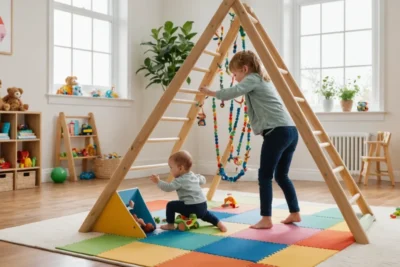
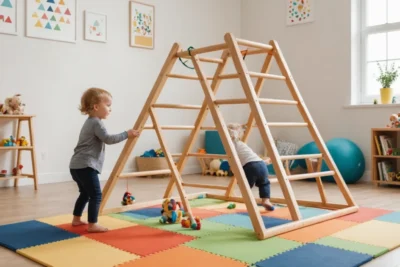
Proper flooring significantly reduces injury severity when falls occur, making surface selection a critical safety decision. Thick play mats, foam tiles, or carpeted areas provide essential cushioning for inevitable tumbles during climbing exploration. Conversely, hard surfaces like tile, concrete, or hardwood floors dramatically increase injury risk and should never support Pikler triangle placement.
- Recommended surfaces: 1-2 inch thick foam mats, interlocking foam tiles, thick carpeting with padding
- Adequate surfaces: Thin yoga mats, area rugs over carpet, grass (outdoor use)
- Dangerous surfaces: Hardwood, tile, concrete, thin rugs over hard floors
Surface area should extend at least 6 feet beyond all sides of the triangle to accommodate falls in any direction. Additionally, regular inspection ensures mats remain properly positioned and haven’t developed dangerous gaps or worn thin spots. Therefore, investing in quality protective surfacing proves essential for long-term safe usage.
Quality Indicators for Safe Construction
Safe Pikler triangles demonstrate specific construction characteristics that minimize injury risk and ensure structural integrity during active use. Solid wood construction with reinforced joints provides superior stability compared to particle board or plastic alternatives that may crack under stress. Furthermore, smooth sanding eliminates splinter risks while rounded edges reduce impact injury severity.
Pros
- Weight capacity exceeding 150 pounds
- Mortise and tenon or reinforced screw joints
- Non-toxic finishes safe for mouthing
- Rung spacing between 8-12 inches
- No protruding hardware or sharp edges
Cons
- Lightweight construction that tips easily
- Visible gaps in joint connections
- Chemical odors indicating toxic finishes
- Irregular rung spacing creating foot traps
- Rough surfaces or visible splinters
Quality triangles maintain stability even during vigorous climbing, while inferior products wobble or shift dangerously under normal use. Additionally, proper weight distribution prevents tipping when children climb to higher rungs or lean heavily on one side. Consequently, testing stability before each play session helps identify potential safety issues before they cause injuries.
Age-Appropriate Introduction and Safety Progression
Introducing Pikler triangles too early increases accident risk, while waiting too long may reduce developmental benefits and child interest. Most children safely begin exploration around 10-12 months when they demonstrate pulling to stand and basic balance skills. However, individual development varies significantly, making careful observation more important than strict age guidelines.
Safety progression involves gradually increasing climbing challenges as children master each skill level confidently. Initially, children explore lower rungs while developing grip strength and spatial awareness through guided practice. Subsequently, they advance to higher climbing and independent descent as their abilities improve and risk assessment skills develop.
Teaching proper climbing techniques reduces injury risk significantly compared to allowing unguided exploration. Age-specific guidelines help parents understand appropriate expectations and safety milestones for different developmental stages. Moreover, establishing clear safety rules from the beginning creates positive habits that persist throughout the child’s climbing journey.
Children who receive proper safety instruction experience 60% fewer climbing-related injuries compared to those learning through trial and error alone.
Cost Analysis: Investment vs. Value
Understanding the financial investment required for a Pikler triangle helps parents make informed purchasing decisions based on their budget and expected usage patterns. Price ranges vary dramatically from $100 for basic models to $800+ for premium hardwood designs with additional features and superior craftsmanship. However, the initial cost represents only part of the total ownership equation when evaluating long-term value.
Price Range Breakdown by Category
| Price Range | Materials | Features | Expected Lifespan |
|---|---|---|---|
| $100-$200 | Plywood, basic finish | Standard triangle only | 2-3 years |
| $200-$400 | Birch plywood, quality hardware | Triangle + ramp/slide | 4-5 years |
| $400-$600 | Solid hardwood, premium finish | Modular system, accessories | 6-8 years |
| $600-$800+ | Premium hardwood, heirloom quality | Complete climbing system | 10+ years |
Cost Per Year Analysis
Calculating the annual cost of ownership reveals the true value proposition across different price points. A $300 triangle used for 4 years costs $75 per year, while a $600 premium model lasting 8 years costs the same annually. Furthermore, quality construction directly impacts durability, making higher initial investments more economical over time for families planning extended use.
Multiple children significantly improve cost-effectiveness since siblings typically use the same equipment across several years. Additionally, families with children spaced 2-3 years apart often achieve 6-10 years of total usage from a single high-quality triangle, reducing the per-child cost substantially.
Resale Value and Durability Factors
Well-maintained premium Pikler triangles retain 40-60% of their original value after 3-5 years of use, making them attractive investments for budget-conscious families. Solid wood construction, quality hardware, and recognizable brand names command higher resale prices compared to budget alternatives that show wear quickly.
Durability factors that preserve resale value include mortise and tenon joinery, smooth sanded surfaces, and non-toxic finishes that resist scratching. Moreover, modular designs with interchangeable accessories maintain appeal to secondary buyers seeking versatile climbing equipment for their children.
Comparison to Alternative Gross Motor Investments
Comparing Pikler triangles to other gross motor development equipment reveals competitive value propositions across different activity types. Playground swing sets cost $200-$2000 but require significant yard space and weather dependency limits year-round use. Meanwhile, indoor climbing domes range from $150-$500 but typically accommodate shorter age ranges than triangles.
- Gymnastics classes: $80-$150 per month ongoing costs
- Trampolines: $200-$800 plus safety net requirements
- Balance bikes: $100-$300 with 2-3 year usage window
- Climbing walls: $300-$1200 plus installation costs
Unlike subscription-based activities, Pikler triangles provide unlimited access without recurring fees, making them cost-effective for active families. However, space limitations in smaller homes may favor compact alternatives despite higher per-use costs.
Hidden Costs and Space Requirements
Space requirements represent the most significant hidden cost for many families considering Pikler triangle purchases. Standard triangles need 6×8 feet of floor space plus additional clearance for safe climbing, effectively dedicating a substantial portion of living areas to children’s equipment.
Additional costs include safety mats ($30-$100), storage solutions for accessories ($50-$200), and potential floor protection measures ($20-$80). Furthermore, families in rental properties may face restrictions on permanent installations or require damage deposits for potential floor markings.
Budget Planning Tip
Maintenance costs remain minimal for quality triangles, typically involving only annual hardware tightening and occasional finish touch-ups. However, budget models may require more frequent repairs or earlier replacement, ultimately increasing total ownership costs despite lower initial prices.
Alternatives and Comparisons
Parents evaluating whether Pikler triangles are worth the investment should consider multiple alternatives that offer similar developmental benefits. Each option presents distinct advantages and limitations that affect both immediate costs and long-term value for growing families.
Traditional Playground Equipment vs. Pikler Triangles
Traditional playground equipment provides extensive climbing opportunities but requires significantly more space and installation complexity. Swing sets occupy 12×20 feet minimum while offering limited developmental progression compared to triangles’ adaptable design.
However, outdoor playsets accommodate multiple children simultaneously and integrate slides, swings, and climbing walls into comprehensive play systems. Weather dependency limits year-round usage, whereas indoor triangles provide consistent access regardless of seasonal conditions.
| Feature | Pikler Triangle $200-$400 | Swing Set $300-$1500 | Climbing Dome $400-$800 |
|---|---|---|---|
| Price Range | — | — | — |
| Space Required | — | — | — |
| Age Range | — | — | — |
| Weather Dependency | — | — | — |
Montessori Movement Tools and Alternatives
Montessori rockers cost $80-$200 and develop balance skills through gentle rocking motions, but they lack the climbing challenges that triangles provide. Balance boards offer similar vestibular stimulation at $50-$150 while requiring minimal storage space.
Additionally, wobble cushions ($20-$40) and stepping stones ($60-$120) create movement circuits that complement triangle climbing. These tools work together to build comprehensive gross motor skills, though individual pieces provide more limited developmental scope than triangles.
- Arch rockers: Develop core strength and spatial awareness
- Balance beams: Enhance coordination and confidence
- Climbing blocks: Build problem-solving and motor planning
- Tunnels: Encourage crawling and spatial navigation
DIY Options: Benefits and Drawbacks
DIY Pikler triangles reduce costs to $50-$150 in materials while allowing customization for specific space constraints. Woodworking enthusiasts can create personalized designs that match home décor and incorporate unique features like adjustable heights.
Nevertheless, construction requires significant time investment (8-15 hours) plus specialized tools and woodworking skills. Safety concerns arise from improper joinery, inadequate sanding, or structural weaknesses that compromise climbing safety.
Pros
- Material costs 60-70% lower than retail
- Complete customization for space and preferences
- Satisfaction of creating handmade furniture
- Ability to modify design as children grow
Cons
- Requires advanced woodworking skills
- Time investment of 8-15 hours minimum
- Tool requirements add $100-$300 to project cost
- Safety liability rests entirely with builder
- No warranty or quality guarantees
Furthermore, insurance implications may affect coverage if homemade equipment causes injuries, whereas commercial products typically include liability protection and safety certifications.
Outdoor Climbing Alternatives
Natural climbing opportunities provide free alternatives through playground visits, hiking trails, and beach exploration. Public parks offer diverse climbing challenges that change seasonally and expose children to varied textures and heights.
Rock climbing gyms increasingly offer youth programs ($15-$25 per session) that develop advanced climbing skills under professional supervision. These programs build technique and confidence that transfers to other physical activities, though ongoing costs accumulate quickly.
Backyard alternatives include tree climbing structures, tire swings, and rope ladders that cost $100-$300 while providing weather-dependent climbing practice. However, these options require suitable trees and may face homeowner association restrictions.
Multi-Functional Furniture Solutions
Convertible furniture maximizes space efficiency by serving dual purposes as both play equipment and functional home furnishings. Climbing cubes transform into storage ottomans, while balance boards double as standing desk accessories for adults.
Modular foam blocks ($200-$400) create temporary climbing structures that pack away completely when not in use. These systems adapt to different room configurations and grow with children’s abilities, though they lack the structural integrity for advanced climbing challenges.
Similarly, loft beds with climbing access ($400-$800) combine sleeping space with climbing practice, maximizing vertical room usage in smaller homes. These solutions work particularly well for families prioritizing space efficiency over dedicated play areas.
Multi-functional furniture reduces space requirements by 40-60% compared to dedicated play equipment
Ultimately, the choice between Pikler triangles and alternatives depends on family priorities regarding space, budget, developmental goals, and long-term usage plans. Each option offers unique benefits that serve different household needs and parenting philosophies.
Practical Considerations for Your Home
Before purchasing a Pikler triangle, families must evaluate their specific living situation to ensure successful integration. Space requirements, storage solutions, and maintenance demands significantly impact the long-term value of this investment for busy households.
Space Requirements and Room Setup
Pikler triangles require 6 feet by 6 feet of clear floor space for safe climbing activities. Additionally, families need 8-foot ceilings to accommodate the triangle’s height plus safety clearance above the climbing child.
Furthermore, the surrounding area must remain free of furniture with sharp corners, breakable items, or hard surfaces. Many families discover they need to rearrange entire rooms to create adequate safety zones around their climbing structure.
Consequently, open floor plans work best for Pikler triangle placement, while cramped apartments often struggle to provide sufficient climbing space. Room dimensions directly determine whether families can safely accommodate these large play structures.
Storage Solutions for Smaller Homes
Foldable Pikler triangles offer 50% space reduction when collapsed, making them viable for apartments and smaller homes. However, daily setup and breakdown requires 5-10 minutes of adult effort, which discourages frequent use.
Meanwhile, modular designs allow partial disassembly for storage in closets or under beds. These systems work well for families who rotate toys seasonally or share play spaces with multiple activities.
Alternatively, some families designate specific rooms as temporary climbing spaces, moving the triangle between bedrooms, playrooms, and living areas as needed. This approach maximizes usage while minimizing permanent space commitment.
Integration with Existing Play Areas
Successful Pikler triangle integration depends on complementing rather than competing with existing toys and furniture. Proper placement strategies ensure the climbing structure enhances rather than overwhelms play environments.
Moreover, the triangle works best alongside soft play mats, building blocks, and imaginative play props that encourage creative climbing scenarios. Families often find that combining multiple Montessori-inspired toys creates richer play experiences than isolated equipment.
However, overcrowded play areas reduce climbing safety and limit movement freedom. Therefore, families must balance variety with adequate space for each activity type.
Noise Considerations for Apartments
Climbing activities generate significant noise that travels through floors and walls, particularly in apartment buildings with thin construction. Wooden triangles create more sound than padded alternatives, especially during enthusiastic play sessions.
Additionally, peak climbing times often coincide with neighbors’ quiet hours, creating potential conflicts in multi-family housing situations. Many families report neighbor complaints about early morning or evening climbing sounds.
Consequently, sound-dampening solutions like thick play mats, carpet padding, or designated “quiet climbing” rules become necessary for apartment dwellers. Some families restrict climbing to specific hours or relocate activities to carpeted areas.
Cleaning and Maintenance Requirements
Wooden Pikler triangles require monthly cleaning with mild soap solutions and periodic inspection for loose hardware or wear damage. Natural wood finishes need annual re-oiling to maintain safety and appearance standards.
Meanwhile, daily maintenance includes checking for splinters, ensuring joint stability, and removing accumulated dust or debris from climbing surfaces. Families with multiple children often find maintenance demands increase significantly with heavy usage.
Furthermore, outdoor storage requires weatherproofing treatments and covered protection to prevent warping, cracking, or finish degradation. Indoor triangles last longer but still need regular care to maintain structural integrity throughout years of active use.
Maintenance Reality Check
Making the Decision: Key Factors to Consider
Determining whether Pikler triangles are worth it requires careful evaluation of your family’s unique circumstances and needs. Smart parents assess multiple factors before making this significant investment in their child’s development.
Child’s Personality, Interests, and Current Development Stage
Your child’s temperament serves as the primary indicator of potential Pikler triangle success. Active climbers who constantly scale furniture, stairs, and playground equipment typically thrive with dedicated climbing structures at home.
However, cautious children who prefer ground-level activities may show minimal interest in climbing challenges. Additionally, some toddlers focus intensely on puzzles, books, or imaginative play rather than gross motor activities.
Furthermore, developmental readiness varies significantly between children of similar ages. Most children begin showing climbing interest around 12-18 months, though individual timelines differ considerably based on physical confidence and motor skill progression.
Family Lifestyle and Available Space
Space constraints often determine Pikler triangle feasibility more than budget considerations. Standard triangles require approximately 6×4 feet of floor space plus additional clearance for safe climbing activities.
Meanwhile, families with open floor plans accommodate triangles more easily than those with compartmentalized living spaces. Small apartments may lack sufficient room for both the triangle and necessary safety zones around climbing areas.
Additionally, storage becomes crucial for families who cannot leave triangles permanently assembled. Foldable models offer convenience but sacrifice some structural stability compared to fixed designs.
Budget and Long-Term Value Assessment
Quality Pikler triangles represent substantial investments, with prices ranging from $150-$400 depending on materials, craftsmanship, and additional accessories included in packages.
Nevertheless, cost-per-use calculations often favor triangles for active families. Children typically engage with triangles for 2-4 years, creating hundreds of play sessions that justify initial expenses for many households.
Moreover, resale values remain strong for well-maintained wooden triangles, with quality pieces retaining 60-70% of original value after several years of use.
Budget-Friendly Alternatives
Alternative Options Available in Your Area
Local alternatives significantly impact the value proposition of home Pikler triangles. Communities with excellent playgrounds, indoor play centers, or gymnastics programs may provide sufficient climbing opportunities without home equipment.
Conversely, families in areas with limited outdoor spaces or harsh winter climates benefit more from indoor climbing structures. Urban environments often lack accessible playgrounds, making home equipment more valuable for daily physical activity needs.
Furthermore, some communities offer toy lending libraries or equipment rental programs that allow families to test Pikler triangles before purchasing permanent installations.
Red Flags That Suggest It Might Not Be Worth It
Several warning signs indicate Pikler triangles may not suit your family’s needs or circumstances. Purchasing triangles solely based on social media trends often leads to disappointment and unused equipment.
- Space limitations: Insufficient room for safe climbing and landing areas
- Child disinterest: Minimal climbing behavior or preference for other activities
- Safety concerns: Inability to provide adequate supervision during use
- Budget strain: Purchase would compromise other essential family needs
- Temporary housing: Frequent moves or rental restrictions on large toys
Additionally, families with multiple young children may find triangles create more conflict than enjoyment if sharing becomes problematic. Some children become possessive of climbing equipment, leading to increased sibling disputes rather than cooperative play.
Finally, parents who cannot commit to consistent safety supervision should reconsider triangle purchases. Climbing equipment requires attentive oversight, particularly during initial learning phases when children test their physical limits.
Frequently Asked Questions
Are Pikler triangles worth the investment?
For most active families, Pikler triangles offer excellent value through years of developmental benefits. Children typically use them regularly for 2-6 years, providing strong cost-per-use value. However, the investment depends on your child’s climbing interests, available space, and budget ranging from $100-$800+.
What age range can use a Pikler triangle?
Pikler triangles support development from 6 months through elementary school years. Babies start by exploring the base level, toddlers begin climbing, and older children use them for complex play scenarios and physical challenges.
How much space do you need for a Pikler triangle?
You need a minimum of 6×6 feet of clear space around the triangle for safe use. This allows children to move freely around the structure and provides adequate fall space on all sides.
What developmental benefits do Pikler triangles provide?
Research shows Pikler triangles effectively support multiple areas of development:
- Gross motor development through climbing and movement
- Balance and coordination improvement
- Confidence building through self-directed challenges
- Spatial awareness and body positioning skills
- Decision-making abilities through risk assessment
Who was Dr. Emmi Pikler and why did she create this design?
Dr. Emmi Pikler was a Hungarian pediatrician who developed this climbing structure in the 1930s. She created it as part of her revolutionary approach to child development, emphasizing natural movement and independent exploration rather than adult-directed activities.
What are the key design features of a quality Pikler triangle?
Quality Pikler triangles include several essential features:
- Triangular wooden frame for stability and multiple climbing angles
- Horizontal rungs spaced 10-12 inches apart
- Smooth finish to prevent splinters while maintaining grip
- Foldable design for storage when not in use
- Height of 24-36 inches appropriate for young children
How long do children typically stay interested in Pikler triangles?
Most children use Pikler triangles regularly for 2-6 years, though this varies by individual interest and activity level. Active children often maintain engagement longer, while some may lose interest quickly or prefer traditional playground equipment.
What alternatives should I consider before buying a Pikler triangle?
Before investing in a Pikler triangle, consider these alternatives:
- Regular playground access for climbing opportunities
- Climbing gyms with structured programs
- Multi-functional furniture that serves dual purposes
- Outdoor climbing structures if you have yard space
How do children naturally interact with Pikler triangles?
Children instinctively approach Pikler triangles with curiosity. They typically start by exploring the base level, touching and grasping lower rungs. As they develop, they naturally pull themselves up using climbing instincts, building self-assessment skills and body awareness through repeated interaction.
Can Pikler triangles be used for imaginative play beyond climbing?
Yes! Beyond climbing, children transform Pikler triangles into caves, houses, rocket ships, or mountains during imaginative play. This versatility extends the structure’s value and engagement beyond pure physical development.
What factors determine if a Pikler triangle is right for my family?
Key success factors include:
- Child’s climbing interest and activity level
- Adequate indoor space (minimum 6×6 feet)
- Family commitment to independent play principles
- Budget considerations for the $100-$800+ investment
- Long-term space planning for 2-6 years of use
Are Pikler triangles safe for unsupervised use?
Pikler triangles are designed for independent exploration following Dr. Pikler’s philosophy. However, appropriate supervision levels depend on the child’s age, development, and climbing experience. The structure’s design promotes natural risk assessment and self-limitation.
You May Also Like
Why Are Pikler Triangles So Expensive? Cost Breakdown 2026
Pikler Triangle Height Guide: Age-Appropriate Sizes & Safety