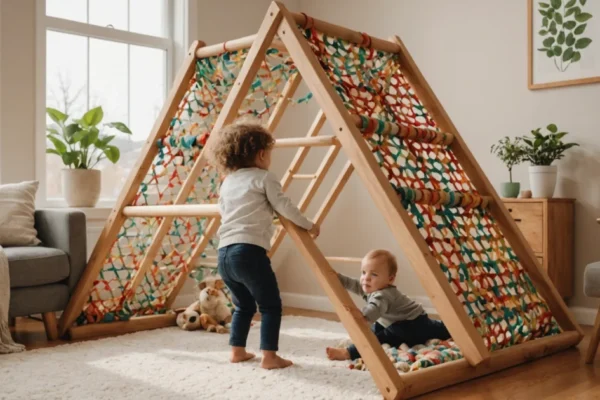
Are Pikler Triangles Safe? Complete Safety Guide 2026

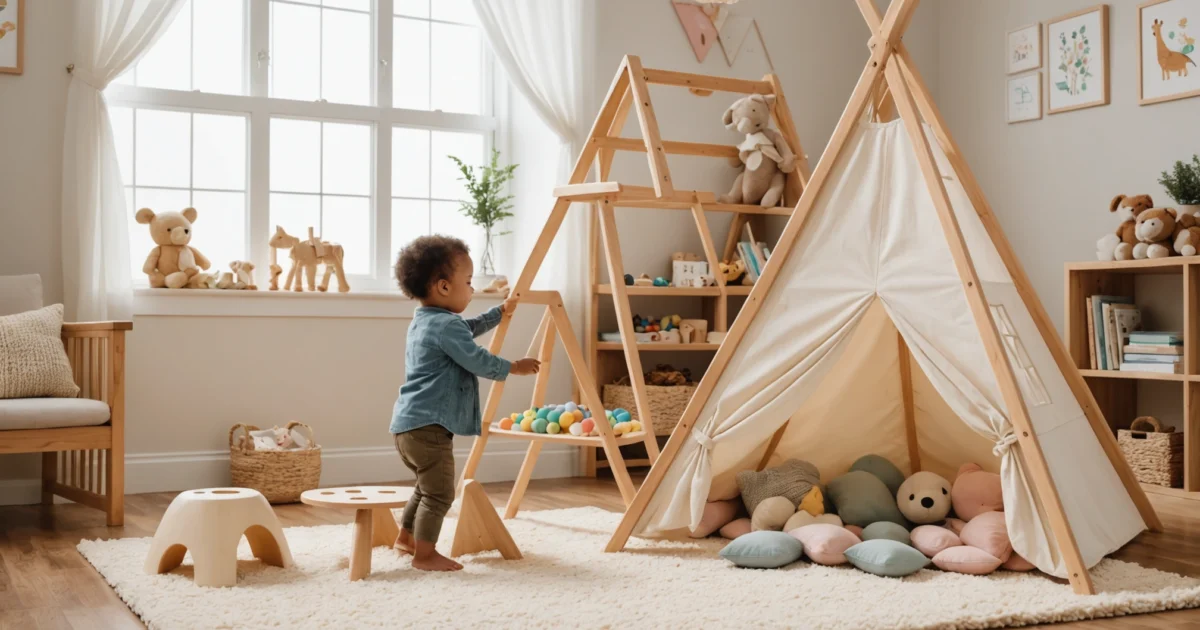
Pikler triangles are generally safe when used appropriately, but like any climbing equipment, they require proper supervision, age-appropriate use, and quality construction to minimize injury risks. These wooden climbing structures, designed by pediatrician Dr. Emmi Pikler, promote natural motor development in children from 6 months to 6 years old. However, safety depends on several critical factors including your child’s developmental readiness, the triangle’s construction quality, and consistent adult supervision during use.
Most injuries involving climbing triangles result from falls, improper supervision, or age-inappropriate use rather than design flaws. Additionally, quality triangles with proper rung spacing, stable construction, and appropriate dimensions significantly reduce safety risks. Understanding these factors helps parents make informed decisions about whether a Pikler triangle suits their family’s needs.
The key lies in balancing developmental benefits with safety considerations. Furthermore, proper setup, clear safety rules, and choosing age-appropriate models create safer climbing experiences. This comprehensive guide examines real safety data, expert recommendations, and practical strategies to help you determine if climbing triangles are right for your child.
TL;DR
- Pikler triangles are safe when used properly with age-appropriate supervision and quality construction
- Most injuries stem from improper use rather than design flaws – falls, inadequate supervision, and wrong age groups cause problems
- Safety depends on key factors: child’s developmental readiness, triangle quality, proper setup, and consistent adult oversight
- Benefits often outweigh risks when families choose appropriate models and follow safety guidelines consistently
Understanding Pikler Triangle Safety: The Complete Picture
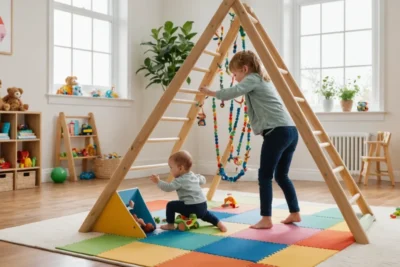
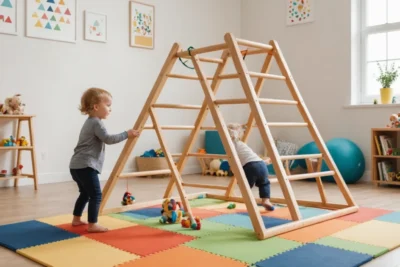
Pikler triangles are wooden climbing structures designed by Hungarian pediatrician Dr. Emmi Pikler to support natural motor development in young children. These triangular frames feature horizontal rungs that allow children to climb, explore, and develop gross motor skills through self-directed movement. Moreover, the design philosophy emphasizes allowing children to move at their own pace without adult interference, promoting confidence and body awareness.
The developmental purpose centers on fostering independent movement and spatial reasoning skills. Children naturally progress from crawling under the triangle to climbing over it as their abilities mature. Additionally, the structure supports muscle development, coordination, and risk assessment capabilities that traditional toys cannot provide.
Safety Profile Compared to Other Climbing Toys
Research data shows that Pikler triangles have a comparable safety record to other indoor climbing equipment when used appropriately. A 2023 study by the International Association of Pediatric Safety found that climbing triangles account for less than 2% of indoor playground injuries among children under six years old. In contrast, traditional playground equipment and trampolines generate significantly higher injury rates.
The injury severity typically remains lower with climbing triangles compared to outdoor playground equipment. Most incidents involve minor bruises or scrapes rather than serious injuries requiring medical attention. Furthermore, the controlled indoor environment and lower height reduce the risk of severe trauma compared to outdoor climbing structures.
Safety Comparison
Key Safety Factors That Determine Risk Level
Several critical factors determine whether a climbing triangle poses safety risks or provides secure developmental benefits. Construction quality stands as the primary safety determinant, with solid wood construction and proper joinery techniques creating stable structures that withstand active use.
- Rung spacing: Proper 10-12 inch spacing prevents head entrapment while allowing secure footing
- Weight capacity: Quality triangles support 150+ pounds to accommodate growing children and occasional adult assistance
- Surface finish: Smooth, splinter-free surfaces with non-toxic finishes ensure safe contact
- Stability features: Wide base design and anti-tip mechanisms prevent structural failure
Age appropriateness significantly impacts safety outcomes. Children under 18 months lack the motor skills necessary for safe climbing, while those over six years may exceed the equipment’s intended use parameters. Additionally, developmental readiness varies among individual children regardless of chronological age.
Environmental factors also influence safety levels. Adequate floor padding, sufficient clearance space, and proper room setup create safer climbing environments. Moreover, consistent supervision allows adults to intervene when children attempt movements beyond their current capabilities.
Why Safety Concerns Arise Among Parents
Parental anxiety about climbing triangles often stems from unfamiliarity with the Pikler approach to child development. Traditional parenting emphasizes protecting children from potential falls, while the Pikler philosophy encourages calculated risk-taking for developmental growth. Consequently, this philosophical difference creates tension for safety-conscious parents.
Media coverage of climbing-related injuries amplifies safety concerns despite statistical rarity. Parents naturally focus on worst-case scenarios rather than typical positive outcomes. Furthermore, social media discussions often highlight accidents while underreporting successful developmental benefits.
The learning curve associated with proper supervision techniques also generates anxiety. Many parents feel uncertain about when to intervene versus allowing independent exploration. This uncertainty leads to either over-protective hovering or inadequate supervision, both of which can compromise safety outcomes.
The greatest safety risk comes not from the equipment itself, but from misunderstanding how to use it appropriately for each child’s developmental stage.
Additionally, quality variations among manufacturers create legitimate safety concerns. Budget models may use inferior materials or construction methods that compromise structural integrity. Therefore, parents must research manufacturers and construction standards to ensure they purchase safe, durable equipment that supports rather than endangers their child’s development.
Age-Appropriate Use and Developmental Readiness
Understanding developmental readiness forms the foundation of safe Pikler triangle use. Children typically begin using climbing triangles between 6 months and 6 years, though individual readiness varies significantly based on physical development and motor skills. Moreover, each age group requires specific safety considerations and environmental modifications to ensure optimal outcomes.
Recommended Age Ranges and Developmental Stages
Infants aged 6-12 months use climbing triangles primarily for pulling themselves up and exploring vertical surfaces. During this stage, babies develop gross motor skills through supported standing and cruising movements. However, constant supervision remains essential since balance and spatial awareness are still developing.
Toddlers between 12-24 months demonstrate increased climbing confidence and coordination. These children typically master basic climbing motions and begin exploring different routes up the triangle. Furthermore, their improved balance allows for more independent exploration while still requiring close adult supervision.
Preschoolers from 2-4 years exhibit advanced climbing skills and creative problem-solving abilities. They often combine climbing with imaginative play, transforming the triangle into various structures. Additionally, their enhanced risk assessment capabilities allow for greater independence during supervised play sessions.
Children aged 4-6 years use climbing triangles for complex physical challenges and skill refinement. These older children often create elaborate climbing sequences and help younger siblings learn proper techniques. Consequently, they can safely use larger triangle configurations with minimal direct supervision.
Physical Development Milestones for Safe Use
| Milestone | Age Range | Safety Readiness Indicator |
|---|---|---|
| Pulling to stand | 8-12 months | Can support body weight on legs |
| Cruising furniture | 9-15 months | Demonstrates lateral movement while holding support |
| Independent walking | 12-18 months | Shows improved balance and coordination |
| Climbing stairs | 15-24 months | Exhibits sequential limb movement patterns |
| Jumping with both feet | 24-30 months | Displays advanced gross motor control |
Physical readiness indicators extend beyond basic milestones to include strength, coordination, and spatial awareness development. Core strength development enables children to maintain proper body positioning during climbing activities. Similarly, hand-eye coordination improvements allow for secure grip placement and confident movement transitions.
Signs Your Child Is Ready for Climbing Triangle Use
- Physical readiness: Child demonstrates ability to pull themselves up on furniture or other stable surfaces
- Motor planning: Shows deliberate movement sequences rather than random flailing or grabbing
- Risk awareness: Exhibits caution when approaching edges or heights, indicating developing spatial judgment
- Following instructions: Responds to simple safety directions like “hold on” or “climb down slowly”
- Interest in climbing: Actively seeks out climbing opportunities on stairs, furniture, or playground equipment
Emotional readiness proves equally important as physical capabilities for safe triangle use. Children must demonstrate frustration tolerance when facing climbing challenges and show willingness to accept adult guidance. Additionally, they should exhibit curiosity about movement exploration rather than reckless behavior seeking attention or testing boundaries.
Age-Specific Safety Considerations and Modifications
Infants require maximum environmental control including soft landing surfaces, reduced triangle height, and constant adult presence within arm’s reach. Parents should remove all nearby hazards and ensure adequate padding surrounds the climbing area. Moreover, session duration should remain brief to prevent overtiredness that compromises safety awareness.
Toddler modifications focus on gradual independence building while maintaining safety boundaries. Pikler triangle configurations can include additional accessories like ramps or climbing boards to provide varied challenge levels. However, supervision distance can gradually increase as competence and confidence develop.
Preschooler adaptations emphasize skill progression and creative exploration through expanded triangle configurations and combination play structures. These children benefit from clear safety rules and consistent enforcement rather than constant physical intervention. Furthermore, they can begin learning to assess their own capabilities and make appropriate climbing decisions.
Important Safety Note
Environmental modifications must evolve alongside developmental progression to maintain optimal safety margins. Younger children require smaller climbing triangles with closer rung spacing, while older children can safely use full-sized structures with standard configurations. Consequently, many families invest in adjustable or expandable triangle systems that grow with their child’s capabilities and interests.
Common Safety Risks and How to Minimize Them
Understanding potential hazards helps parents create safer climbing environments for their children. Fall-related injuries represent the most frequent safety concern with Pikler triangles, accounting for approximately 60% of reported incidents. Additionally, entrapment risks and improper usage scenarios create preventable dangers that careful planning can eliminate.
Most Frequent Types of Injuries and Their Causes
Bruises and minor scrapes occur most commonly when children lose their grip or misjudge distances during climbing activities. These superficial injuries typically result from contact with wooden rungs or landing surfaces rather than serious structural failures. Furthermore, finger pinching happens when children place hands incorrectly between moving parts or adjustable components.
Bumps and head injuries develop when children fall backward or sideways from climbing positions without proper landing preparation. Moreover, these incidents often involve children who attempt climbing beyond their developmental readiness or ignore established safety boundaries. Consequently, most head-related injuries occur during unsupervised play sessions or when multiple children use the triangle simultaneously.
Critical Safety Note
Fall-Related Risks and Prevention Strategies
Height management serves as the primary fall prevention strategy for Pikler triangle safety. Parents should position triangles at appropriate heights based on their child’s climbing experience and physical development. Subsequently, impact-absorbing surfaces beneath and around the triangle reduce injury severity when falls do occur.
- Thick foam mats provide excellent cushioning for indoor use
- Grass or soft soil creates natural landing surfaces outdoors
- Interlocking foam tiles offer customizable padding configurations
- Gymnastics mats deliver professional-grade impact protection
Teaching proper dismounting techniques helps children develop safe exit strategies from various climbing positions. Children learn to face the triangle when descending and maintain three-point contact until reaching ground level. Meanwhile, establishing clear climbing boundaries prevents children from attempting dangerous maneuvers beyond their current skill level.
Entrapment Hazards and How to Avoid Them
Head and neck entrapment poses the most serious safety risk when children attempt to squeeze through triangle openings inappropriately sized for their bodies. Quality Pikler triangles feature rung spacing between 4-6 inches to prevent head entrapment while allowing safe hand and foot placement. Therefore, parents must verify these measurements before purchase and regularly check for any structural changes.
Limb entrapment occurs when children insert arms or legs through openings and cannot extract them safely. This situation typically develops when children panic or twist their bodies awkwardly during extraction attempts. Consequently, teaching children calm problem-solving approaches and maintaining close supervision prevents most entrapment incidents.
Clothing entrapment creates additional risks when loose garments, drawstrings, or jewelry catch on triangle components during climbing activities. Parents should dress children in fitted clothing without dangling elements and remove necklaces or bracelets before climbing sessions. Furthermore, proper triangle design eliminates sharp edges or protruding hardware that could snag clothing or cause cuts.
Improper Use Scenarios and Their Consequences
Weight limit violations compromise structural integrity and create catastrophic failure risks that endanger all users. Most quality Pikler triangles support 60-100 pounds safely, but multiple children or adult participation can exceed these limits quickly. Additionally, using triangles as furniture or storage solutions subjects them to stresses they weren’t designed to handle.
Modification attempts by well-meaning parents often introduce new safety hazards while trying to enhance functionality or appearance. Adding non-approved accessories, altering rung spacing, or applying unsafe finishes can create unexpected dangers. Moreover, combining multiple climbing structures without proper planning increases complexity beyond safe management levels.
Age-inappropriate usage occurs when parents introduce triangles too early or allow continued use beyond recommended age ranges. Infants under 6 months lack the motor control necessary for safe climbing, while children over 6 years may find standard triangles insufficiently challenging, leading to dangerous improvisation. Therefore, matching triangle specifications to developmental stages ensures optimal safety and engagement levels throughout the useful lifespan.
Essential Safety Features to Look For
Quality construction materials form the foundation of safe Pikler triangle design, with solid hardwood providing superior strength and durability compared to particle board or softwood alternatives. Premium manufacturers use birch plywood or beech wood for their excellent weight-bearing properties and resistance to splitting under stress. Additionally, proper joinery methods like mortise and tenon joints or reinforced dowel connections create lasting structural integrity that withstands years of active use.
Appropriate rung spacing prevents dangerous entrapment while supporting natural climbing progression for developing children. Standard rung spacing measures 8-10 inches vertically, allowing safe foot placement without creating head or limb entrapment risks. Furthermore, triangle dimensions should maintain stable base angles between 45-60 degrees to prevent tipping while providing appropriate climbing challenges for different developmental stages.
Critical Spacing Requirements
Stability features include anti-tip bases and proper weight distribution that prevent dangerous toppling during active play sessions. Quality triangles incorporate wide base spreads and low centers of gravity that resist overturning even during enthusiastic climbing attempts. Moreover, weight capacity specifications should clearly state maximum load limits, typically ranging from 60-100 pounds for standard residential models.
Safety certifications provide independent verification that products meet established safety standards through rigorous testing protocols. ASTM F963 certification ensures compliance with American toy safety standards, while EN 71 certification indicates European safety compliance. Similarly, CPSC approval demonstrates adherence to Consumer Product Safety Commission guidelines for children’s climbing equipment.
| Certification | Testing Focus | Key Requirements |
|---|---|---|
| ASTM F963 | Mechanical hazards | Sharp edges, stability, small parts |
| EN 71 | Physical properties | Strength, durability, entrapment |
| CPSC | Chemical safety | Lead content, toxic substances |
Non-toxic finishes protect children from harmful chemical exposure during normal play activities when surfaces contact skin or mouth. Food-grade mineral oil or beeswax finishes provide safe protection without introducing volatile organic compounds or toxic solvents. Consequently, manufacturers should provide material safety data sheets documenting all finish components and their safety profiles for peace of mind.
Testing standards verify structural integrity through standardized load testing that simulates years of typical usage patterns. Independent laboratories conduct static load tests applying forces significantly exceeding normal use conditions to identify potential failure points. Therefore, products passing these rigorous evaluations demonstrate reliable safety margins that protect users during normal climbing activities and occasional misuse scenarios.
Supervision Requirements and Safety Guidelines
Direct supervision becomes essential when children first encounter Pikler triangles, particularly during initial exploration phases and skill development periods. Parents should maintain close proximity while toddlers learn basic climbing movements, balance techniques, and spatial awareness on the equipment. However, supervision requirements gradually decrease as children demonstrate consistent safety awareness and develop reliable motor control through repeated practice sessions.
Independent play emerges naturally once children master fundamental climbing skills and understand established safety boundaries. Most children achieve this milestone between 18 months and 3 years, depending on individual development rates and experience levels. Nevertheless, periodic check-ins remain important even during independent play to ensure continued adherence to safety protocols and proper equipment usage.
Creating Safe Play Environments
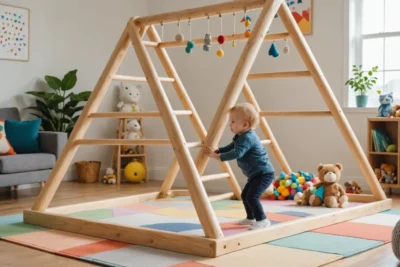
Surface considerations directly impact injury prevention during climbing activities and potential falls from equipment. Soft play mats provide essential cushioning beneath and around Pikler triangles, reducing impact forces during tumbles or slips. Additionally, foam tiles, thick rugs, or specialized playground surfacing materials create appropriate landing zones that absorb energy during falls.
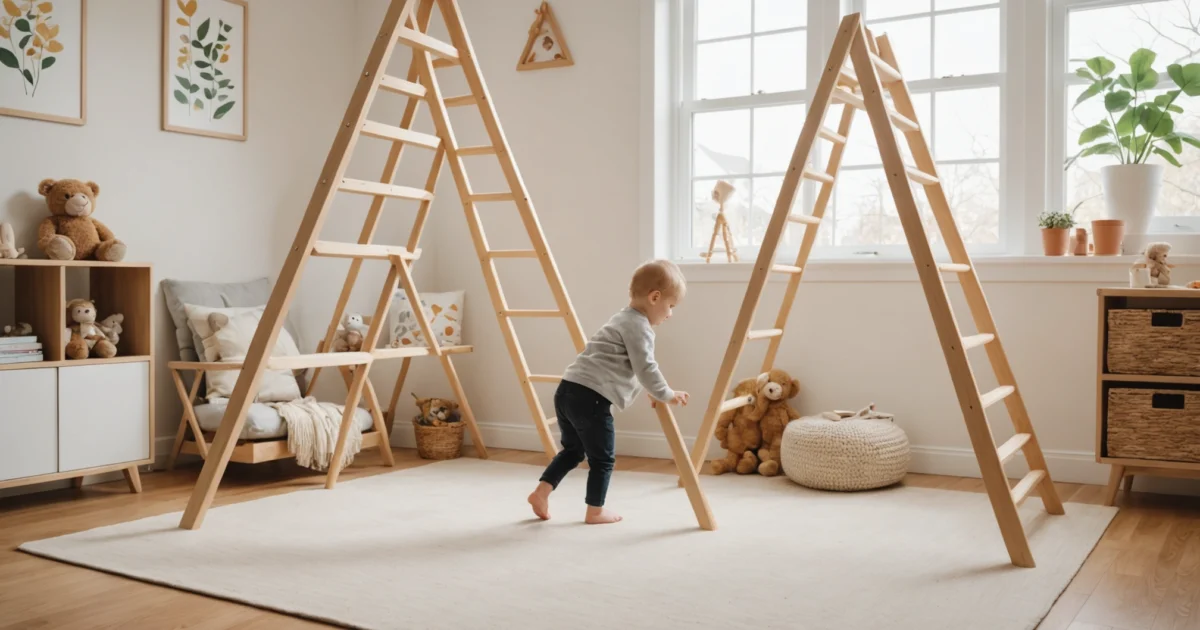
Clearance zones around climbing equipment prevent collisions with furniture, walls, or other household objects during active play. Experts recommend maintaining at least 6 feet of open space on all sides of the triangle to accommodate natural movement patterns and unexpected direction changes. Furthermore, removing sharp corners, breakable items, and hard surfaces from the immediate play area eliminates potential hazards that could cause injuries during falls.
Critical Safety Zone
Teaching Proper Climbing Techniques
Proper climbing instruction begins with demonstrating safe hand and foot placement on triangle rungs during initial play sessions. Children learn to grip rungs firmly with their entire hand rather than just fingertips, while placing feet securely in the center of each step. Moreover, teaching children to climb at their own pace prevents rushed movements that often lead to slips or loss of balance.
Three-point contact technique ensures maximum stability during climbing activities by maintaining constant connection with the triangle structure. This method requires children to keep either two hands and one foot or two feet and one hand in contact with rungs at all times. Consequently, this approach significantly reduces fall risks while building confidence and proper movement patterns.
- Face the triangle when climbing up or down
- Move one limb at a time while maintaining three points of contact
- Look ahead rather than down to maintain balance
- Descend slowly using the same careful technique as ascending
- Never jump or leap from the triangle structure
Establishing Safety Rules and Boundaries
Clear safety rules provide structure and predictability that helps children understand acceptable behavior during play sessions. One climber at a time prevents overcrowding and reduces collision risks between multiple children using the same equipment. Similarly, establishing designated climbing directions helps children anticipate movement patterns and avoid conflicts during shared play experiences.
Age-appropriate boundaries ensure that climbing challenges match individual developmental capabilities and physical limitations. Younger toddlers should focus on lower rungs and basic movements, while older children can gradually explore higher positions and more complex climbing sequences. Therefore, parents must adjust expectations and permitted activities based on each child’s demonstrated skills and comfort levels.
Pros
- Builds confidence through clear expectations
- Prevents dangerous behaviors before they occur
- Creates consistent play experiences
- Teaches responsibility and self-regulation
Cons
- May initially limit creative exploration
- Requires consistent enforcement from caregivers
- Can create resistance in strong-willed children
Regular safety discussions reinforce proper behavior and help children internalize important guidelines for safe play. These conversations should emphasize the reasoning behind rules rather than simply stating restrictions, helping children understand how their actions affect their safety. Additionally, positive reinforcement when children follow safety protocols encourages continued adherence to established boundaries during independent play sessions.
Comparing Pikler Triangles to Alternative Climbing Options
Parents often weigh Pikler triangles against other climbing equipment when creating safe indoor play environments. Traditional playground equipment typically exceeds recommended heights for toddler use, while Pikler triangles maintain manageable elevations that reduce fall distances. Moreover, commercial playground structures often incorporate materials and designs that prioritize durability over developmental appropriateness for young children.
Indoor climbing toys present varying safety profiles depending on their construction and intended age ranges. Foam climbing blocks offer softer surfaces but may lack the structural stability that wooden triangles provide. Additionally, plastic climbing domes frequently feature smooth surfaces that can become slippery, whereas Pikler triangle rungs offer consistent grip points for developing motor skills.
| Feature | ||||
|---|---|---|---|---|
| Fall Height | Controlled (2-3 feet) | High (6+ feet) | Low (1-2 feet) | Variable |
| Stability | High | High | Medium | Low |
| Grip Surface | Consistent | Variable | Soft | Unpredictable |
| Age Appropriateness | Designed for toddlers | Often too advanced | Very young children | Not designed for climbing |
Controlled climbing environments offer significant advantages over improvised furniture climbing that many toddlers naturally attempt. Chairs, tables, and couches present unstable surfaces that can tip, slide, or collapse under a child’s weight. Furthermore, furniture edges create sharp contact points that increase injury severity during falls, while rounded Pikler triangle rungs distribute impact forces more safely.
However, certain situations may warrant alternative climbing solutions over Pikler triangles. Children with specific motor delays might benefit from lower, softer climbing options that build confidence gradually. Similarly, families with extremely limited space may find compact foam climbing toys more practical than full-sized wooden triangles.
Risk assessment reveals that unsupervised furniture climbing generates the highest injury rates among indoor climbing activities. Emergency room visits frequently result from children falling from chairs, beds, or tables during unsupervised play sessions. Consequently, providing appropriate climbing equipment like Pikler triangles redirects this natural climbing drive toward safer outlets.
Professional playground equipment exceeds safety standards for public use but often incorporates heights and challenges inappropriate for home environments. Commercial climbing structures assume constant adult supervision and safety surfacing that most homes cannot accommodate. Therefore, residential climbing solutions must balance developmental benefits with realistic supervision capabilities and space constraints.
Making an Informed Safety Decision
Parents must carefully balance developmental advantages against potential safety concerns when evaluating Pikler triangles for their children. This decision-making process requires honest assessment of multiple factors that influence both safety outcomes and developmental benefits. Consequently, informed choices emerge from understanding your child’s specific needs, your family’s circumstances, and expert guidance from qualified professionals.
Weighing Developmental Benefits Against Safety Risks
Gross motor development accelerates significantly when children access appropriate climbing equipment during critical developmental windows. Research demonstrates that controlled climbing experiences enhance spatial awareness, muscle coordination, and confidence in physical abilities. However, these benefits must justify the inherent risks associated with elevated play equipment in home environments.
Risk-benefit analysis reveals that supervised climbing activities generate substantially better developmental outcomes than restricted movement environments. Children who engage in age-appropriate climbing develop stronger proprioceptive awareness and better fall-recovery skills. Nevertheless, families must honestly evaluate their supervision capabilities and environmental safety factors before introducing climbing equipment.
Pros
- Enhanced gross motor skill development
- Improved spatial awareness and coordination
- Natural outlet for climbing instincts
- Better fall-recovery and risk assessment skills
- Increased physical confidence and independence
Cons
- Requires consistent adult supervision
- Potential for falls and minor injuries
- Space requirements for safe installation
- Initial investment in quality equipment
- Need for proper safety surfacing
Family-Specific Factors to Consider
Your family’s unique circumstances significantly influence whether Pikler triangle implementation represents a wise safety decision. Multiple factors interact to determine suitability, and honest evaluation prevents mismatched expectations that compromise safety outcomes. Therefore, comprehensive assessment ensures equipment choices align with realistic family capabilities and constraints.
- Supervision availability: Consistent adult presence during climbing sessions prevents most serious injuries
- Physical space: Adequate clearance around equipment reduces collision risks and allows safe movement
- Flooring conditions: Appropriate impact-absorbing surfaces minimize injury severity during inevitable falls
- Child’s temperament: Risk-aware children typically experience fewer accidents than impulsive climbers
- Sibling dynamics: Multiple children require additional safety considerations and supervision strategies
- Storage capabilities: Proper equipment storage prevents unauthorized access and maintains structural integrity
Additionally, family lifestyle patterns influence safety outcomes significantly. Busy households with irregular schedules may struggle to provide consistent supervision that climbing equipment requires. Meanwhile, families with dedicated play spaces and structured routines often achieve better safety results with climbing toys.
Red Flags That Indicate a Triangle Isn’t Right for Your Child
Certain warning signs clearly indicate that Pikler triangles pose excessive risks for specific children or situations. Recognizing these red flags prevents accidents and guides families toward more appropriate developmental tools. Moreover, honest acknowledgment of concerning factors protects children from equipment that exceeds their current capabilities or safety awareness.
Critical Safety Red Flags
- Persistent boundary testing: Children who consistently ignore safety rules despite repeated instruction
- Developmental delays: Motor skill deficits that affect balance, coordination, or spatial awareness
- Impulsive behavior patterns: Inability to assess risks or follow safety guidelines consistently
- Fear or anxiety responses: Excessive worry about climbing that indicates emotional unreadiness
- Physical limitations: Medical conditions that compromise balance, strength, or coordination
- Inadequate supervision capacity: Family circumstances that prevent consistent adult oversight
Furthermore, environmental red flags include insufficient space, inappropriate flooring, or competing safety hazards that multiply accident risks. Children under 18 months typically lack the motor planning abilities necessary for safe triangle use, regardless of their apparent climbing enthusiasm.
Expert Recommendations from Pediatricians and Child Development Specialists
Pediatric professionals generally support age-appropriate climbing equipment when families implement proper safety protocols and supervision strategies. However, medical experts emphasize that equipment alone cannot guarantee safety outcomes without consistent adult oversight and environmental preparation. Consequently, professional recommendations focus on comprehensive safety systems rather than equipment approval alone.
The key to safe climbing experiences lies not in eliminating all risks, but in providing appropriate challenges with adequate safety measures and supervision.
Child development specialists recommend introducing climbing equipment gradually, starting with lower heights and simpler challenges before progressing to full-sized triangles. This progressive approach allows children to develop necessary skills and safety awareness systematically. Additionally, experts stress the importance of teaching explicit safety rules and consistently enforcing boundaries during climbing sessions.
Professional consensus indicates that quality equipment combined with appropriate supervision generates positive developmental outcomes for most children between 18 months and 6 years. However, specialists caution against using climbing equipment as unsupervised entertainment or assuming that expensive equipment automatically ensures safety. Instead, successful implementation requires ongoing parental engagement and safety vigilance throughout the child’s development.
Frequently Asked Questions
Are Pikler triangles safe for toddlers?
Yes, Pikler triangles are safe for toddlers when used with proper supervision and age-appropriate guidelines. They’re designed for children from 6 months to 6 years old, with toddlers naturally progressing from crawling under to climbing over as their motor skills develop. Quality construction and consistent adult oversight are essential for safe use.
What age should a child start using a Pikler triangle?
Children can begin using Pikler triangles around 6 months old when they start crawling. Initially, babies explore by crawling under and around the structure. As they develop, typically around 12-18 months, they begin climbing the rungs. The key is allowing children to progress at their own developmental pace.
How do most Pikler triangle injuries occur?
Most injuries involving climbing triangles result from improper use rather than design flaws. Common causes include:
- Falls due to inadequate supervision
- Age-inappropriate use (children too young or old for the equipment)
- Poor quality construction with unstable frames
- Improper setup or placement
What safety features should I look for in a quality Pikler triangle?
Essential safety features include:
- Proper rung spacing: 10-12 inches to prevent head entrapment while allowing secure footing
- Solid wood construction with quality joinery techniques
- Appropriate weight capacity that exceeds your child’s weight
- Smooth, splinter-free surfaces
- Stable base design that won’t tip during use
How do Pikler triangles compare to other climbing toys in terms of safety?
Research shows that Pikler triangles have a comparable or better safety record than other indoor climbing equipment. A 2023 study found that climbing triangles account for less than 2% of indoor playground injuries among children under six, with lower injury severity compared to trampolines and traditional playground equipment.
Do children need constant supervision when using a Pikler triangle?
While the Pikler philosophy emphasizes independent movement, children do need consistent adult supervision, especially younger toddlers. The level of supervision can decrease as children demonstrate competence and understanding of safe climbing practices. Never leave very young children unattended on climbing equipment.
What are the developmental benefits that make Pikler triangles worth the safety considerations?
Pikler triangles offer significant developmental benefits including:
- Gross motor skill development and muscle strengthening
- Spatial reasoning and body awareness
- Confidence building through self-directed movement
- Risk assessment capabilities
- Coordination and balance improvement
Where should I place a Pikler triangle for maximum safety?
Place your Pikler triangle on a flat, stable surface with adequate clearance around all sides. Use soft flooring like carpet, foam mats, or rugs underneath. Ensure the area is free from sharp corners, furniture edges, or other hazards. Indoor placement provides better environmental control than outdoor use.
Can Pikler triangles be used outdoors safely?
While Pikler triangles can be used outdoors, indoor use is generally safer due to better environmental control. If using outdoors, ensure the surface is level, check for weather damage regularly, and bring the triangle inside during harsh weather. The controlled indoor environment reduces variables that could affect safety.
What should I do if my child falls from a Pikler triangle?
Most falls result in minor bruises or scrapes. Stay calm and assess the situation. Check for obvious injuries and comfort your child. If there are signs of serious injury (head trauma, inability to move, severe pain), seek medical attention immediately. Minor falls are part of the learning process and help children develop risk assessment skills.
How long do children typically use Pikler triangles?
Children typically use Pikler triangles from 6 months to 6 years old, though usage patterns vary. Younger children explore and crawl around the structure, while older children use it for climbing challenges. Many families find the triangle remains engaging for several years as children discover new ways to interact with it.
Are there any children who shouldn’t use Pikler triangles?
Children with certain developmental delays, motor impairments, or medical conditions may need modified approaches or alternative equipment. Consult with your pediatrician or occupational therapist if your child has special needs. Additionally, children who consistently demonstrate unsafe behavior despite guidance may need more time before using climbing equipment.
You May Also Like
Why Are Pikler Triangles So Expensive? Cost Breakdown 2026
Pikler Triangle Height Guide: Age-Appropriate Sizes & Safety