Montessori Cultural Materials: Complete Guide for 2026

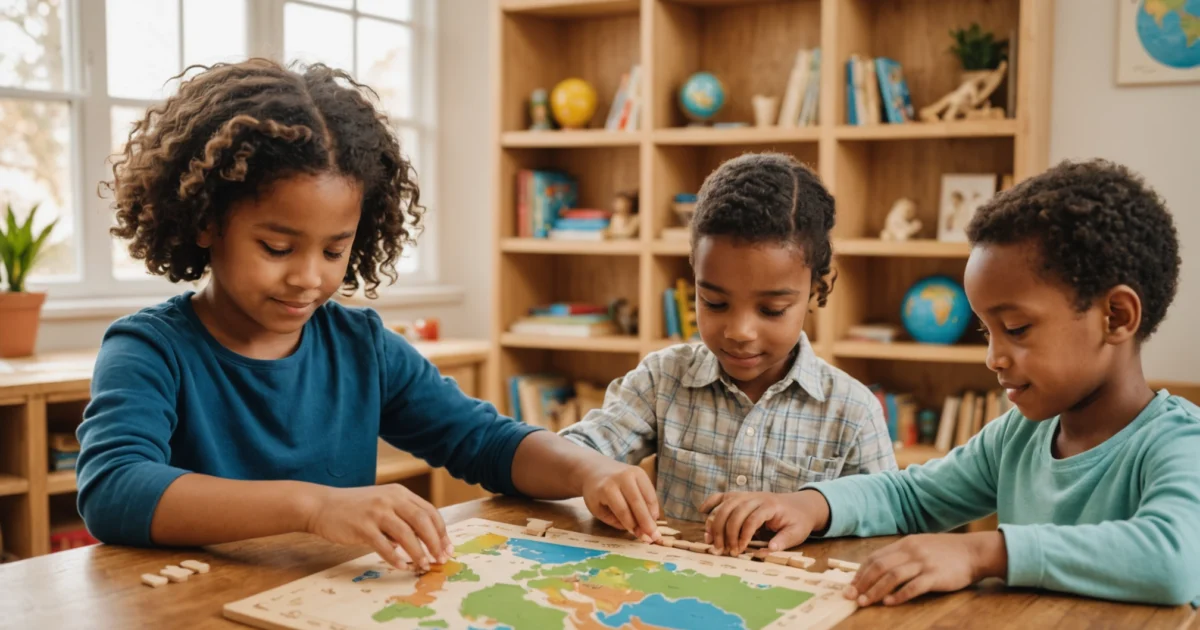
Montessori cultural materials are specialized educational tools designed to introduce children to geography, history, science, and diverse cultures around the world. These materials form a cornerstone of Maria Montessori’s cosmic education philosophy, which aims to help children understand their place in the universe and develop a global perspective. Furthermore, cultural materials seamlessly integrate with other Montessori curriculum areas, creating connections between subjects while fostering curiosity about the natural and human world.
The cultural area encompasses five main categories: geography materials like puzzle maps and land-water forms, history materials including timelines and cultural artifacts, science materials for botany and zoology studies, art and music materials representing various cultures, and language materials featuring cultural stories and writing systems. Additionally, these materials progress from concrete sensorial experiences for younger children to abstract research-based studies for elementary students.
Cultural materials serve multiple developmental purposes beyond academic learning. They build cultural sensitivity, enhance research skills, and promote peace education through understanding of diversity. Moreover, they encourage independent exploration while connecting children to both their local community and the broader world, similar to how the Emmi Pikler approach emphasizes respectful, child-centered learning experiences.
TL;DR
- Montessori cultural materials introduce children to geography, history, science, and world cultures through hands-on learning experiences
- Five main categories include geography (puzzle maps), history (timelines), science (botany/zoology), art/music, and language materials
- Materials progress from concrete sensorial activities for ages 3-6 to abstract research studies for elementary students
- Benefits include developing global perspective, research skills, cultural sensitivity, and connections between academic subjects
What Are Montessori Cultural Materials?
Montessori cultural materials represent a comprehensive collection of educational tools designed to introduce children to the interconnected nature of knowledge and human civilization. These materials serve as bridges connecting children to their world through concrete, hands-on experiences that gradually build toward abstract understanding. Furthermore, they embody Maria Montessori’s belief that education should prepare children to become informed global citizens.
The purpose of cultural materials extends beyond simple fact transmission to cultivate what Montessori termed “cosmic education.” This philosophy recognizes that all knowledge interconnects within a grand cosmic plan where every element serves a vital function. Consequently, children develop appreciation for their role within the larger universe while understanding how human cultures contribute to civilization’s advancement.
Cosmic Education Foundation
Cultural understanding develops naturally through these materials as children explore different societies, traditions, and ways of life. The materials present diversity as a strength rather than a division, showing how various cultures solve similar human needs through different approaches. Additionally, this exposure builds empathy and respect for differences while highlighting universal human experiences.
Global awareness emerges as children work with world maps, study different countries, and learn about various peoples’ contributions to human progress. The materials demonstrate how geography influences culture, how historical events shape present circumstances, and how scientific discoveries benefit all humanity. Moreover, children begin recognizing patterns and connections that span continents and centuries.
Integration with other Montessori curriculum areas occurs seamlessly through cultural materials. Mathematical concepts appear in timeline work and map measurements, while language skills develop through cultural stories and research projects. Similarly, sensorial experiences from earlier learning support geographic and scientific explorations, creating a unified educational experience rather than isolated subject study.
The materials function as research tools that encourage independent investigation and discovery. Children learn to formulate questions, seek answers through various sources, and present their findings to others. This approach builds critical thinking skills while maintaining the natural curiosity that drives authentic learning experiences throughout childhood development.
Core Categories of Montessori Cultural Materials
Montessori cultural materials organize into five distinct categories that systematically introduce children to human civilization and natural sciences. Each category builds foundational knowledge while connecting to broader cultural understanding through hands-on exploration and discovery.
Geography Materials: Mapping the World
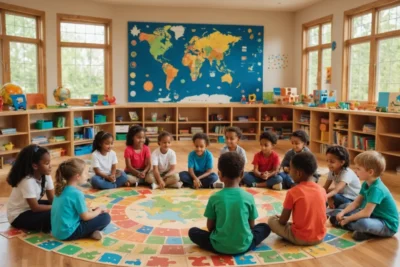
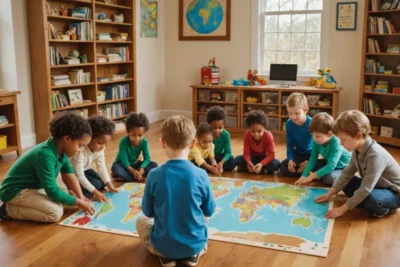
Puzzle maps serve as the cornerstone of geographic education, beginning with the world continents and progressing to individual countries. These wooden puzzles allow children to physically handle geographic shapes, developing spatial awareness while memorizing continental boundaries. The tactile experience reinforces visual learning as children repeatedly assemble and disassemble these colorful representations.
Land and water forms demonstrate geographic concepts through three-dimensional models and matching cards. Children explore islands, peninsulas, straits, and lakes using miniature landscapes filled with actual water. These materials make abstract geographic terms concrete and understandable for young learners.
Flag studies connect geography to cultural identity through national symbols and their historical significance. Children learn to identify flags while discovering the stories behind their colors, patterns, and emblems. This work naturally extends to learning about national customs, languages, and traditions associated with each country.
History Materials: Understanding Time and Progress
Timeline materials present human history through visual chronologies that span from the formation of the universe to modern times. The Timeline of Life shows evolution through millions of years, while shorter timelines focus on human civilization periods. These materials help children grasp vast time concepts through proportional representations.
Historical figures come alive through biographical materials, picture cards, and research folders. Children study inventors, artists, scientists, and leaders who shaped human progress. These studies demonstrate how individual contributions create lasting changes that benefit all humanity.
Cultural artifacts provide tangible connections to past civilizations through replicas and authentic items. Children examine tools, clothing, art objects, and architectural models that reveal how people lived in different eras. This hands-on approach makes history immediate and relevant rather than abstract.
Science Materials: Exploring Natural Laws
Botany materials introduce plant classification, life cycles, and functions through detailed nomenclature cards and specimens. Children learn botanical terminology while examining real plants, seeds, and flowers. The materials progress from simple identification to complex understanding of photosynthesis and plant reproduction.
Zoology studies classify animals according to scientific categories while exploring habitats, adaptations, and life cycles. Children work with detailed animal cards, skeletons, and models to understand vertebrate and invertebrate characteristics. These materials demonstrate the interconnectedness of all living creatures within ecosystems.
Physical science experiments allow children to discover fundamental principles through direct manipulation and observation. Simple experiments with magnetism, gravity, light, and sound provide concrete experiences with abstract scientific concepts. Children formulate hypotheses, conduct tests, and draw conclusions through guided investigation.
Art and Music Materials: Cultural Expression
Cultural art forms expose children to diverse artistic traditions through reproductions, art supplies, and technique demonstrations. Children study famous artworks while learning about the cultures that created them. They practice various artistic methods including painting, sculpture, and textile arts from different civilizations.
Musical instruments from around the world introduce children to different sound traditions and musical scales. Children explore rhythm, melody, and harmony through hands-on experience with authentic instruments. This musical exploration connects to cultural studies as children learn how different societies use music for celebration, communication, and expression.
Language and Literature: Communication Across Cultures
Cultural stories preserve traditional wisdom while introducing children to diverse narrative traditions from around the world. These carefully selected tales demonstrate universal themes while showcasing unique cultural perspectives. Children encounter creation myths, folk tales, and legends that reveal how different societies explain natural phenomena and teach moral lessons.
Poetry collections expose children to rhythmic language patterns and cultural expressions through verses from various traditions. Children memorize poems, analyze their meanings, and create their own verses inspired by different cultural forms. This work develops language appreciation while building cultural connections.
Writing systems demonstrate how humans developed different methods for recording language and preserving knowledge. Children explore hieroglyphics, cuneiform, and various alphabets through tracing activities and symbol creation. These materials show how written communication evolved to meet different cultural and practical needs across civilizations.
Geography Materials and Activities
Montessori cultural materials transform abstract geographical concepts into concrete learning experiences through carefully designed manipulative tools. These materials enable children to explore Earth’s physical features, political boundaries, and diverse environments through hands-on discovery. Geography education begins with sensorial exploration and progresses to complex understanding of global interconnections.
Puzzle Maps: Building Spatial Understanding
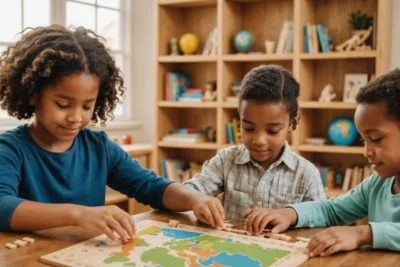
Puzzle maps serve as foundational geography materials that help children visualize continental shapes and country boundaries through tactile manipulation. Each continent appears as a separate wooden puzzle piece, allowing children to physically handle and position landmasses while developing spatial awareness. The materials progress from simple continent maps to detailed country puzzles that reveal political divisions and geographical relationships.
Children begin their geographical journey by removing and replacing continent pieces, gradually memorizing shapes through muscle memory and visual recognition. Subsequently, they advance to country-specific puzzles that demonstrate how political boundaries divide larger landmasses. This progression builds understanding from general to specific, following Montessori’s fundamental principle of moving from concrete to abstract concepts.
Land and Water Form Trays
Land and water form trays provide three-dimensional representations of geographical features that children can touch, fill, and manipulate during exploration activities. These blue and brown trays demonstrate concepts like islands, peninsulas, lakes, and straits through miniature landscapes filled with actual water. Children pour water into designated areas, observing how liquid naturally flows and settles in different formations.
The trays introduce geographical vocabulary through direct sensorial experience rather than abstract explanation. For instance, children understand that an island represents land completely surrounded by water by observing their tray model. Similarly, they grasp peninsula concepts by seeing land extending into water on three sides while remaining connected to a larger landmass.
Flag Studies and National Identity
Flag identification activities connect geographical knowledge to cultural identity while developing visual discrimination skills and cultural awareness. Children match flag cards to corresponding countries on puzzle maps, creating connections between symbols and territories. These materials introduce discussions about national symbols, colors, and design elements that reflect cultural values and historical experiences.
Flag matching exercises progress from simple recognition to complex analysis of symbolic meanings and historical contexts. Children explore why certain colors appear frequently in regional flags or how geographical features influence design choices. This work builds cultural sensitivity while reinforcing geographical knowledge through multi-sensory learning approaches.
Regional Cultural Exploration
Cultural studies materials examine how geography influences human adaptation, traditions, and lifestyle choices across different regions worldwide. Children investigate how climate, natural resources, and terrain shape architecture, clothing, food production, and social customs. These studies demonstrate the fundamental relationship between physical environment and cultural development throughout human history.
Regional study boxes contain artifacts, photographs, and information cards that represent specific geographical areas and their inhabitants. Children compare desert adaptations with arctic survival strategies, understanding how humans modify their behaviors to thrive in diverse environments. This comparative approach builds appreciation for human ingenuity while fostering respect for cultural diversity and environmental adaptation.
Climate and Biome Discovery
Climate exploration materials help children understand how temperature, precipitation, and seasonal patterns create distinct biomes that support different plant and animal communities. These materials include climate classification cards, biome definition materials, and ecosystem study guides that connect weather patterns to living environments. Children learn that climate determines which organisms can survive in specific regions.
Biome study materials feature detailed representations of rainforests, deserts, grasslands, and tundra environments through pictures, specimens, and interactive displays. Children examine how plants and animals adapt to their specific biomes, understanding concepts like camouflage, hibernation, and migration as survival strategies. This work connects geography to biology while building environmental awareness and conservation consciousness.
Furthermore, climate studies introduce children to global weather patterns, seasonal changes, and the water cycle’s role in shaping geographical features. Children track weather data, create climate graphs, and explore how human activities impact environmental systems. These investigations develop scientific thinking while building understanding of humanity’s responsibility for environmental stewardship and sustainable living practices.
History and Timeline Materials
History and timeline materials form the cornerstone of Montessori cultural education, presenting the vast sweep of cosmic history through carefully sequenced lessons that capture children’s imagination. These materials tell the great stories of universe formation, Earth’s development, life’s emergence, and human civilization through dramatic narratives that connect scientific facts to meaningful contexts. Children experience history as an interconnected web of relationships rather than isolated events.
The Timeline of Life serves as the primary material for understanding evolutionary history, stretching across classroom floors to demonstrate the immense spans of geological time. This black timeline features measured segments representing different eras, with the appearance of humans occupying only the tiniest fraction at the end. Children place pictures and specimens along the timeline, visualizing how life forms developed complexity through millions of years of adaptation and change.
Similarly, the Timeline of Humans explores cultural development from early hominids to modern civilization, showing how humans created tools, developed language, and built societies. Children trace humanity’s journey through hunter-gatherer societies, agricultural revolutions, and technological advances that shaped contemporary life. This timeline emphasizes human creativity, cooperation, and the gradual accumulation of knowledge across generations.
Historical figure studies bring individual personalities to life through research cards, biographies, and project materials that encourage deep investigation into influential people’s contributions. Children explore scientists, artists, leaders, and inventors who changed human understanding or improved life conditions. These studies develop research skills while demonstrating how individual actions can create lasting impact on human progress and cultural development.
Research Approach
Research cards provide structured frameworks for investigating historical personalities, guiding children through biographical details, major accomplishments, historical context, and lasting influence. These cards teach children to evaluate sources, organize information chronologically, and present findings clearly to others. The research process develops critical thinking skills while building appreciation for diverse human achievements across cultures and time periods.
Cultural celebrations and traditions materials explore how different societies mark important events, seasonal changes, and life transitions through festivals, ceremonies, and customs. Children study holiday origins, traditional foods, ceremonial objects, and cultural practices that reflect each society’s values and beliefs. These materials build cultural awareness while demonstrating how human communities create meaning through shared experiences and collective memory.
Traditional celebration studies include materials for exploring religious holidays, harvest festivals, coming-of-age ceremonies, and national commemorations from cultures worldwide. Children examine how celebrations reflect geographic influences, historical events, and spiritual beliefs that shape community identity. This work fosters respect for cultural diversity while highlighting universal human needs for belonging, celebration, and meaning-making.
Moreover, archaeology and ancient civilization studies introduce children to how historians and archaeologists uncover evidence about past societies through systematic investigation of artifacts, structures, and written records. Children examine archaeological tools, excavation methods, and artifact analysis techniques that reveal information about daily life, trade relationships, and technological capabilities of ancient peoples.
- Mesopotamian civilization cards featuring cuneiform writing and irrigation systems
- Egyptian materials including hieroglyphic studies and pyramid construction
- Greek civilization exploration through philosophy, democracy, and architectural achievements
- Roman empire materials covering engineering, law, and territorial expansion
- Indigenous civilization studies highlighting diverse cultural adaptations
Ancient civilization materials present detailed studies of major historical societies through artifact replicas, architectural models, and cultural practice demonstrations. Children explore how geographical factors influenced civilization development, how trade networks connected distant societies, and how technological innovations spread across cultures. These investigations develop understanding of historical causation while building appreciation for human ingenuity and cultural achievement.
Archaeological investigation activities teach children to think like historians, examining evidence carefully and drawing logical conclusions about past human behavior. Children practice artifact classification, site mapping, and hypothesis formation while learning how archaeological discoveries continuously expand human understanding of historical development. This scientific approach to history builds critical thinking skills while demonstrating how knowledge grows through systematic inquiry and evidence-based reasoning.
Science and Nature Study Materials
Montessori cultural materials in science and nature studies provide children with systematic exploration opportunities that develop scientific thinking through direct observation and classification. These materials transform abstract natural concepts into concrete learning experiences, enabling children to understand biological systems, geological processes, and environmental relationships through hands-on investigation.
Botany Cabinet and Leaf Classification
The botany cabinet contains wooden leaf shape insets that introduce children to botanical classification through tactile exploration. Children trace leaf shapes, match real leaves to corresponding insets, and learn botanical terminology including simple, compound, palmate, and pinnate leaf structures. This systematic approach develops visual discrimination skills while building foundational knowledge of plant morphology.
Leaf classification activities extend beyond shape recognition to include botanical nomenclature cards featuring scientific plant names and detailed illustrations. Children learn to identify common trees through leaf characteristics, understand seasonal changes in deciduous plants, and explore the relationship between leaf structure and plant habitat. These studies develop observation skills while introducing scientific vocabulary and classification systems used by botanists worldwide.
Zoology Materials and Animal Classification
Zoology materials guide children through systematic animal classification using the Linnaean taxonomy system. Puzzle maps show animal distribution across continents, while classification cards organize animals by phylum, class, and order characteristics. Children learn to distinguish vertebrates from invertebrates, understand mammalian characteristics versus reptilian features, and explore how animal adaptations relate to environmental conditions.
Animal study extends to life cycle materials that demonstrate metamorphosis, reproduction, and growth patterns across species. Children observe butterfly transformation through preserved specimens, study bird development from egg to adult, and learn about mammalian birth and nurturing behaviors. These investigations develop understanding of biological processes while building vocabulary related to animal behavior, habitat requirements, and ecological relationships.
Rock and Mineral Collections
Rock and mineral collections provide concrete examples of geological formation processes and Earth’s material composition. Children examine igneous, sedimentary, and metamorphic rock samples while learning how different formation processes create distinct characteristics. Mineral specimens demonstrate properties including hardness, luster, and crystal structure, introducing children to geological classification systems.
Geological studies incorporate formation timeline materials that show how rocks change over millions of years through weathering, erosion, and tectonic activity. Children learn to identify common minerals using simple tests for hardness and streak color, understand how fossils form within sedimentary layers, and explore how geological processes shape landscape features. These hands-on investigations develop scientific observation skills while building understanding of Earth’s dynamic systems.
Weather and Astronomy Materials
Weather study materials include measurement instruments, cloud identification charts, and seasonal observation records that teach children about atmospheric processes. Children use thermometers, barometers, and wind vanes to collect daily weather data, learn to identify cumulus, stratus, and cirrus cloud formations, and understand how temperature, pressure, and humidity interact to create weather patterns.
Astronomy materials introduce children to solar system organization, planetary characteristics, and celestial movements through three-dimensional models and observation charts. Children learn planet names in order from the sun, understand day and night cycles through Earth rotation demonstrations, and explore how moon phases result from orbital positioning. These studies develop spatial reasoning while building foundational knowledge of astronomical concepts and scientific measurement.
Environmental Science and Ecology Studies
Environmental science materials demonstrate ecological relationships through food chain cards, habitat dioramas, and ecosystem balance activities. Children learn how producers, consumers, and decomposers interact within natural systems, understand how energy flows through trophic levels, and explore how human activities impact environmental stability. These studies develop systems thinking while building awareness of ecological interdependence.
Ecology investigations include conservation materials that teach children about renewable versus non-renewable resources, pollution effects on natural systems, and sustainable living practices. Children explore how recycling reduces waste, learn about endangered species protection efforts, and understand how individual choices affect environmental health. These comprehensive studies develop environmental responsibility while building scientific understanding of human impact on natural systems.
Age-Appropriate Cultural Materials
Montessori cultural materials follow a carefully designed progression that matches children’s developmental stages and cognitive abilities. This systematic approach ensures that young learners encounter concepts at precisely the right moment for optimal understanding and retention. Cultural education adapts its complexity and presentation methods to support natural learning patterns across different age groups.
Primary Level Cultural Learning (Ages 3-6)
Sensorial geography activities form the foundation of cultural education for young children. These materials engage multiple senses through tactile exploration of continent shapes, textured land and water forms, and three-dimensional puzzle maps. Children trace continents with their fingers, feel the difference between rough mountain ranges and smooth ocean areas, and build spatial awareness through hands-on manipulation.
Simple cultural activities introduce basic concepts through concrete experiences rather than abstract information. Children explore different cultural foods by tasting, smelling, and preparing simple recipes from various countries. They examine traditional clothing through dress-up activities, listen to music from different cultures, and learn basic greetings in various languages. These experiences build cultural awareness through direct sensory engagement.
Primary materials emphasize immediate, concrete understanding over detailed factual knowledge. Children work with large, colorful materials that isolate single concepts and provide clear visual feedback. Land and water forms demonstrate geographical concepts through simple sorting activities, while basic timeline materials introduce sequence concepts through picture cards showing daily routines or seasonal changes.
Elementary Level Cultural Studies (Ages 6-12)
Research-based studies characterize elementary cultural education as children develop abstract thinking capabilities and independent learning skills. Students investigate topics through multiple sources, conduct experiments to understand scientific principles, and create detailed reports about their discoveries. This approach develops critical thinking while building comprehensive knowledge across cultural subjects.
Elementary children engage with complex timeline work that spans millions of years and connects multiple disciplines simultaneously. They explore geological time through rock formation studies, trace human civilization development through historical research, and understand how scientific discoveries built upon previous knowledge. Timeline materials help students visualize vast time periods and understand cause-and-effect relationships across history.
Research projects allow elementary students to pursue personal interests while meeting curriculum objectives. Children choose topics that fascinate them, develop research questions, gather information from various sources, and present findings to classmates. This independence fosters intrinsic motivation while building academic skills necessary for advanced learning.
Concrete to Abstract Learning Progression
Cultural materials demonstrate a systematic progression from concrete experiences to abstract understanding that respects natural cognitive development. Young children begin with sensorial exploration of actual objects, progress to pictorial representations, and eventually work with symbolic materials that represent complex concepts. This sequence ensures solid foundational understanding before introducing abstract thinking.
Geographical studies exemplify this progression perfectly through their material sequence. Children first explore actual rocks, shells, and natural specimens before working with classification cards that picture these items. Later, they use maps and globes to understand spatial relationships, then progress to reading about geographical concepts in books and conducting independent research projects.
Historical understanding follows similar developmental patterns from concrete to abstract thinking. Primary children experience history through storytelling, role-playing, and handling replica artifacts that make past events tangible and immediate. Elementary students then investigate historical periods through research, analyze cause-and-effect relationships, and understand how past events influence contemporary society.
Individual and Group Presentation Formats
Individual presentations allow children to demonstrate personal understanding and develop confidence in public speaking. Students choose topics that interest them, research independently, and present findings to small groups or entire classes. These presentations develop communication skills while reinforcing learning through teaching others.
Group presentations encourage collaboration and shared responsibility for learning outcomes. Children work together to investigate complex topics, divide research tasks according to individual strengths, and coordinate their findings into cohesive presentations. Collaborative work develops social skills while demonstrating how different perspectives enhance understanding of cultural topics.
Presentation formats vary according to age and developmental needs, from simple show-and-tell activities for younger children to sophisticated research reports for elementary students. Teachers guide children in choosing appropriate presentation methods that match their communication abilities while challenging them to grow in confidence and skill. This flexibility ensures that every child can successfully share their cultural learning with others.
Implementation in the Montessori Classroom
Successful implementation of Montessori cultural materials requires careful attention to environmental design, presentation techniques, and assessment strategies. Teachers create learning environments that support independent exploration while maintaining clear connections between cultural studies and other curriculum areas.
Setting Up the Cultural Area in Prepared Environment
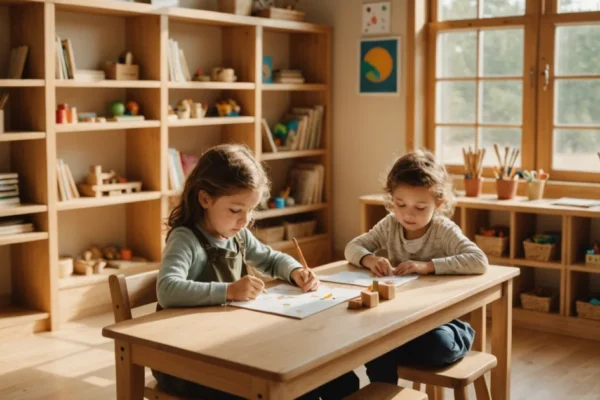
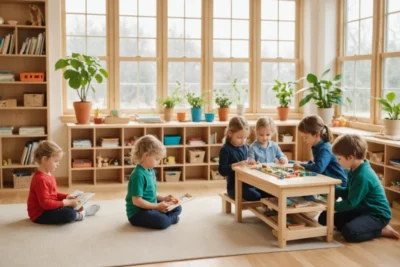
The cultural area occupies a dedicated space within the prepared environment, featuring low shelves that display materials at children’s eye level. Geography materials appear on the left side of the area, followed by history materials, then science and nature study resources. This logical arrangement helps children understand the interconnected nature of cultural subjects.
Materials require careful organization according to complexity and sequence. Furthermore, teachers arrange puzzle maps from concrete to abstract, beginning with the world puzzle map and progressing to individual continent maps. Each material has a designated place that children learn to maintain through daily use and care routines.
Natural lighting enhances the cultural area whenever possible, while adequate table space allows children to work comfortably with larger materials. Additionally, teachers provide magnifying glasses, atlases, and reference books that support deeper investigation of cultural topics. The environment invites exploration while maintaining the order essential for independent learning.
Presentation Techniques and Lesson Structure
Effective presentations of cultural materials follow the traditional three-period lesson structure adapted for cultural content. Teachers begin with careful preparation, ensuring they understand both the material’s purpose and its place within the broader cultural curriculum. Initial presentations focus on concrete experiences that engage children’s senses and natural curiosity.
The first period introduces vocabulary and basic concepts through direct manipulation of materials. For example, teachers demonstrate the sandpaper globe by having children feel the rough land masses and smooth water areas while naming continents. This sensory approach creates lasting impressions that support later abstract learning.
During the second period, teachers ask children to identify and manipulate materials based on given instructions. Children might locate specific continents on puzzle maps or arrange timeline cards in chronological order. This active practice reinforces understanding while allowing teachers to observe comprehension levels.
The third period invites children to demonstrate their knowledge independently. Teachers ask open-ended questions that encourage children to explain concepts in their own words or make connections between different cultural topics. However, formal testing never replaces this natural assessment approach.
Encouraging Independent Research and Exploration
Independent research develops naturally when children encounter intriguing questions during their work with cultural materials. Teachers support this curiosity by providing access to age-appropriate reference materials and research tools. Children learn to formulate questions, locate relevant information, and organize their findings into meaningful presentations.
Research projects begin with simple investigations that match children’s developmental abilities. Primary students might explore animals from different continents, while elementary children investigate complex historical events or scientific phenomena. Teachers guide children in choosing topics that genuinely interest them rather than assigning predetermined subjects.
The classroom library includes books, magazines, and digital resources that support cultural investigations. Moreover, teachers help children develop research skills by modeling effective information-gathering techniques and teaching proper citation methods. Children learn to evaluate sources critically and synthesize information from multiple references.
Connecting Cultural Studies to Other Curriculum Areas
Cultural studies naturally integrate with mathematics, language, and practical life activities throughout the Montessori curriculum. Geography lessons incorporate measurement and scale concepts, while historical timelines reinforce number sequences and mathematical relationships. These connections demonstrate how knowledge forms an interconnected whole rather than isolated subjects.
- Language connections emerge through vocabulary development, research writing, and storytelling activities
- Mathematical applications include map scaling, timeline calculations, and statistical analysis of cultural data
- Practical life skills develop through food preparation from different cultures and traditional craft activities
- Science integration occurs naturally when studying ecosystems, climate patterns, and technological innovations
Teachers plan thematic units that weave cultural content throughout daily activities. For instance, a study of ancient Egypt might include hieroglyphic writing practice, pyramid geometry, and mummification science experiments. These integrated approaches help children understand how different aspects of human culture connect and influence each other.
Assessment and Observation Methods
Assessment in Montessori cultural education relies primarily on systematic observation rather than standardized testing. Teachers document children’s progress through detailed notes that capture both academic understanding and developing interests. These observations inform future lesson planning and material presentations.
Portfolio assessment collects samples of children’s cultural work over time, including research reports, artistic interpretations, and presentation materials. Additionally, teachers photograph children working with materials to document their engagement levels and problem-solving approaches. This comprehensive documentation provides evidence of learning that extends beyond traditional academic measures.
Self-assessment opportunities help children reflect on their own learning progress and set personal goals for future cultural investigations. Teachers facilitate regular conferences where children discuss their interests, challenges, and accomplishments in cultural studies. These conversations develop metacognitive skills while maintaining the child-centered focus essential to Montessori education.
Peer assessment occurs naturally when children present their research to classmates and receive feedback on their work. Nevertheless, teachers ensure that feedback remains constructive and supportive, focusing on the learning process rather than comparing children’s abilities. This approach builds confidence while encouraging continuous improvement in cultural understanding.
Benefits of Montessori Cultural Materials
Montessori cultural materials cultivate a global perspective that transcends geographical boundaries and cultural limitations. Children develop cultural sensitivity through direct exposure to diverse traditions, customs, and ways of life from around the world. This exposure fosters empathy and understanding that forms the foundation for peaceful international relations.
Furthermore, these materials enhance research and critical thinking skills through hands-on investigation and exploration. Students learn to formulate questions, gather information from multiple sources, and analyze findings independently. Active engagement with cultural materials develops analytical abilities that transfer to all academic subjects and life situations.
Pros
- Develops global awareness and cultural appreciation
- Enhances independent research capabilities
- Builds critical thinking through investigation
- Fosters natural curiosity about world cultures
- Creates foundation for academic excellence
Cons
- Requires extensive teacher preparation and knowledge
- Materials can be expensive to acquire initially
- Needs regular updates to remain current
Cultural materials foster curiosity about both the natural and human world through interconnected learning experiences. Children discover how geography influences culture, how history shapes present-day societies, and how scientific discoveries impact human development. This integrated approach helps students understand the relationships between different fields of knowledge.
Moreover, these materials build a strong foundation for traditional academic subjects by making abstract concepts concrete and meaningful. Geography becomes tangible through puzzle maps and landform models, while history comes alive through timeline materials and cultural artifacts. Science concepts emerge naturally as children explore how different cultures adapt to their environments.
Peace education represents a fundamental benefit of Montessori cultural materials, as children learn to appreciate diversity and resolve conflicts through understanding. Students discover commonalities among different cultures while respecting unique differences and traditions. This understanding promotes tolerance and cooperation that extends beyond the classroom into daily interactions.
Additionally, cultural materials develop language skills through storytelling, research presentations, and cross-cultural communication activities. Children expand their vocabulary while learning about different societies and their contributions to human civilization. Research demonstrates that this comprehensive approach to cultural education produces students who are both academically prepared and socially conscious global citizens.
Selecting and Sourcing Cultural Materials
Quality considerations form the foundation of effective Montessori cultural materials selection, as authentic materials provide children with genuine learning experiences. Authentic artifacts, traditional crafts, and culturally accurate representations ensure students develop accurate understanding of different societies and their practices. Furthermore, materials must demonstrate durability to withstand repeated handling while maintaining their educational integrity over time.
Material authenticity requires careful evaluation of sources, cultural accuracy, and educational value before making purchasing decisions. Teachers should verify that artifacts represent genuine cultural practices rather than stereotypical or commercialized interpretations. Additionally, materials must align with Montessori principles of self-correction, isolation of concepts, and progressive skill development.
Commercial Suppliers vs. DIY Options
Commercial suppliers offer professionally manufactured materials with consistent quality standards and comprehensive teacher guides. Established Montessori material companies provide scientifically accurate globes, precisely crafted puzzle maps, and historically accurate timeline materials. However, commercial options often require significant financial investment and may limit customization opportunities.
DIY alternatives allow teachers to create culturally relevant materials that reflect their specific student populations and local communities. Handmade materials can incorporate regional artifacts, family traditions, and contemporary cultural elements that commercial suppliers might overlook. Nevertheless, creating quality DIY materials demands considerable time investment and specialized crafting skills.
Pros
- Lower cost per item
- Customizable to local culture
- Involves community participation
- Reflects current events
Cons
- Time-intensive creation process
- Quality consistency challenges
- Limited durability
- Requires specialized skills
Budget-Friendly Alternatives and Adaptations
Budget constraints require creative approaches to building comprehensive cultural material collections without compromising educational effectiveness. Teachers can adapt everyday objects into learning materials by transforming household items into cultural artifacts and geography tools. For instance, empty containers become cultural sorting materials, while magazine photographs create affordable cultural classification cards.
Community partnerships provide cost-effective sourcing opportunities through donations, cultural exchanges, and collaborative purchasing arrangements. Local museums often loan educational materials, while cultural organizations may donate authentic artifacts for classroom use. Additionally, parent volunteers can contribute specialized knowledge and materials from their cultural backgrounds.
- Library partnerships for rotating cultural book collections
- Museum loan programs offering authentic artifacts
- Cultural center collaborations providing guest speakers and materials
- Parent contributions sharing family traditions and objects
- Teacher exchanges swapping materials between classrooms
Digital Resources and Modern Technology Integration
Digital resources expand cultural learning opportunities while maintaining Montessori principles of hands-on exploration and self-directed discovery. Virtual museum tours allow children to explore cultural sites worldwide, while interactive maps provide real-time geographic information. Moreover, digital storytelling tools enable students to create presentations about different cultures and share their research findings.
Technology integration requires careful balance between digital tools and traditional manipulative materials to preserve the tactile learning experiences central to Montessori education. Tablets and computers serve as research tools rather than primary learning materials, supporting investigation and documentation activities. Consequently, digital resources complement rather than replace physical cultural materials in the prepared environment.
Online databases provide access to current cultural information, historical documents, and multimedia resources that enhance traditional materials. Teachers can access National Geographic Education resources for authentic cultural content and geographic materials. Additionally, video conferencing enables direct cultural exchanges between classrooms in different countries.
Maintaining and Updating Cultural Material Collections
Regular maintenance ensures cultural materials remain accurate, relevant, and functional throughout their educational lifespan. Materials require periodic inspection for damage, outdated information, and cultural sensitivity issues that may emerge over time. Furthermore, systematic organization and inventory management prevent loss and ensure materials remain accessible when needed.
Updating collections involves incorporating new cultural developments, current events, and evolving understanding of different societies. Teachers must regularly assess whether materials accurately represent contemporary cultures rather than historical stereotypes. Additionally, student feedback and observation data guide decisions about which materials effectively support learning objectives.
Collection Management Strategy
Professional development opportunities help teachers stay current with best practices in cultural education and material selection. Montessori conferences, cultural workshops, and online training programs provide updates on new materials and teaching approaches. Consequently, ongoing education ensures teachers can effectively evaluate, select, and implement cultural materials that support authentic learning experiences.
Frequently Asked Questions
What are Montessori cultural materials?
Montessori cultural materials are specialized educational tools designed to introduce children to geography, history, science, and diverse cultures around the world. These materials form a cornerstone of Maria Montessori’s cosmic education philosophy, helping children understand their place in the universe and develop a global perspective through hands-on learning experiences.
What are the five main categories of Montessori cultural materials?
- Geography materials: puzzle maps and land-water forms
- History materials: timelines and cultural artifacts
- Science materials: botany and zoology studies
- Art and music materials: representing various cultures
- Language materials: cultural stories and writing systems
What is cosmic education in Montessori?
Cosmic education is Maria Montessori’s philosophy that recognizes all knowledge as interconnected within a grand cosmic plan where every element serves a vital function. This approach helps children understand how human cultures contribute to civilization’s advancement and appreciate their role within the larger universe.
How do cultural materials progress with age?
Cultural materials progress from concrete sensorial experiences for younger children (ages 3-6) to abstract research-based studies for elementary students. This progression follows the Montessori principle of moving from concrete to abstract learning, allowing children to build understanding gradually.
What developmental benefits do cultural materials provide?
- Build cultural sensitivity and respect for diversity
- Enhance research skills and independent exploration
- Promote peace education through understanding of diversity
- Develop global perspective and awareness
- Create connections between academic subjects
- Foster curiosity about the natural and human world
How do cultural materials integrate with other Montessori curriculum areas?
Cultural materials seamlessly integrate with other Montessori curriculum areas by creating natural connections between subjects. Mathematical concepts appear in timeline work and map measurements, while language skills develop through cultural stories and research projects. This integration demonstrates the interconnected nature of all knowledge.
What are some examples of geography materials in Montessori?
Geography materials include puzzle maps that allow children to physically manipulate continents and countries, and land-water forms that demonstrate geographical concepts like islands, peninsulas, and straits. These concrete materials help children understand spatial relationships and geographical terminology.
How do cultural materials promote peace education?
Cultural materials promote peace education by presenting diversity as a strength rather than a division. They show how various cultures solve similar human needs through different approaches, building empathy and respect for differences while highlighting universal human experiences and contributions to civilization.
What role do timelines play in Montessori cultural education?
Timelines are essential history materials that help children visualize the passage of time and understand how historical events shape present circumstances. They demonstrate patterns and connections that span centuries, helping children see their place in the continuum of human history.
How do science materials fit into the cultural curriculum?
Science materials for botany and zoology studies help children understand the natural world and how scientific discoveries benefit all humanity. These materials demonstrate the interconnectedness of life and show how human cultures adapt to and interact with their natural environments.
What age group benefits most from Montessori cultural materials?
While cultural materials are designed for all Montessori age groups, they are particularly beneficial for children ages 3-12. Younger children (3-6) engage with concrete sensorial experiences, while elementary students (6-12) can handle more abstract research-based studies and complex cultural concepts.
How do cultural materials connect children to their local community?
Cultural materials encourage children to explore both their local community and the broader world by showing how their immediate environment connects to global patterns. Children learn about their own culture’s contributions while understanding how they fit into the larger human story, fostering both local pride and global citizenship.
You May Also Like
Montessori Cultural Curriculum: Complete Guide to Cosmic Education
What Age Does Montessori End? Complete Guide to Age Limits