Montessori Cultural Activities: Complete Guide for 2026

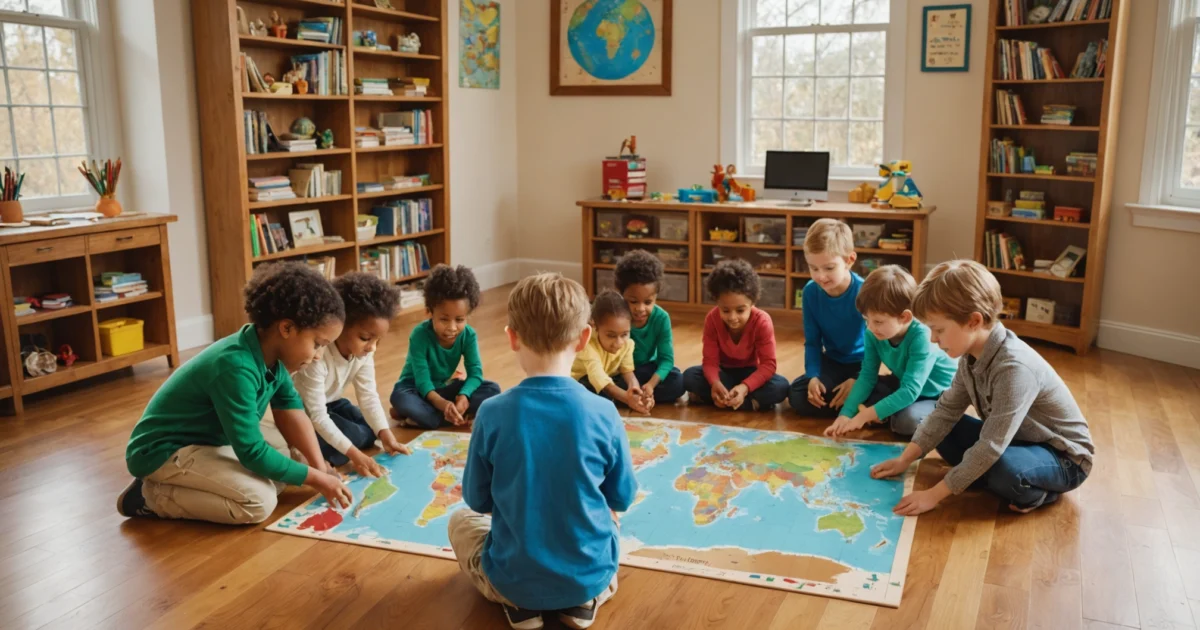
Montessori cultural activities form the heart of elementary education in Montessori classrooms, introducing children to geography, history, science, and the interconnectedness of all knowledge. These activities stem from Dr. Maria Montessori’s concept of cosmic education, which helps children understand their place in the universe and develop global awareness. Furthermore, cultural studies integrate seamlessly with language, mathematics, and practical life skills to create a holistic learning experience.
The cultural curriculum begins with the famous Five Great Lessons that spark curiosity about the universe, life, humans, language, and numbers. Additionally, children explore geography through puzzle maps, investigate timelines of life and civilization, and conduct scientific experiments that satisfy their natural wonder about the world.
These activities encourage independent research, critical thinking, and respect for diverse cultures. Moreover, they provide concrete materials that make abstract concepts accessible to young learners while fostering a lifelong love of learning.
TL;DR
- Montessori cultural activities encompass geography, history, science, and cosmic education to develop global awareness
- The Five Great Lessons introduce the universe, life, humans, language, and numbers as interconnected stories
- Materials include puzzle maps, timelines, classified cards, and hands-on science experiments for independent exploration
- Activities progress from concrete exploration (ages 6-9) to abstract research projects (ages 9-12)
What Are Montessori Cultural Activities?
Montessori cultural activities represent a comprehensive educational approach that introduces children to geography, history, science, and the arts through hands-on exploration and discovery. These activities form the foundation of what Dr. Maria Montessori called cosmic education, which helps children understand their place in the universe and develop a deep appreciation for the interconnectedness of all knowledge. Cultural studies in Montessori classrooms go beyond traditional subject boundaries to create meaningful connections between different areas of learning.
The core philosophy behind cultural activities emphasizes that all knowledge is interconnected and should be presented as such to children. Rather than teaching subjects in isolation, Montessori cultural education weaves together science, geography, history, and the arts into a cohesive narrative about human civilization and our planet. This approach nurtures children’s natural curiosity while helping them develop a global perspective and cultural awareness that extends far beyond their immediate environment.
Cosmic education serves as the theoretical framework that connects all cultural activities in Montessori environments. This concept presents the universe as an interconnected whole where every element has a purpose and contributes to the greater cosmic plan. Children learn that humans have a special responsibility as conscious beings to care for the Earth and contribute positively to society. Through this lens, cultural activities become more than academic subjects—they transform into explorations of humanity’s role in the cosmic order.
The development of global awareness and cultural appreciation stands as a primary goal of Montessori cultural activities. Children explore different countries, learn about various cultures, and discover how geography influences human development and civilization. These studies foster respect for diversity while helping children recognize the common threads that unite all humanity. Moreover, cultural activities encourage children to see themselves as global citizens with responsibilities to their local and international communities.
Key Components of Cultural Activities
Integration with other Montessori curriculum areas creates a seamless learning experience where cultural activities reinforce and enhance mathematical, language, and practical life skills. For instance, children use mathematical concepts when measuring distances on maps, apply language skills when researching different cultures, and employ practical life techniques when conducting science experiments. This integration ensures that learning becomes meaningful and relevant to children’s daily experiences while building strong foundational skills across multiple domains.
The Emmi Pikler approach shares similar values with Montessori cultural education in respecting children’s natural development and providing rich, meaningful experiences. Both educational philosophies recognize that children learn best when they can explore their environment freely and make connections between different areas of knowledge. Furthermore, cultural activities provide the intellectual framework that supports children’s growing understanding of the world around them.
The Five Great Lessons: Foundation of Cultural Learning
The Five Great Lessons form the cornerstone of Montessori cultural activities, providing children with a comprehensive framework for understanding their place in the universe. These interconnected stories create a foundation that sparks curiosity and drives independent exploration across all areas of learning. Each lesson builds upon the previous one, creating a seamless narrative that connects cosmic education to practical understanding.
The Coming of the Universe and Earth
The first great lesson introduces children to cosmic education through the dramatic story of how the universe and Earth came to be. This foundational narrative demonstrates how all elements in the universe follow natural laws and work together harmoniously. Children learn that the universe operates according to specific principles, and these same principles govern everything from the smallest particle to the largest galaxy.
Through this lesson, students discover concepts of matter, energy, and transformation while exploring how the Earth formed its unique characteristics. The story emphasizes how each element has a special job or cosmic task that contributes to the functioning of the whole system. Subsequently, children develop an appreciation for the interconnectedness of all things and their own role within this vast cosmic order.
The Coming of Life
The second lesson explores the timeline of life and evolution, showing how life emerged and developed on Earth over millions of years. Children learn about the gradual progression from simple organisms to complex life forms, understanding how each species adapted to changing environmental conditions. This evolutionary narrative demonstrates how life continuously transforms and adapts to meet new challenges.
Students examine how different organisms developed specialized functions that helped them survive and thrive in various environments. The lesson emphasizes cooperation and interdependence among species, showing how plants and animals work together to create balanced ecosystems. Furthermore, children begin to understand their connection to all living things and the responsibility that comes with being part of the web of life.
The Coming of Humans
The third great lesson focuses on human history and development, exploring what makes humans unique among all living creatures. Children discover how humans developed special gifts including the ability to think, create, love, and work together cooperatively. This lesson emphasizes human creativity and the development of tools, art, and social structures that distinguish human civilization.
Students learn about early human societies and how people adapted to different environments around the world. The narrative shows how humans used their unique abilities to solve problems, create beauty, and care for one another across different cultures and time periods. Additionally, children explore how human innovation and cooperation led to the development of agriculture, settlements, and complex societies.
The Story of Language
The fourth lesson examines communication and writing systems, showing how humans developed the remarkable ability to share ideas across time and space. Children explore how language evolved from simple sounds and gestures to complex spoken and written forms. This lesson demonstrates how communication systems allowed humans to preserve knowledge, share stories, and connect with people far away.
Students discover how different cultures developed unique writing systems and how these systems spread and influenced one another. The lesson emphasizes how language enables humans to record history, express emotions, and transmit knowledge from generation to generation. Moreover, children appreciate how their own ability to read and write connects them to this grand human achievement.
The Story of Numbers
The fifth great lesson explores mathematics and measurement, revealing how humans developed numerical systems to understand and organize their world. Children learn how different civilizations created counting systems, mathematical concepts, and measurement tools to solve practical problems. This lesson shows how mathematics underlies all scientific discovery and technological advancement.
Students examine how mathematical thinking helped humans build structures, navigate oceans, and understand natural phenomena. The narrative demonstrates how numbers and mathematical relationships appear throughout nature and how humans learned to recognize and use these patterns. Consequently, children develop appreciation for mathematics as a powerful tool for understanding and describing the world around them.
Sparking Curiosity and Independent Research
The Five Great Lessons serve as launching points for independent research and exploration rather than complete courses of study. Each story raises questions that inspire children to investigate specific topics that capture their interest. Teachers present these lessons dramatically, using props and storytelling techniques that engage children’s imagination and emotional connection to the material.
After experiencing each great lesson, children naturally develop questions about particular aspects of the story. These questions drive their individual and small-group research projects, allowing them to explore topics in depth according to their interests and developmental readiness. The lessons create a framework that helps children organize new information and understand how different subjects connect to the larger story of the universe.
Implementation Tip
Geography Activities and Materials
Geography activities in Montessori cultural education provide children with concrete, hands-on experiences that build understanding of our planet’s physical features, political boundaries, and diverse cultures. These carefully sequenced materials progress from simple to complex, allowing children to explore geographical concepts through manipulation and discovery rather than abstract memorization.
Puzzle Maps and Progressive Complexity
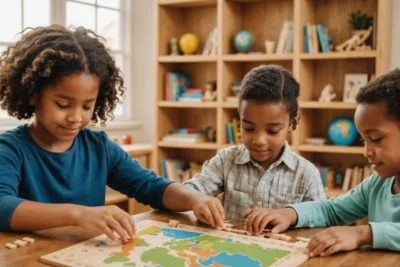
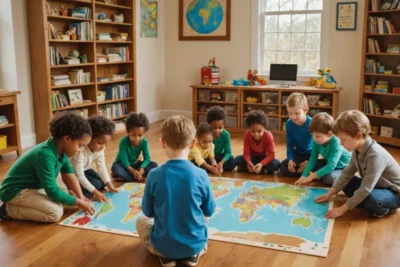
Puzzle maps form the foundation of Montessori geography education, introducing children to spatial relationships and geographical boundaries through tactile exploration. The sequence begins with the world puzzle map, which presents continents as large, colorful pieces that children can remove and replace while learning continent names and shapes.
Subsequently, children progress to continent puzzle maps that break down each landmass into individual countries. These maps use the same color coding as the world map, creating visual connections between the whole and its parts. Finally, country puzzle maps introduce children to states, provinces, or regions within specific nations, building detailed geographical knowledge systematically.
Each puzzle piece contains a small knob that develops fine motor skills while children manipulate the materials. Moreover, the self-correcting nature of these puzzles allows children to work independently and verify their understanding through successful completion.
Land and Water Forms
Land and water form trays provide three-dimensional representations of geographical features such as islands, peninsulas, lakes, and straits. These blue and brown models allow children to pour water into designated areas, creating realistic demonstrations of how land and water interact in nature.
Nomenclature cards accompany each land and water form, presenting the precise vocabulary for geographical features through a three-part card system. Children match picture cards to the models, then progress to reading definition cards that explain each feature’s characteristics. This systematic approach builds both visual recognition and verbal expression of geographical terminology.
Teachers often extend these activities by encouraging children to identify land and water forms in their local environment or in photographs of famous geographical landmarks. These connections help children understand how the abstract concepts they’re learning apply to the real world around them.
Flag Activities and Cultural Studies
Flag activities introduce children to the symbols and cultural identities of different nations while developing visual discrimination and memory skills. Children begin by matching flag cards to corresponding countries on puzzle maps, creating connections between geographical locations and national symbols.
Furthermore, cultural studies expand beyond flags to explore the people, customs, foods, clothing, and traditions of different countries. These investigations often include examining artifacts, tasting foods from various cultures, listening to traditional music, and learning simple phrases in different languages.
Research projects frequently emerge from these cultural explorations as children develop curiosity about specific countries or regions. Teachers support this interest by providing books, photographs, and multimedia resources that allow children to investigate cultural practices and geographical features in greater depth.
Climate and Biome Exploration
Climate studies help children understand how geographical location influences weather patterns, plant life, and animal habitats across different regions of the world. Teachers present climate zones through visual materials that show how latitude, altitude, and proximity to water bodies affect local weather conditions.
Biome exploration extends climate studies by examining how plants and animals adapt to specific environmental conditions. Children learn about rainforests, deserts, grasslands, and tundra through photographs, specimens, and detailed study materials that highlight the relationships between climate and living organisms.
These investigations often connect to practical life experiences as children observe local weather patterns and seasonal changes in their own environment. Additionally, they may create climate charts, collect weather data, or maintain classroom plants that represent different biomes.
Map-Making and Coordinate Activities
Map-making activities for older children combine artistic expression with geographical understanding as students create their own maps of familiar places such as their classroom, school grounds, or neighborhood. These projects develop spatial reasoning skills while reinforcing concepts about scale, direction, and symbolic representation.
Coordinate activities introduce mathematical concepts through geographical applications, teaching children to locate places using latitude and longitude systems. Students practice finding specific locations on maps using coordinate pairs, building precision and analytical thinking skills that support both mathematical and geographical learning.
Advanced map work may include creating topographical maps, weather maps, or population density maps that integrate multiple types of geographical information. These complex projects allow children to synthesize knowledge from various sources while developing research and presentation skills that support their overall academic development.
History and Timeline Activities
Timeline activities form the cornerstone of Montessori historical education, providing children with concrete visualization tools that transform abstract time concepts into tangible learning experiences. These materials help students understand chronological relationships while developing their sense of historical perspective and sequential thinking skills.
Timeline of Life Materials and Presentations
The Timeline of Life presents Earth’s biological history through a dramatic black strip that measures approximately 46 meters in length, with each meter representing 100 million years. Children unfold this timeline while learning about major evolutionary milestones, from the first appearance of life to the emergence of humans in the final centimeters.
Accompanying cards feature detailed illustrations of prehistoric organisms, allowing students to place creatures like trilobites, dinosaurs, and early mammals in their proper chronological positions. Furthermore, these presentations connect biological evolution to geological changes, helping children understand how environmental shifts influenced the development of life forms over millions of years.
Human History Timelines and Fundamental Needs Charts
Human timeline activities explore civilization development through the lens of fundamental human needs including food, shelter, clothing, transportation, defense, and spiritual expression. Students examine how different cultures throughout history addressed these universal requirements using available resources and technologies.
These studies often begin with prehistoric humans and progress through ancient civilizations, medieval periods, and modern times. Additionally, children create their own timeline books, researching specific time periods while documenting how human innovations solved basic survival challenges across different geographical regions and cultural contexts.
Cultural Connections
Clock of Eras and Geological Time Concepts
The Clock of Eras presents geological time through a circular format that helps children visualize Earth’s 4.6-billion-year history as a 12-hour clock face. Each hour represents approximately 383 million years, with human existence appearing only in the final seconds before midnight.
This powerful visualization tool demonstrates the relative brevity of human existence compared to Earth’s vast geological history. Moreover, students learn about major geological eras including the Precambrian, Paleozoic, Mesozoic, and Cenozoic periods while understanding how geological processes shaped the planet’s surface and climate over time.
Historical Research Projects and Biography Studies
Research projects encourage independent investigation as children select historical topics that capture their interest and curiosity. These studies develop critical thinking skills while teaching students to evaluate sources, organize information, and present findings through various formats including written reports, oral presentations, and creative displays.
Biography studies focus on influential historical figures, allowing children to explore how individual actions shaped broader historical events. Students examine the lives of scientists, artists, leaders, and innovators while considering how personal choices and circumstances contributed to significant historical changes and cultural developments.
These projects often incorporate primary source materials such as letters, photographs, and historical documents that provide authentic glimpses into past lives and events. Consequently, children develop appreciation for historical evidence while building research skills that support their academic growth across multiple subject areas.
Cause and Effect Relationships in Historical Events
Cause and effect studies help children understand how historical events connect through chains of influence and consequence. These investigations develop analytical thinking skills as students examine how economic conditions, technological innovations, natural disasters, and political decisions created ripple effects throughout history.
Students create visual diagrams that map relationships between historical causes and their resulting effects, often discovering how single events triggered multiple consequences across different time periods and geographical regions. These activities build logical reasoning abilities while demonstrating how human actions and natural forces interact to shape historical outcomes and cultural changes.
Science Explorations in Cultural Activities
Montessori cultural activities incorporate scientific exploration as a fundamental component of children’s understanding of the natural world. These investigations span multiple scientific disciplines while connecting abstract concepts to concrete, hands-on experiences that children can observe, manipulate, and analyze through direct interaction.
Botanical Studies and Plant Classification
Botany activities introduce children to plant classification systems through systematic observation and categorization exercises. Students examine plant parts including roots, stems, leaves, flowers, and seeds while learning how each component contributes to plant survival and reproduction processes.
Leaf shape studies develop classification skills as children sort specimens according to characteristics such as simple versus compound structures, smooth versus serrated edges, and various geometric patterns. These botanical explorations connect scientific observation with artistic expression as students create detailed drawings and pressed leaf collections that document their discoveries.
Zoological Classifications and Animal Studies
Animal classification activities help children understand taxonomic relationships through hands-on sorting and categorization exercises. Students distinguish between vertebrates and invertebrates while exploring characteristics that define mammals, birds, reptiles, amphibians, and fish within the vertebrate classification system.
These zoological studies incorporate living specimens when possible, allowing children to observe animal behaviors, feeding patterns, and habitat preferences through direct experience. Furthermore, students create classification charts that organize animals according to shared characteristics while developing scientific vocabulary and observational skills.
Astronomical Explorations and Space Studies
Solar system studies introduce children to planetary characteristics, orbital patterns, and relative sizes through three-dimensional models and scaled representations. Students explore how day and night cycles result from Earth’s rotation while investigating seasonal changes caused by planetary tilt and orbital movement.
Constellation studies connect astronomy with cultural traditions as children learn how different civilizations interpreted star patterns and created navigation systems based on celestial observations. These activities often incorporate storytelling elements that link scientific facts with mythological traditions from various cultures worldwide.
Geological Investigations and Earth Sciences
Rock and mineral classification activities teach children to identify specimens based on physical properties including hardness, color, crystal structure, and formation processes. Students use simple tools such as magnifying glasses and hardness testing kits to conduct systematic investigations that develop scientific methodology skills.
Studies of Earth’s layers help children understand geological processes through cross-sectional models and hands-on demonstrations. These investigations explore how tectonic movements, volcanic activity, and erosion processes shape planetary surfaces while connecting geological concepts to local geographical features and environmental changes.
Elementary Physics and Chemistry Experiments
Physics experiments appropriate for elementary students focus on observable phenomena such as magnetism, simple machines, light refraction, and sound vibration. These activities use everyday materials to demonstrate scientific principles while encouraging children to form hypotheses and test predictions through controlled observations.
Chemistry explorations introduce basic concepts through safe, age-appropriate experiments involving color changes, crystallization, and simple reactions. Students observe how substances interact while learning about states of matter, density differences, and chemical versus physical changes through hands-on investigations that prioritize safety and discovery.
Safety First
Cultural Materials and Learning Tools
Montessori cultural activities rely on carefully curated materials that transform abstract concepts into concrete learning experiences. These specialized tools enable children to explore geography, history, science, and arts through hands-on manipulation while developing critical thinking skills and cultural awareness.
Classified Cards and Nomenclature Materials
Three-part cards form the foundation of Montessori nomenclature work across all cultural subjects. Each set contains a control card with picture and label, a picture card without text, and a separate label card that children match to develop reading skills and vocabulary acquisition.
Geography nomenclature cards feature landforms, water bodies, and geographical features that children identify and classify systematically. Similarly, biology cards present plant parts, animal classifications, and ecosystem components through detailed illustrations that support scientific observation and categorization skills.
Historical nomenclature materials introduce timeline figures, cultural artifacts, and civilization elements through visual representations. These cards help children develop temporal understanding while building vocabulary related to human achievements and cultural developments across different eras.
Research Books and Reference Materials
Research books in Montessori environments differ from traditional textbooks by presenting information in accessible formats that encourage independent investigation. These materials feature clear illustrations, simple text, and organized layouts that support children’s natural curiosity and research abilities.
Reference materials include atlases, encyclopedias, and field guides specifically designed for elementary students. These resources provide accurate information while maintaining age-appropriate language and visual presentations that facilitate self-directed learning and fact-finding activities.
Digital resources complement traditional books through interactive maps, virtual museum tours, and educational databases that expand research possibilities. However, physical books remain essential for developing concentration, reading stamina, and the ability to synthesize information from multiple sources effectively.
Timeline Charts and Control Charts
Timeline materials transform abstract historical concepts into visual narratives that children can manipulate and explore. The Timeline of Life presents evolutionary development through a long black strip with illustrations showing the emergence and development of different life forms over millions of years.
Historical timelines feature human civilizations, technological developments, and cultural achievements arranged chronologically to help children understand cause-and-effect relationships. These materials often include moveable elements that allow students to arrange events and explore connections between different historical periods.
Control charts provide self-correcting reference tools for various cultural subjects including classification systems, geographical features, and scientific processes. Children use these charts to verify their work independently while developing accuracy and attention to detail in their investigations.
Experiment Materials and Scientific Instruments
Scientific investigation materials enable children to conduct controlled experiments that demonstrate natural phenomena and scientific principles. These tools include microscopes, magnifying glasses, measuring instruments, and specimen containers that support systematic observation and data collection.
Chemistry experiment kits contain safe, age-appropriate materials for exploring chemical reactions, states of matter, and molecular behavior. Physics materials demonstrate magnetism, electricity, light properties, and mechanical principles through hands-on activities that make abstract concepts tangible and understandable.
Biological investigation tools include dissection materials, plant pressing equipment, and observation journals that support life science studies. These materials enable children to examine living systems while developing scientific methodology and documentation skills essential for advanced scientific study.
Art and Music Materials Representing Different Cultures
Cultural art materials expose children to diverse artistic traditions through authentic tools and techniques from various civilizations. These collections include traditional instruments, art supplies, and craft materials that represent different cultural approaches to creative expression and aesthetic development.
Musical instruments from different cultures allow children to explore rhythm patterns, tonal systems, and musical traditions that reflect various societies’ values and histories. Students learn about pentatonic scales, percussion techniques, and melodic structures while developing appreciation for global musical diversity.
Art technique materials introduce children to traditional painting methods, sculpture techniques, and decorative arts from various cultures. These hands-on experiences help students understand how environmental factors, available materials, and cultural values influence artistic expression while developing their own creative abilities and cultural sensitivity.
Age-Appropriate Implementation
Successful Montessori cultural activities require careful adaptation to match children’s developmental stages and cognitive abilities. Furthermore, effective implementation considers each child’s individual learning style while maintaining the authentic spirit of cultural exploration that defines this educational approach.
Early Elementary (6-9 Years): Concrete Exploration and Basic Timelines
Children in the early elementary years learn best through concrete experiences that engage their senses and provide tangible connections to abstract concepts. Additionally, their developing minds require structured activities that build foundational knowledge before progressing to more complex cultural understanding.
Timeline activities for this age group focus on simple chronological sequences using picture cards, physical objects, and hands-on manipulatives. Consequently, children develop temporal awareness through activities like the Timeline of Life, which uses realistic animal figurines and illustrated cards to show evolutionary progression in concrete, visual terms.
Geography lessons emphasize sensory exploration through puzzle maps, sandpaper globes, and three-dimensional landform models. Meanwhile, these materials allow young children to physically trace continents, feel different textures, and manipulate puzzle pieces that represent countries and states in their actual geographic relationships.
Cultural studies at this level introduce fundamental needs of humans through storytelling, role-playing, and simple research projects. Therefore, children explore how different societies meet basic needs for food, shelter, clothing, and transportation while developing empathy and global awareness through concrete examples.
Upper Elementary (9-12 Years): Abstract Thinking and Independent Research
Upper elementary students demonstrate increased capacity for abstract reasoning and independent investigation, enabling more sophisticated cultural activities that challenge their developing analytical skills. Moreover, their social awareness expands to encompass complex relationships between cultures, historical events, and contemporary global issues.
Research projects become central to cultural learning as students investigate specific civilizations, historical periods, or geographic regions through independent study. Subsequently, these investigations develop critical thinking skills while allowing children to pursue personal interests within structured academic frameworks.
Timeline work evolves to include abstract concepts such as the Timeline of Humans, which explores cultural development, technological advancement, and social evolution across millennia. Similarly, students create personal timelines, family histories, and community studies that connect their own lives to broader historical narratives.
Interdisciplinary connections become more sophisticated as students explore relationships between geography, history, science, and mathematics through integrated cultural studies. Therefore, they might investigate how geographic factors influenced ancient civilizations while calculating distances, analyzing climate data, and examining archaeological evidence.
Adapting Activities for Mixed-Age Classrooms
Multi-age environments require flexible activity designs that accommodate different developmental levels while maintaining collaborative learning opportunities. Additionally, successful adaptation strategies allow younger children to participate meaningfully while providing appropriate challenges for older students within the same cultural investigation.
- Layered presentations introduce topics at basic levels while including extension materials for advanced learners
- Peer mentoring opportunities allow older students to support younger classmates while reinforcing their own understanding
- Differentiated materials provide multiple entry points for the same cultural concept at various complexity levels
- Collaborative projects assign age-appropriate roles that contribute to shared learning goals
Timeline activities adapt through progressive complexity, where younger children focus on picture sequences while older students research historical details, create written reports, and analyze cause-and-effect relationships. Consequently, both age groups contribute to comprehensive cultural understanding while working at their optimal challenge level.
Supporting Different Learning Styles and Interests
Effective cultural activity implementation recognizes diverse learning preferences and individual interests that influence how children engage with cultural materials. Furthermore, successful adaptation strategies provide multiple pathways to the same learning objectives while honoring each child’s natural learning tendencies and personal fascinations.
Visual learners benefit from rich graphic materials, detailed maps, illustrated timelines, and art-based cultural activities that emphasize color, pattern, and spatial relationships. Meanwhile, these students often excel at creating visual presentations, designing cultural displays, and interpreting historical artwork and artifacts.
Kinesthetic learners engage through hands-on experiments, cultural craft activities, dramatic reenactments, and physical exploration of geographic materials. Additionally, these children thrive when cultural lessons include movement, manipulation of three-dimensional objects, and opportunities to build, create, or physically demonstrate their understanding.
Auditory learners respond well to storytelling approaches, musical elements, oral presentations, and discussion-based cultural activities. Therefore, these students often enjoy researching cultural music, participating in oral history projects, and sharing their discoveries through verbal presentations to classmates.
Implementation Strategy
Setting Up the Cultural Area
Creating an effective cultural area requires thoughtful organization that promotes independent exploration while maintaining accessibility for children of varying ages and abilities. Moreover, the physical setup directly influences how successfully students engage with Montessori cultural activities and develop their understanding of the world around them.
Organizing Materials for Independent Access
Strategic material organization enables children to select, use, and return cultural materials without adult assistance. Consequently, this independence fosters responsibility and allows students to follow their natural curiosity at their own pace.
- Place frequently used materials at child height on accessible shelves
- Group related items together using consistent organizational systems
- Label shelves with both words and pictures for easy identification
- Store delicate materials in protective containers with clear viewing windows
- Maintain designated spaces for work-in-progress projects
Clear containers and baskets organize small materials while protecting them from damage. Furthermore, transparent storage allows children to see contents without opening containers, promoting efficient material selection and reducing unnecessary handling.
Creating Research Stations and Quiet Work Spaces
Dedicated research stations provide focused environments where children can engage deeply with cultural investigations. Additionally, these specialized areas support different types of learning activities while minimizing distractions from other classroom activities.
Individual work stations accommodate solo research projects and allow for concentrated study of complex cultural materials. Meanwhile, collaborative spaces support group investigations and peer discussions about cultural discoveries and shared interests.
Research Station Essentials
Natural lighting enhances the research environment and reduces eye strain during detailed work. Therefore, positioning research stations near windows or supplementing with quality task lighting creates optimal conditions for cultural exploration and documentation.
Displaying Timelines and Reference Materials
Strategic display of timelines and reference materials transforms wall space into valuable learning resources that support ongoing cultural investigations. Furthermore, these visual references provide immediate access to information that enhances understanding across multiple cultural subjects.
Timeline displays should be positioned at child eye level and feature clear, engaging visuals that illustrate historical progression. Additionally, interactive elements such as removable cards or flip sections encourage active engagement with historical information.
- Mount world maps showing political boundaries, physical features, and cultural regions
- Display seasonal calendars highlighting cultural celebrations and natural phenomena
- Create rotating bulletin boards featuring current cultural study topics
- Position reference charts for measurement conversions, historical periods, and scientific classifications
Rotating Materials to Maintain Interest and Challenge
Regular material rotation prevents stagnation and ensures that cultural activities continue to challenge and engage students throughout the school year. Moreover, strategic rotation introduces new concepts while reinforcing previously learned skills through varied applications.
Seasonal rotations align cultural materials with natural cycles and current events, creating relevant connections between classroom learning and real-world experiences. Consequently, this approach maintains student interest while providing timely cultural context for ongoing studies.
| Rotation Schedule | Focus Areas | Key Materials |
|---|---|---|
| Monthly | Current events, seasonal celebrations | News articles, cultural artifacts, seasonal displays |
| Quarterly | Geographic regions, historical periods | Maps, timeline materials, research resources |
| Annually | Major curriculum themes | Core timeline work, fundamental geography materials |
Student interest surveys and observation data inform rotation decisions, ensuring that material changes respond to actual learning needs and emerging curiosities. Therefore, this responsive approach maintains optimal challenge levels while supporting individual learning trajectories.
Connecting Indoor and Outdoor Learning Environments
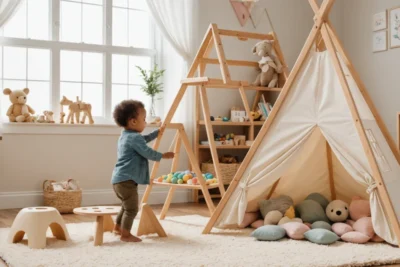
Seamless integration between indoor and outdoor spaces extends cultural learning beyond classroom walls and provides authentic contexts for applying cultural knowledge. Furthermore, this connection supports the Pikler approach’s emphasis on natural movement and environmental exploration that enhances cultural understanding.
Outdoor cultural activities include weather monitoring, seasonal observation journals, garden-based geography lessons, and nature-based historical investigations. Additionally, these experiences provide concrete foundations for abstract cultural concepts learned indoors.
Portable cultural materials enable smooth transitions between indoor and outdoor learning environments. Meanwhile, weather-resistant storage solutions protect materials while maintaining accessibility for spontaneous outdoor cultural explorations and investigations.
Documentation stations in both environments capture learning experiences and create connections between indoor study and outdoor discovery. Consequently, this comprehensive approach ensures that cultural learning remains dynamic, relevant, and deeply engaging for all students.
Assessment and Documentation
Effective assessment in Montessori cultural activities relies on systematic observation and documentation that captures children’s authentic learning processes. Moreover, this approach moves beyond traditional testing to embrace holistic evaluation methods that honor individual learning styles and developmental timelines.
Observing Children’s Interests and Following Their Curiosity
Skilled educators observe children’s natural curiosity patterns and document emerging interests through detailed observation notes. Subsequently, these observations guide material presentations and inform decisions about introducing new cultural concepts that align with children’s demonstrated fascinations.
Interest tracking involves recording which materials children choose repeatedly, how long they engage with specific activities, and what questions they ask during cultural explorations. Additionally, teachers note peer interactions and collaborative learning moments that reveal deeper understanding and social learning patterns.
Observation Focus Areas
Portfolio Development and Research Project Documentation
Portfolio development creates comprehensive records of each child’s cultural learning journey through collected work samples, photographs, and reflection pieces. Furthermore, these portfolios demonstrate growth over time and provide concrete evidence of conceptual understanding across various cultural domains.
Research project documentation includes initial questions, investigation processes, source materials used, and final presentations or products created. Meanwhile, teachers photograph children engaged in research activities and record their verbal explanations of discoveries and connections made during cultural investigations.
- Work samples from geography, history, and science explorations
- Photographs of three-dimensional projects and collaborative work
- Audio recordings of children explaining their discoveries
- Self-reflection journals and learning goal documentation
- Peer feedback and collaborative project contributions
Peer Collaboration and Presentation Opportunities
Collaborative assessment opportunities allow children to share knowledge, teach peers, and demonstrate understanding through presentation formats. Consequently, these experiences develop communication skills while revealing depth of cultural knowledge and ability to synthesize complex information for others.
Peer teaching moments provide authentic assessment data as children explain concepts, demonstrate material use, and answer questions from classmates. Additionally, these interactions reveal misconceptions, areas needing reinforcement, and opportunities for extending learning through peer-to-peer knowledge exchange.
Presentation formats include formal research sharing, informal peer teaching, collaborative timeline creation, and group problem-solving sessions focused on cultural topics. Therefore, these varied formats accommodate different learning styles while providing multiple opportunities for demonstrating cultural understanding.
Connecting Learning to Real-World Applications
Assessment practices emphasize connections between classroom cultural learning and real-world applications through community engagement projects and practical problem-solving activities. Furthermore, this approach demonstrates the relevance of cultural knowledge and encourages children to see themselves as active participants in their communities.
Real-world application assessments include community service projects, local history investigations, environmental stewardship activities, and cultural celebration planning. Meanwhile, these experiences provide authentic contexts for applying geographic, historical, and scientific knowledge while developing civic responsibility and cultural awareness.
Documentation of real-world connections includes photographs of community engagement, reflection writings about service experiences, and presentations sharing community research findings. Subsequently, this evidence demonstrates children’s ability to transfer classroom learning to meaningful real-world contexts and applications.
Supporting Transition to Middle School Academic Expectations
Assessment practices gradually introduce middle school academic expectations while maintaining Montessori principles of intrinsic motivation and individualized learning. Additionally, this transitional approach helps children develop study skills, research methodologies, and presentation abilities needed for future academic success.
Transition support includes introducing formal research papers, structured presentation formats, peer review processes, and self-evaluation rubrics that mirror middle school expectations. However, these elements maintain child-centered approaches that honor individual interests and developmental readiness for increased academic rigor.
Portfolio reviews with children help them reflect on learning growth, identify areas of strength and interest, and set goals for continued cultural exploration. Consequently, this self-assessment process develops metacognitive skills essential for independent learning success in middle school academic environments and beyond.
Frequently Asked Questions
What are Montessori cultural activities?
Montessori cultural activities are a comprehensive educational approach that introduces children to geography, history, science, and the arts through hands-on exploration and discovery. These activities form the foundation of Dr. Maria Montessori’s concept of cosmic education, helping children understand their place in the universe and develop a deep appreciation for the interconnectedness of all knowledge.
What are the Five Great Lessons in Montessori education?
The Five Great Lessons are foundational stories that spark curiosity about the universe, life, humans, language, and numbers. These lessons introduce children to the interconnected nature of all knowledge and serve as the starting point for deeper exploration into various cultural subjects throughout the elementary years.
What is cosmic education in Montessori?
Cosmic education is Dr. Montessori’s theoretical framework that presents the universe as an interconnected whole where every element has a purpose and contributes to the greater cosmic plan. This concept helps children understand that humans have a special responsibility as conscious beings to care for the Earth and contribute positively to society.
What materials are used in Montessori cultural activities?
Montessori cultural activities use a variety of concrete materials including:
- Puzzle maps for geography exploration
- Timelines of life and civilization
- Classified cards for various subjects
- Hands-on science experiments
- Cultural artifacts and pictures
How do cultural activities develop global awareness?
Cultural activities foster global awareness by encouraging children to explore different countries, learn about various cultures, and discover how geography influences human development and civilization. These studies help children recognize common threads that unite all humanity while developing respect for diversity and seeing themselves as global citizens.
At what age do children begin Montessori cultural activities?
Montessori cultural activities primarily begin in the elementary years (ages 6-12), though some foundational concepts may be introduced earlier. The activities progress from concrete exploration for younger elementary children (ages 6-9) to more abstract research projects for older elementary students (ages 9-12).
How do cultural activities integrate with other Montessori subjects?
Cultural activities integrate seamlessly with language, mathematics, and practical life skills to create a holistic learning experience. Rather than teaching subjects in isolation, Montessori cultural education weaves together different areas of learning into a cohesive narrative about human civilization and our planet.
What skills do children develop through cultural activities?
Through cultural activities, children develop:
- Independent research skills
- Critical thinking abilities
- Respect for diverse cultures
- Global perspective and awareness
- Understanding of interconnectedness
- Lifelong love of learning
Why are cultural activities important in Montessori education?
Cultural activities are crucial because they help children understand their place in the universe and develop a sense of responsibility toward their environment and society. These activities nurture natural curiosity, provide concrete materials that make abstract concepts accessible, and foster the development of global citizens who appreciate diversity and interconnectedness.
How do puzzle maps work in Montessori geography?
Puzzle maps are hands-on materials that allow children to physically manipulate and explore geographical concepts. Children can remove and replace pieces representing continents, countries, or states, helping them develop spatial awareness, learn geographical names, and understand the relationship between different land masses through tactile exploration.
What role do timelines play in Montessori cultural education?
Timelines help children visualize the progression of life and civilization over vast periods of time. These materials make abstract concepts of time concrete and accessible, allowing children to understand the sequence of events, the development of life on Earth, and humanity’s place in the broader context of cosmic history.
How do cultural activities encourage independent learning?
Cultural activities encourage independent learning by providing children with concrete materials they can explore at their own pace, sparking natural curiosity through engaging presentations, and offering opportunities for self-directed research projects. The materials are designed to be self-correcting and allow children to discover concepts through hands-on manipulation and exploration.
You May Also Like
Montessori Cultural Curriculum: Complete Guide to Cosmic Education
What Age Does Montessori End? Complete Guide to Age Limits