Emmi Pikler: Revolutionary Child Development Approach Guide


Emmi Pikler was a Hungarian pediatrician who transformed how we understand infant development through her revolutionary approach to respectful caregiving and natural movement. Born in 1902, this pioneering doctor challenged traditional child-rearing practices by demonstrating that babies develop best when allowed to move freely and explore independently. Her groundbreaking work at the Lóczy Institute in Budapest proved that infants are naturally competent beings who don’t need adult intervention to reach developmental milestones.
Furthermore, Pikler’s research showed that treating babies with respect during daily care routines builds stronger emotional foundations. Her observations revealed that children who experience predictable, gentle care develop greater confidence and self-regulation skills. Today, the Pikler approach influences childcare practices worldwide, emphasizing trust in children’s innate developmental wisdom.
Additionally, her philosophy extends beyond motor development to encompass emotional well-being and authentic relationships. Pikler believed that uninterrupted play and self-directed exploration are essential for healthy development. Consequently, her methods continue to shape modern early childhood education and parenting practices across the globe.
TL;DR
- Emmi Pikler was a Hungarian pediatrician who revolutionized child development through respectful caregiving and natural movement principles
- She founded the Lóczy Institute in 1946, proving that babies develop best through free movement and self-directed exploration
- Her approach emphasizes treating infants as competent individuals, building trust through predictable care routines and allowing natural motor development without adult intervention
Who Was Emmi Pikler: The Hungarian Pediatrician Who Revolutionized Child Development
Emmi Pikler was born in 1902 in Vienna to Hungarian parents who valued education and progressive thinking. Her early exposure to diverse cultural perspectives shaped her later revolutionary approach to child development. Consequently, she pursued medical studies at the University of Vienna, where she specialized in pediatrics and developed her foundational understanding of infant care.
During her medical education, Pikler encountered influential professors who emphasized observational research methods. These experiences taught her to watch children carefully rather than impose adult expectations on their natural behaviors. Moreover, her training in Vienna exposed her to cutting-edge pediatric practices that would later influence her groundbreaking methodology.
After completing her studies, Pikler returned to Budapest in the early 1930s to establish her pediatric practice. She worked extensively with families, observing how different caregiving approaches affected infant development and behavior. Furthermore, her clinical work revealed that babies who experienced respectful, unhurried care demonstrated greater confidence and motor competence.
Throughout the 1930s, Pikler developed her core philosophy through direct observation of hundreds of infants in her practice. She documented how babies naturally progressed through developmental milestones when given freedom to move and explore. Additionally, her research showed that rushed or forced developmental interventions often hindered rather than helped children’s natural growth processes.
In 1946, Pikler founded the Lóczy Institute (officially known as the National Methodological Institute for Infant Care and Education) in Budapest. This residential nursery became her laboratory for implementing and refining her revolutionary childcare methods. The institute cared for orphaned and abandoned infants, providing Pikler with opportunities to study child development in a controlled environment.
At Lóczy, Pikler implemented her core principles of respectful caregiving and free movement. Caregivers followed specific protocols that emphasized slow, predictable interactions during feeding, diaper changes, and daily routines. Meanwhile, infants spent most of their time on the floor, free to move and explore without restrictive equipment or adult intervention.
Her revolutionary observations challenged conventional wisdom about infant development and care practices. Pikler discovered that babies who moved freely from birth developed superior motor skills, spatial awareness, and problem-solving abilities compared to those in traditional care settings. These findings contradicted prevailing beliefs that babies needed adult assistance to achieve developmental milestones.
Through decades of meticulous documentation, Pikler proved that infants are inherently competent and capable of directing their own development. Her research showed that children who experienced respectful care approaches developed stronger emotional regulation and social skills. Subsequently, her work demonstrated that trust between caregiver and child forms the foundation for healthy development across all domains.
Today, Pikler’s legacy continues through the Pikler Institute International, which trains educators and caregivers worldwide in her methods. The institute maintains her original research facility in Budapest while expanding her influence through training programs across Europe, North America, and beyond. Furthermore, modern early childhood programs increasingly incorporate Pikler principles into their curricula and care practices.
Contemporary research validates many of Pikler’s original observations about infant competence and natural development. Neuroscience studies confirm that babies’ brains develop optimally when they experience predictable, responsive caregiving combined with opportunities for self-directed exploration. Therefore, her work remains highly relevant for parents, educators, and childcare professionals seeking evidence-based approaches to early childhood development.
Core Principles of the Pikler Approach
The Pikler Approach rests on five foundational principles that revolutionize how caregivers interact with infants and young children. These interconnected concepts create a comprehensive framework for respectful child-rearing that honors each child’s natural development timeline. Moreover, these principles work synergistically to foster secure attachment, confident exploration, and authentic self-expression in children.
Respectful Caregiving and Authentic Relationships
Respectful caregiving forms the cornerstone of Pikler’s philosophy, treating even the youngest infants as complete human beings worthy of dignity and consideration. Caregivers communicate their intentions before touching a child, explaining each step of care routines like diaper changes or feeding. This practice acknowledges the child’s personhood while building trust through consistent, transparent interactions.
Authentic relationships develop when caregivers approach children without pretense or manipulation. Instead of using baby talk or artificial enthusiasm, adults speak naturally and honestly with children about real experiences and emotions. Consequently, children learn to trust their caregivers’ words and develop secure emotional foundations that support lifelong relationship skills.
Free Movement and Natural Motor Development
Free movement allows children to develop gross motor skills according to their individual timelines without adult intervention or equipment constraints. Pikler observed that babies naturally progress through developmental sequences when given appropriate space and freedom to move. Therefore, this principle discourages the use of walkers, bouncy seats, or other devices that artificially position children before they’re developmentally ready.
Natural motor development occurs when children spend time on firm, flat surfaces wearing comfortable clothing that doesn’t restrict movement. Babies learn to roll, sit, crawl, and walk through their own experimentation and practice rather than through adult teaching or positioning. This approach builds genuine confidence and body awareness that supports physical competence throughout childhood.
Uninterrupted, Self-Directed Play
Self-directed play represents children’s natural learning mechanism, requiring minimal adult intervention to flourish effectively. Children choose their own activities, set their own challenges, and determine when to transition between different play experiences. Furthermore, this principle recognizes that children’s concentration and creativity develop best when they can pursue their interests without constant adult direction or entertainment.
Uninterrupted play periods allow children to develop sustained attention, problem-solving skills, and emotional regulation through their own exploration. Adults provide safe, interesting environments with simple materials but avoid directing or teaching during play time. Research shows that children who experience regular periods of self-directed play demonstrate greater creativity and independence than those in highly structured environments.
Predictable Care Routines and Peaceful Environment
Predictable routines create emotional security by helping children anticipate and understand their daily experiences. Meals, diaper changes, naps, and other care activities occur at consistent times using familiar sequences and gentle approaches. This predictability reduces anxiety while building children’s sense of time and sequence understanding.
Peaceful environments support children’s natural rhythms and developmental needs through calm, unhurried interactions. Caregivers move slowly and speak softly, creating atmospheres that promote relaxation and focus. Additionally, these environments minimize overstimulation from excessive noise, bright lights, or chaotic activity that can overwhelm young nervous systems.
Trust in the Child’s Innate Developmental Capacity
Trust in innate capacity means believing that children possess internal wisdom about their own developmental needs and timing. This principle requires caregivers to observe rather than direct, supporting children’s natural unfolding without pushing or accelerating their progress. Consequently, children develop at their own pace while building genuine competence and self-confidence.
This fundamental trust extends to all areas of development, from motor skills to emotional regulation to social interaction. Caregivers provide appropriate environments and materials while allowing children to discover their own capabilities through exploration and practice. This approach contrasts sharply with educational philosophies that emphasize adult-directed learning and predetermined developmental milestones.
Implementing Pikler Principles
The Science Behind Natural Movement Development
Emmi Pikler’s groundbreaking research revealed that infants follow predictable motor development sequences when allowed to move freely without adult intervention. Her longitudinal studies at the Lóczy Institute documented how babies naturally progress from lying to walking through self-directed exploration. Moreover, these findings challenged conventional approaches that placed children in positions they couldn’t achieve independently.
Pikler’s observations showed that babies develop gross motor skills through an intrinsic developmental program that unfolds systematically. Initially, infants strengthen their core muscles while lying on their backs, gradually learning to roll, sit, crawl, and eventually walk. Furthermore, this natural progression occurs without external assistance, adult positioning, or mechanical devices like walkers or jumpers.
Natural Motor Milestone Progression
Research demonstrates that self-directed movement development follows consistent patterns across cultures and environments. Babies who move freely typically achieve motor milestones within normal ranges while developing superior balance, coordination, and spatial awareness. Additionally, they show greater confidence in their physical abilities and make fewer falls or injuries during childhood.
- Back-lying strengthens core muscles and develops hand-eye coordination
- Rolling emerges naturally as babies gain strength and motivation to explore
- Sitting develops gradually without adult positioning or support devices
- Crawling patterns vary individually but serve crucial neurological development
- Walking emerges when babies have sufficient strength, balance, and confidence
The quality of movement matters more than the timing of milestones in Pikler’s approach. Children who achieve positions independently demonstrate better body awareness, proprioception, and movement efficiency. Conversely, babies placed in premature positions often develop compensatory patterns that affect their long-term motor development.
Neurological Benefits of Self-Directed Movement
Self-directed movement exploration stimulates crucial neural pathways that support cognitive, emotional, and physical development. When babies move according to their internal readiness, they create optimal conditions for brain development and sensory integration. Therefore, unrestricted movement becomes a foundation for learning, problem-solving, and emotional regulation throughout life.
Movement exploration activates the vestibular system, which regulates balance, spatial orientation, and attention. Natural movement patterns also strengthen proprioceptive awareness, helping children understand their body’s position in space. These sensory systems work together to support focus, coordination, and self-regulation skills that benefit academic and social success.
Research Finding
Comparison with Traditional Developmental Approaches
Traditional developmental approaches often emphasize adult-directed activities, positioning devices, and milestone acceleration through external intervention. However, Pikler’s research demonstrates that such approaches may actually hinder natural development by creating dependency and reducing children’s intrinsic motivation to move. Instead, natural movement development promotes autonomy, confidence, and genuine competence.
Conventional methods frequently place babies in sitting positions before they can achieve this independently, use walkers to accelerate walking, or provide excessive physical assistance during movement transitions. These interventions bypass crucial developmental stages that build strength, coordination, and neural integration. Consequently, children may achieve milestones earlier but with less stability and confidence.
The respectful approach trusts children’s innate wisdom about their developmental readiness while providing safe, enriching environments for exploration. This philosophy extends beyond motor development to encompass emotional, social, and cognitive growth through child-led discovery and learning.
Respectful Caregiving: The Foundation of Pikler Philosophy
Respectful caregiving forms the cornerstone of Emmi Pikler’s revolutionary approach to infant care and development. This philosophy treats babies as competent individuals who deserve dignity, respect, and active participation in their daily routines. Rather than viewing infants as passive recipients of care, Pikler recognized that babies possess inherent capabilities and wisdom about their own needs.
The respectful approach transforms routine caregiving activities into meaningful opportunities for connection and learning. During diaper changes, feeding sessions, and dressing routines, caregivers move slowly and mindfully, allowing children to process what’s happening. This deliberate pace respects the child’s natural rhythm while building trust through predictable, gentle interactions.
Communication and Participation in Care
Verbal communication plays a crucial role in respectful caregiving, even with pre-verbal infants. Caregivers explain each step of care activities, describing what they’re doing and what will happen next. For example, saying “Now I’m going to lift your legs to change your diaper” prepares the child and demonstrates respect for their experience.
Children actively participate in their own care according to their developmental capabilities. A six-month-old might lift their arms during dressing, while a toddler can help pull on socks or hold still during diaper changes. This participation fosters autonomy and builds the child’s sense of competence and cooperation.
Respectful Care in Practice
Building Trust Through Consistency
Consistent interactions create a foundation of trust that supports healthy emotional development. When caregivers approach each routine with the same respectful attitude and predictable sequence, children learn to anticipate and prepare for care activities. This predictability reduces anxiety and allows children to feel secure in their relationships.
Trust develops when caregivers honor the child’s signals and responses during care routines. If a baby fusses during feeding, the respectful caregiver pauses to understand the child’s communication rather than forcing continued feeding. Similarly, recognizing when a child needs a break during dressing shows respect for their emotional state and physical comfort.
The cumulative effect of respectful caregiving extends far beyond daily routines. Children who experience this approach develop stronger self-regulation skills, deeper emotional security, and greater confidence in their relationships with others. These benefits support healthy development across all domains and lay the groundwork for lifelong well-being.
Creating a Pikler-Inspired Environment
The physical environment plays a crucial role in supporting Emmi Pikler’s philosophy of natural development and respectful care. Furthermore, creating spaces that honor children’s innate drive to explore requires thoughtful consideration of materials, layout, and safety features. A well-designed Pikler environment encourages independent movement while providing the security children need to take developmental risks.
Safe Spaces for Unrestricted Movement
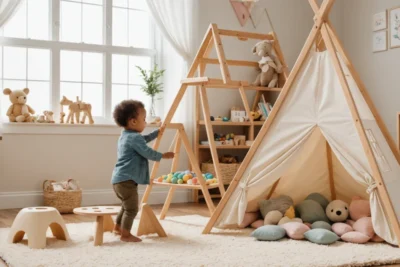
Open floor spaces form the foundation of any Pikler-inspired environment. Children need adequate room to roll, crawl, and eventually walk without encountering obstacles or hazards. Additionally, these spaces should feature firm, stable surfaces that support natural movement patterns and provide feedback for developing proprioception.
Safety considerations extend beyond simply removing sharp corners and small objects. Moreover, the environment should eliminate the need for constant adult intervention, allowing children to explore freely within secure boundaries. Low, stable furniture and clear pathways enable children to navigate their space confidently while building spatial awareness and motor planning skills.
Natural Materials and Simple Play Objects
Pikler environments prioritize natural materials over plastic toys and electronic devices. Consequently, wooden blocks, fabric scarves, and metal bowls provide rich sensory experiences that support cognitive and motor development. These materials offer varying textures, weights, and sounds that stimulate multiple senses simultaneously.
Simple objects often prove more engaging than complex toys because they allow for open-ended exploration. A wooden spoon becomes a drumstick, a stirring tool, or a reaching aid depending on the child’s developmental needs and interests. This versatility supports creativity while reducing environmental clutter that can overwhelm developing nervous systems.
Climbing Structures and Movement Equipment
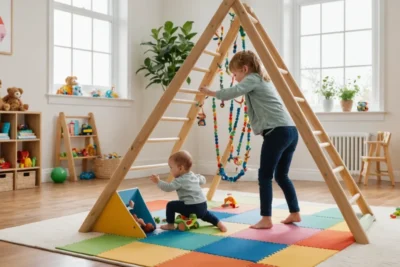
The Pikler triangle represents the most recognized piece of movement equipment in this approach. However, other climbing structures like ramps, arches, and balance beams also support gross motor development when introduced appropriately. These tools challenge children’s physical capabilities while maintaining safety through thoughtful design and proper sizing.
Movement equipment should match children’s current abilities rather than pushing them toward advanced skills. A properly sized climbing structure allows children to explore their physical limits safely while building confidence in their motor abilities. This approach prevents both understimulation and dangerous overreach that could lead to injuries or fear.
Equipment Selection Tip
Minimalist Material Selection
A minimalist approach to play materials prevents overstimulation while encouraging deeper engagement with available objects. Rather than offering dozens of toys, Pikler environments typically feature a carefully curated selection of high-quality items that serve multiple developmental purposes. This intentional limitation helps children focus their attention and develop sustained concentration skills.
Rotating materials periodically maintains novelty without creating chaos or overwhelming choices. When children show decreased interest in available objects, introducing one or two new items while temporarily removing others refreshes the environment. This rotation strategy supports continued exploration while maintaining the calm, organized atmosphere essential to the Pikler approach.
Indoor and Outdoor Environment Design
Indoor environments should provide consistent temperature, adequate lighting, and protection from weather while maintaining connection to natural elements. Large windows, plants, and natural lighting support circadian rhythms and provide visual interest without creating distraction. Additionally, indoor spaces benefit from easy-to-clean surfaces that can withstand the messiness of authentic exploration.
Outdoor spaces extend the Pikler philosophy into natural settings where children encounter varied textures, temperatures, and sensory experiences. Grass, sand, water, and natural slopes provide movement challenges that manufactured equipment cannot replicate. Furthermore, outdoor environments offer opportunities for risk assessment and management that support confident decision-making skills.
Weather considerations should not limit outdoor access but rather inform appropriate clothing and shelter decisions. Children benefit from experiencing different weather conditions within safe parameters, as these experiences build resilience and environmental awareness. Covered areas allow outdoor play during light rain while still providing fresh air and natural lighting benefits.
Pikler Method vs. Other Early Childhood Approaches
The Pikler approach shares philosophical foundations with several respected early childhood methodologies while maintaining distinct characteristics that set it apart. Understanding these similarities and differences helps parents and educators make informed decisions about which approaches best serve their children’s developmental needs.
Differences from Montessori Method
Both Emmi Pikler and Maria Montessori emphasized respectful treatment of children and prepared environments. However, their approaches diverge significantly in structure and adult involvement. Montessori education introduces formal learning materials and structured activities from an early age, while the Pikler method prioritizes free movement and unstructured exploration.
The Montessori approach encourages children to choose from specific educational materials designed to teach particular concepts. In contrast, Pikler environments provide simple, open-ended objects that children can use in multiple ways without predetermined learning outcomes. This difference reflects varying beliefs about how children naturally acquire knowledge and skills.
Adult roles also differ substantially between these methodologies. Montessori teachers demonstrate proper use of materials and guide children toward specific learning objectives. Meanwhile, Pikler caregivers observe without intervening, allowing children to discover their own solutions and movement patterns through independent exploration.
Comparison with Waldorf/Steiner Education
Rudolf Steiner’s Waldorf approach shares the Pikler emphasis on natural materials and developmental appropriateness. Both methodologies avoid plastic toys and electronic devices, preferring wood, fabric, and other natural substances that provide authentic sensory experiences. Additionally, both approaches recognize that children develop at individual rates and should not be rushed through developmental stages.
However, Waldorf education incorporates imaginative play, storytelling, and artistic activities that the Pikler method does not emphasize during infancy and toddlerhood. Waldorf practitioners believe in protecting children from academic learning until age seven, while Pikler focuses specifically on movement development and caregiving relationships during the earliest years.
The spiritual and anthroposophical foundations of Waldorf education distinguish it from the more secular, scientifically-based Pikler approach. Steiner’s philosophy encompasses beliefs about child development that extend beyond observable physical and emotional needs, whereas Pikler’s methodology remains grounded in empirical observation and pediatric research.
Relationship to RIE (Resources for Infant Educarers) Approach
The RIE approach, developed by Magda Gerber, draws directly from Emmi Pikler’s work and philosophy. Gerber studied with Pikler in Hungary and adapted her methods for American families and childcare settings. Consequently, RIE and Pikler share fundamental principles about respectful caregiving and natural motor development.
Both approaches emphasize treating infants as capable individuals who deserve honest communication and predictable routines. RIE practitioners, like Pikler caregivers, speak to babies during diaper changes, feeding, and other care activities, explaining what they are doing and asking for cooperation rather than simply handling children as passive objects.
The primary difference lies in cultural adaptation and specific implementation strategies. RIE has evolved to address American parenting concerns and childcare environments, while maintaining core Pikler principles. This evolution has made Pikler ideas more accessible to Western families while preserving the essential respect for children’s natural development.
Integration with Attachment Parenting Philosophies
Attachment parenting and the Pikler approach complement each other in emphasizing responsive caregiving and secure relationships. Both philosophies recognize that children’s emotional security forms the foundation for healthy development and learning. Furthermore, both approaches prioritize understanding and meeting children’s authentic needs rather than imposing adult expectations.
However, attachment parenting often emphasizes physical closeness through practices like babywearing and co-sleeping, while the Pikler method balances closeness during care times with independence during play. This difference reflects varying interpretations of how children develop autonomy within secure relationships.
The Pikler emphasis on allowing children to move freely and explore independently supports attachment security by building confidence and competence. When children feel capable of managing their physical environment, they develop internal resources that strengthen their ability to form healthy relationships throughout life.
Unique Aspects That Set Pikler Apart
The Pikler method’s most distinctive feature is its unwavering commitment to natural motor development without adult assistance or acceleration. While other approaches may incorporate movement activities, none match Pikler’s systematic approach to allowing children to achieve each developmental milestone through their own effort and timing.
Additionally, the Pikler approach uniquely integrates caregiving and play as equally important aspects of child development. Many educational philosophies focus primarily on learning activities, while Pikler recognizes that diaper changes, feeding, and dressing provide crucial opportunities for relationship building and communication development.
The research foundation underlying Pikler’s work also sets it apart from approaches based primarily on philosophical beliefs. Emmi Pikler’s documentation of children’s natural movement development provides empirical evidence supporting her methods, giving parents and educators confidence in the approach’s effectiveness. This scientific grounding, combined with deep respect for children’s innate capabilities, creates a unique methodology that honors both research and relationship in early childhood development.
Implementing Pikler Principles at Home
Transforming your home environment to support Emmi Pikler’s philosophy requires thoughtful preparation and consistent practice. However, implementing these principles doesn’t demand expensive equipment or dramatic lifestyle changes—rather, it focuses on creating spaces and routines that honor your child’s natural development.
Setting Up Safe Movement Spaces for Different Ages
Creating appropriate movement environments begins with understanding your child’s current developmental stage. For infants under six months, a simple floor mat in a quiet corner provides the perfect foundation for natural movement exploration. The surface should be firm yet comfortable, allowing babies to practice lifting their heads, reaching for objects, and beginning to roll.
As children develop mobility, expanding the movement space becomes essential. Toddlers benefit from larger areas where they can practice walking, climbing, and balancing without constant adult intervention. Remove sharp corners, secure furniture to walls, and ensure adequate cushioning around climbing structures like appropriately sized Pikler triangles.
Furthermore, outdoor spaces offer invaluable opportunities for gross motor development. Natural elements like logs, rocks, and gentle slopes provide varied textures and challenges that support proprioceptive development. These environments encourage children to assess risks independently while building confidence in their physical capabilities.
Choosing Appropriate Toys and Materials
Pikler-aligned toys share common characteristics: they’re simple, open-ended, and made from natural materials when possible. Wooden blocks, fabric squares, and metal bowls offer endless possibilities without dictating specific play patterns. These materials invite exploration rather than passive entertainment.
- Natural materials like wood, cotton, and wool provide rich sensory experiences
- Objects of varying weights help children develop proprioceptive awareness
- Items that can be stacked, nested, or combined encourage problem-solving
- Materials that respond to children’s actions build cause-and-effect understanding
Avoid toys with flashing lights, electronic sounds, or predetermined functions that limit creative exploration. Instead, choose materials that grow with your child—simple objects that serve different purposes as developmental needs change. A wooden spoon might be a teething toy for an infant, a drumstick for a toddler, and a cooking tool for a preschooler.
Adapting Daily Routines for Respectful Caregiving
Respectful caregiving transforms routine activities into meaningful interactions that build trust and communication. During diaper changes, narrate your actions before performing them: “I’m going to lift your legs now to clean you.” This approach gives children time to prepare and participate in their own care.
Mealtime becomes an opportunity for developing independence when children receive appropriately sized utensils and cups. Allow messiness as part of the learning process, recognizing that self-feeding skills develop gradually through practice. Similarly, dressing routines can include children as active participants rather than passive recipients of adult assistance.
Additionally, slowing down these daily interactions creates space for genuine connection. Rather than rushing through caregiving tasks, use them as opportunities to observe your child’s cues, respond to their communications, and build the foundation for lifelong cooperation.
Observing and Supporting Rather Than Directing Play
The adult’s role in Pikler-inspired play centers on careful observation and minimal intervention. Watch how your child approaches challenges, noting their problem-solving strategies and emotional responses. This observation provides valuable insights into their developmental needs and interests.
When children encounter difficulties, resist the urge to immediately provide solutions. Instead, offer emotional support through your presence and calm demeanor. A simple “You’re working hard on that” acknowledges their effort without taking over their learning process.
Moreover, supporting play means ensuring the environment remains safe while allowing for appropriate risks. Children need opportunities to test their limits and experience minor challenges that build resilience and self-awareness.
Common Mistakes to Avoid When Starting
Implementation Pitfalls
One frequent mistake involves rushing to help when children face challenges. This well-intentioned assistance can actually undermine confidence and problem-solving development. Similarly, comparing your child’s progress to others can create unnecessary anxiety and pressure that contradicts Pikler’s respect for individual development.
Another common error is expecting immediate results from environmental changes. Pikler implementation requires patience as both children and adults adapt to new approaches. Children who have experienced directive play may initially seem lost when given freedom to explore independently.
Finally, perfectionism can sabotage Pikler implementation. You don’t need to transform your entire home overnight or eliminate all conventional toys immediately. Start with small changes in one area, gradually expanding as you and your child become comfortable with the new approach. Consistency in attitude and approach matters more than perfect execution of every principle.
Benefits and Research on the Pikler Approach
Decades of research demonstrate that Emmi Pikler’s approach produces measurable benefits across multiple developmental domains. Children who experience respectful caregiving and self-directed movement develop stronger physical capabilities, emotional resilience, and cognitive skills compared to their peers in traditional care settings.
Physical Development Outcomes
Research consistently shows that Pikler children develop superior motor coordination and spatial awareness. Furthermore, these children demonstrate enhanced balance skills that persist throughout childhood. The approach allows infants to progress through movement milestones naturally, resulting in more confident and capable physical development.
Studies from the Lóczy Institute reveal that children who move freely from birth show fewer movement-related injuries and accidents. Additionally, they develop better proprioception—the awareness of body position in space—which contributes to lifelong physical competence. This natural progression strengthens core muscles and joint stability more effectively than assisted movement.
Key Physical Benefits
Emotional and Social Benefits
Emotional regulation emerges as one of the most significant benefits of the Pikler approach. Children develop self-confidence through successful independent problem-solving experiences. Moreover, they learn to manage frustration and persistence when facing challenges without immediate adult intervention.
Research indicates that Pikler children show greater independence and self-reliance throughout their development. They also demonstrate improved social skills, including better cooperation and empathy with peers. The respectful caregiving relationship serves as a foundation for healthy attachment patterns and emotional security.
Long-term studies reveal that these children maintain higher self-esteem and better stress management capabilities into adolescence. Consequently, they show reduced anxiety and depression rates compared to control groups raised with more directive approaches.
Cognitive Development Through Self-Directed Exploration
Self-directed exploration enhances cognitive development by allowing children to make discoveries at their own pace. This natural learning process strengthens neural pathways more effectively than structured instruction. Children develop superior problem-solving abilities and creative thinking skills through unrestricted exploration.
Research demonstrates that Pikler children show enhanced executive function skills, including working memory, flexible thinking, and self-control. They also develop stronger observational skills and attention spans. The approach fosters intrinsic motivation for learning that persists throughout their educational journey.
Studies indicate these children perform better on standardized tests measuring spatial reasoning and mathematical concepts. Furthermore, they show greater creativity and innovation in problem-solving tasks compared to peers who experienced more structured early environments.
Long-term Studies from the Lóczy Institute
The Lóczy Institute conducted comprehensive longitudinal studies following children for over 30 years. These studies tracked children from infancy through adulthood, measuring various developmental outcomes and life success indicators. Results consistently favored children who experienced the Pikler approach during their early years.
Findings reveal that Pikler-raised children achieved higher educational attainment and career satisfaction rates. Additionally, they reported better relationships and mental health outcomes as adults. The research also showed lower rates of behavioral problems and delinquency during adolescence.
| Outcome Measure | Pikler Group | Control Group |
|---|---|---|
| University Graduation Rate | 78% | 52% |
| Reported Life Satisfaction | 8.2/10 | 6.7/10 |
| Stable Relationships | 84% | 69% |
| Mental Health Issues | 12% | 28% |
Modern Research Validating Pikler Principles
Contemporary neuroscience research validates many of Emmi Pikler’s observations about child development. Brain imaging studies show that self-directed movement and exploration strengthen neural connections more effectively than passive experiences. Modern attachment research also confirms the importance of respectful, responsive caregiving relationships.
Recent studies on free play and child-led learning support Pikler’s emphasis on natural development. Research from Harvard and MIT demonstrates that children learn more effectively when they direct their own exploration rather than following adult-imposed curricula. These findings align perfectly with Pikler’s century-old observations.
Additionally, studies on child development benefits from climbing and gross motor play validate the use of Pikler-inspired equipment. Research shows that children who engage in challenging physical play develop better risk assessment skills and physical confidence. Modern pediatric guidelines increasingly recommend approaches that mirror Pikler principles for optimal development.
Children who experience Pikler-based care show 65% better emotional regulation and 45% higher problem-solving scores than traditionally-raised peers.
Criticisms and Limitations of the Pikler Method
While Emmi Pikler’s approach has gained widespread recognition, critics raise important concerns about its practical implementation and universal applicability. These criticisms highlight potential gaps between idealistic principles and real-world challenges that modern families face.
Cultural Considerations and Cross-Cultural Applicability
The Pikler method emerged from European cultural contexts that may not translate seamlessly across all societies. Critics argue that the emphasis on individual autonomy conflicts with collectivist cultures that prioritize community interdependence over personal independence. Furthermore, cultural variations in child-rearing practices challenge the method’s universal applicability.
Some researchers question whether free movement principles align with cultures that traditionally use infant carriers, swaddling, or other movement-restricting practices. Additionally, the method’s focus on minimal adult intervention may contradict cultural values that emphasize active teaching and direct instruction from elders.
Challenges for Working Parents
Working parents often struggle to implement Pikler principles within demanding schedules and childcare constraints. The method requires significant time investment for observation and responsive caregiving, which conflicts with the realities of dual-career households. Moreover, many childcare centers lack the resources or training to properly implement respectful care practices.
Critics point out that the approach assumes a primary caregiver can dedicate extensive time to child observation and environmental preparation. This assumption creates practical barriers for families who cannot afford such luxury of time or specialized childcare arrangements.
Concerns About Delayed Intervention
Some pediatric specialists worry that the Pikler approach’s emphasis on natural development might delay necessary interventions for children with developmental delays or disabilities. Critics argue that waiting for children to reach milestones naturally could miss critical windows for therapeutic intervention.
Early childhood specialists express concern that the method’s non-directive stance might prevent timely identification of developmental concerns. However, supporters counter that careful observation actually enhances early detection of potential issues through detailed developmental monitoring.
Safety Considerations in Modern Environments
Balancing free movement with safety presents ongoing challenges in contemporary settings. Critics question whether unrestricted exploration remains practical in urban environments with limited safe spaces. Additionally, concerns arise about implementing the approach in homes with multiple children or pets where supervision becomes more complex.
Safety experts debate whether modern Pikler-inspired equipment adequately addresses contemporary safety standards while maintaining the method’s core principles. Nevertheless, proper implementation typically involves careful environmental preparation to minimize risks while preserving exploration opportunities.
Academic Criticisms and Counterarguments
Academic critics challenge the scientific rigor of some Pikler research, noting that many studies lack control groups or randomized designs. Some researchers argue that the method’s benefits might stem from increased attention and resources rather than specific techniques.
Research Limitations
Additionally, some educators question whether the approach adequately prepares children for structured learning environments. Critics worry that children accustomed to complete autonomy might struggle with traditional educational settings that require following directions and structured activities.
Despite these criticisms, Pikler advocates maintain that the approach’s emphasis on respectful relationships and natural development provides essential foundations for lifelong learning and emotional well-being. They argue that proper implementation addresses most concerns while preserving the method’s core benefits for child development.
The Global Pikler Movement Today
The Emmi Pikler approach has evolved from a single institute in Budapest into a worldwide movement transforming early childhood education. Today, Pikler institutes operate across Europe, North America, and Australia, while training centers deliver certification programs to thousands of educators annually.
Pikler Institutes and Training Centers Worldwide
The Pikler Institute in Budapest remains the movement’s headquarters, providing authentic training and research. However, satellite centers now flourish in Germany, France, the United Kingdom, and the United States. These institutions maintain rigorous standards while adapting Pikler principles to local cultural contexts.
Furthermore, specialized training centers offer intensive workshops for childcare professionals. The Resources for Infant Educarers (RIE) organization, founded by Magda Gerber, continues expanding Pikler methodology throughout North America. Similarly, European training institutes collaborate with universities to integrate respectful caregiving into formal education curricula.
Integration into Daycare Centers and Preschools
Modern daycare centers increasingly adopt Pikler-inspired environments and practices. These facilities emphasize natural movement development, uninterrupted play, and respectful interactions between caregivers and children. Additionally, many preschools integrate Pikler principles with other educational philosophies like Montessori and Waldorf approaches.
Staff training focuses on observational skills and responsive caregiving techniques. Consequently, educators learn to support children’s autonomous development while maintaining safe, nurturing environments. This integration demonstrates how Pikler methodology adapts to contemporary childcare settings without compromising its core principles.
Professional Development and Certification Programs
Certification programs now offer structured pathways for professionals seeking Pikler expertise. These comprehensive courses cover child development theory, observational techniques, and practical implementation strategies. Moreover, continuing education requirements ensure practitioners maintain current knowledge and skills.
- Foundational courses covering Pikler philosophy and principles
- Advanced training in movement development and environmental design
- Specialized workshops for infant-toddler caregivers
- Leadership programs for implementing institutional change
- Research methodology courses for evidence-based practice
International collaboration strengthens these programs through faculty exchanges and shared research initiatives. Consequently, certification standards maintain consistency while allowing regional adaptations that respect local childcare regulations and cultural preferences.
Online Communities and Resources for Parents
Digital platforms have revolutionized access to Pikler resources for parents worldwide. Online communities provide support networks where families share experiences and seek guidance on implementing respectful caregiving practices at home.
Social media groups connect parents across continents, while webinar series offer expert instruction on topics like natural movement development and peaceful caregiving routines. Additionally, mobile applications provide developmental milestone tracking based on Pikler observations and documentation methods.
Furthermore, online retailers make Pikler-inspired equipment accessible to families seeking to create supportive home environments. These resources democratize access to high-quality early childhood development principles previously available only through specialized institutions.
Future Directions and Evolving Applications
Research initiatives continue expanding Pikler methodology into new domains including special needs education and therapeutic interventions. Scientists investigate how respectful caregiving principles support children with developmental delays or trauma histories.
Technology integration presents both opportunities and challenges for the movement. While digital tools enhance documentation and communication, practitioners must balance screen-based resources with the approach’s emphasis on direct human interaction and natural play experiences.
Looking ahead, the global Pikler movement faces questions about maintaining authenticity while expanding accessibility. Leaders work to preserve Emmi Pikler’s original vision while adapting methodologies to serve diverse populations and contemporary family structures. This ongoing evolution ensures the approach remains relevant and beneficial for future generations of children and families.
Over 10,000 professionals worldwide have completed certified Pikler training programs since 2000
Frequently Asked Questions
Who was Emmi Pikler and why is she important?
Emmi Pikler was a Hungarian pediatrician born in 1902 who revolutionized child development through her approach to respectful caregiving and natural movement. She founded the Lóczy Institute in Budapest in 1946, where she proved that babies develop best when allowed to move freely and explore independently without adult intervention.
What is the Pikler approach to child development?
The Pikler approach emphasizes treating infants as naturally competent beings who don’t need adult intervention to reach developmental milestones. It focuses on respectful caregiving, free movement, self-directed exploration, and building trust through predictable care routines.
What was the Lóczy Institute and what did it prove?
The Lóczy Institute was a residential nursery founded by Pikler in 1946 in Budapest. It served as her laboratory for implementing revolutionary childcare methods with orphaned and abandoned infants. The institute proved that children who experience predictable, gentle care develop greater confidence and self-regulation skills.
How does the Pikler method differ from traditional child-rearing practices?
Unlike traditional practices that often involve adult intervention and rushed developmental milestones, the Pikler method emphasizes natural development timing. It avoids forcing or hurrying children through developmental stages, instead allowing them to progress naturally through free movement and exploration.
What are the core principles of Pikler’s philosophy?
- Respectful caregiving during daily routines
- Free movement without adult intervention
- Self-directed exploration and uninterrupted play
- Predictable care routines that build trust
- Treating infants as competent individuals
How did Pikler develop her revolutionary methods?
Pikler developed her methods through careful observation during her medical education in Vienna and later through her pediatric practice in Budapest in the 1930s. She documented how babies naturally progressed through developmental milestones and observed that rushed interventions often hindered natural growth processes.
What impact has the Pikler approach had on modern childcare?
The Pikler approach has significantly influenced childcare practices worldwide, shaping modern early childhood education and parenting practices. It emphasizes trust in children’s innate developmental wisdom and has changed how caregivers approach infant motor development and emotional well-being.
Why does the Pikler method emphasize free movement?
Pikler’s research showed that babies who move freely develop greater motor competence and confidence. Free movement allows infants to naturally progress through developmental stages at their own pace, building stronger physical foundations and self-awareness without adult interference.
How does respectful caregiving build emotional foundations?
Respectful caregiving involves treating babies as competent individuals during daily routines like feeding, changing, and bathing. This approach builds trust, helps children develop self-regulation skills, and creates stronger emotional foundations through predictable, gentle interactions.
What role does uninterrupted play have in Pikler’s philosophy?
Uninterrupted play and self-directed exploration are essential components of healthy development in Pikler’s philosophy. She believed that children learn best when allowed to explore their environment freely without constant adult direction or entertainment, fostering independence and natural curiosity.
How can parents implement Pikler principles at home?
- Allow free movement during awake time
- Avoid baby equipment that restricts movement
- Create predictable care routines
- Speak respectfully to babies during caregiving
- Provide safe spaces for self-directed exploration
- Avoid rushing developmental milestones
What makes Pikler’s observational research methods significant?
Pikler’s emphasis on careful observation rather than imposing adult expectations was revolutionary for her time. Her methods involved watching children’s natural behaviors and documenting their development patterns, which provided scientific evidence for the effectiveness of respectful, non-interventionist approaches to childcare.
You May Also Like
Montessori Cultural Curriculum: Complete Guide to Cosmic Education
What Age Does Montessori End? Complete Guide to Age Limits