How to Use a Pikler Triangle: Complete Safety & Activity Guide

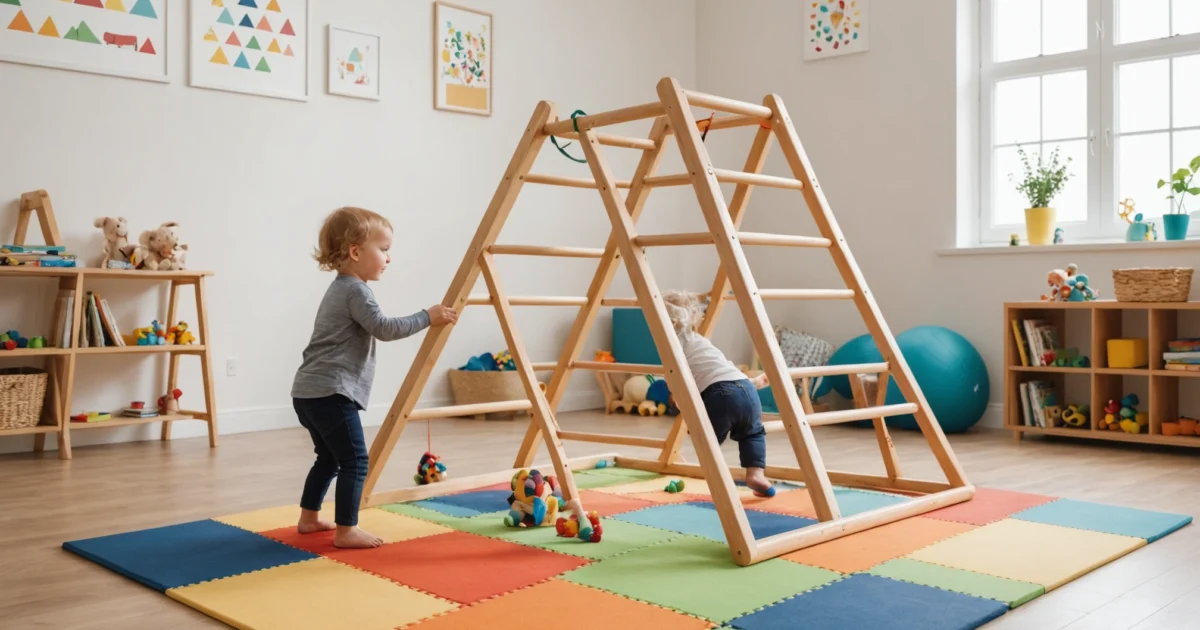
Learning how to use Pikler triangle safely starts with understanding your child’s readiness and creating the right environment for exploration. This wooden climbing frame supports natural development through self-directed play, but proper setup and supervision are essential for safe use. Most children can begin exploring the triangle around 6 months when they show signs of mobility, though climbing typically develops between 12-18 months.
The key to successful Pikler triangle use lies in following your child’s natural pace rather than pushing them to climb. Additionally, proper floor preparation, appropriate supervision levels, and understanding when to intervene ensure both safety and developmental benefits. Furthermore, introducing the triangle gradually allows children to build confidence and risk assessment skills naturally.
This comprehensive guide covers everything from initial setup to long-term maintenance, helping you maximize the developmental benefits while keeping your child safe. Moreover, you’ll discover age-appropriate activities and troubleshooting strategies for common challenges that arise during use.
TL;DR
- Start around 6 months when baby shows mobility signs, but expect climbing to develop between 12-18 months
- Setup safely with proper floor mats, stable assembly, and adequate space away from hazards
- Supervise appropriately by staying close for young children while allowing self-directed exploration
- Introduce gradually through exploration rather than forced climbing, following your child’s natural pace
- Maintain regularly with safety inspections and proper cleaning to ensure long-term safe use
What is a Pikler Triangle and How It Works
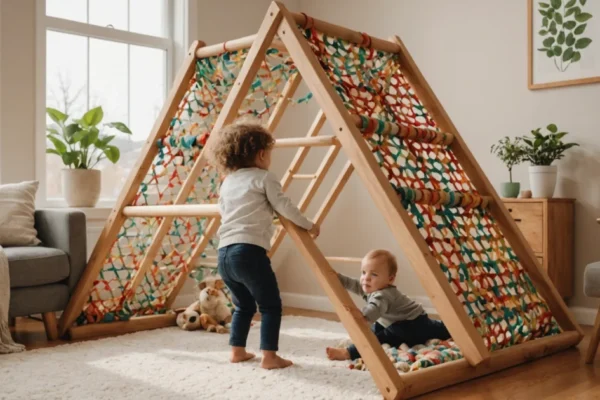
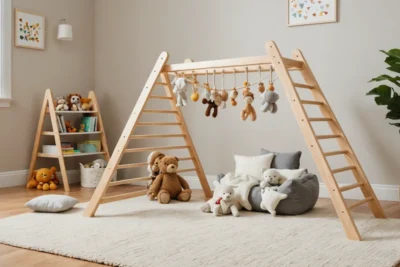
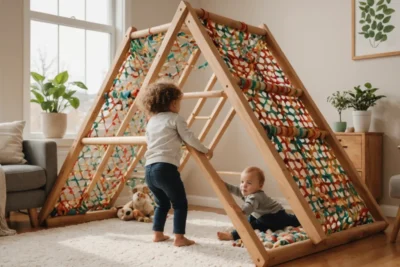
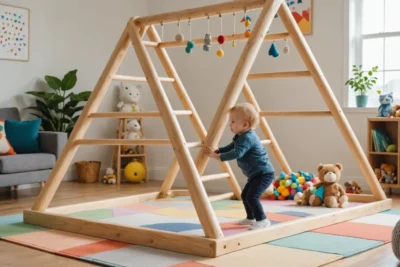
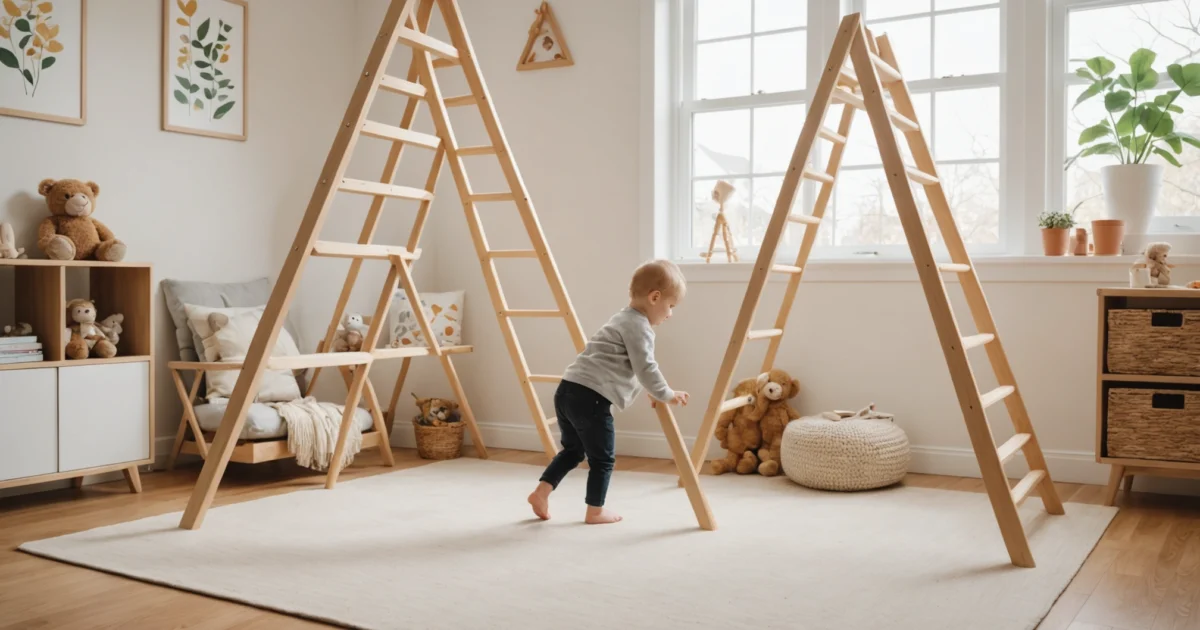
A Pikler triangle is a wooden climbing structure designed to promote natural movement development in children through self-directed exploration. This triangular frame, typically standing 24-36 inches tall, features horizontal rungs that create a ladder-like climbing surface on each side. Moreover, the triangle’s stable base and carefully spaced rungs allow children to climb, crawl, and explore at their own developmental pace.
The climbing frame originates from the work of Dr. Emmi Pikler, a Hungarian pediatrician who revolutionized early childhood development in the 1930s. Dr. Pikler believed that children naturally develop gross motor skills when given appropriate environments and freedom to move. Furthermore, her research at the Pikler Institute demonstrated that unrestricted movement leads to better coordination, confidence, and physical awareness than adult-directed activities.
Emmi Pikler’s Philosophy of Natural Development
Pikler’s philosophy centers on respecting children’s natural development timeline rather than accelerating their progress. She observed that babies and toddlers instinctively know how to move their bodies safely when given appropriate challenges. Additionally, this approach builds intrinsic motivation and risk assessment skills that serve children throughout their lives.
The free movement principle encourages children to attempt new physical challenges only when they feel ready. Consequently, children who learn through self-directed exploration develop stronger proprioception and spatial awareness. This natural progression also reduces injury risk since children don’t attempt movements beyond their current capabilities.
Basic Structure and Design Features
Traditional Pikler triangles feature a simple yet effective design that maximizes developmental benefits. The wooden frame typically measures 32 inches wide at the base with rungs spaced 6-8 inches apart vertically. Furthermore, quality triangles use smooth hardwood construction with rounded edges to prevent splinters and injuries during play.
- Triangular frame provides stability and multiple climbing angles
- Horizontal rungs create gripping surfaces for hands and feet
- Foldable design allows easy storage when not in use
- Natural wood finish ensures safe, non-toxic play surfaces
- Weight capacity typically supports children up to 60-80 pounds
The triangle’s geometry creates natural climbing progressions from easier to more challenging angles. Initially, children often crawl underneath the triangle or pull themselves up on the lower rungs. Subsequently, they progress to climbing over the apex and eventually navigate the steeper back side with confidence.
How the Triangle Supports Self-Directed Exploration
The Pikler triangle functions as an open-ended play structure that adapts to each child’s developmental stage and interests. Unlike prescriptive toys with single purposes, the triangle invites creative problem-solving and physical experimentation. Therefore, children develop both gross motor skills and cognitive abilities through repeated interactions with the structure.
Self-directed exploration through the triangle builds executive function skills as children plan their movements and assess risks independently. Each climbing session requires children to evaluate their abilities, choose appropriate handholds, and coordinate complex movements. Consequently, this process strengthens neural pathways responsible for motor planning and spatial reasoning.
The triangle also promotes intrinsic motivation by allowing children to set their own challenges and celebrate personal achievements. When children choose their climbing goals rather than following adult instructions, they develop stronger self-confidence and persistence. Additionally, this autonomy teaches valuable lessons about personal limits and gradual skill development that extend beyond physical play.
Understanding when children can start using Pikler triangles helps parents introduce this powerful developmental tool at the optimal time for maximum benefit.
Age Guidelines and Readiness Signs
Most children begin using Pikler triangles safely between 6 months and 8 months when they demonstrate consistent sitting balance and purposeful reaching movements. However, chronological age serves as only one indicator of readiness, while physical development milestones provide more reliable guidance for determining appropriate introduction timing.
The upper age limit for triangle use typically extends to 6 years or older, depending on the structure’s size and the child’s continued interest in climbing challenges. Furthermore, many children transition away from triangle play naturally around 4 to 5 years as their motor skills advance to more complex playground equipment and organized sports activities.
Physical Readiness Indicators
Children demonstrate physical readiness through several observable behaviors that indicate sufficient strength and coordination for safe triangle exploration. Stable sitting without support represents the foundational skill that enables children to maintain balance while reaching for triangle rungs. Additionally, purposeful grasping and releasing objects shows the hand strength necessary for gripping wooden bars securely.
- Crawling proficiency with coordinated arm and leg movements
- Pulling to standing using furniture or other stable surfaces
- Weight bearing on arms during tummy time or crawling
- Intentional reaching for objects at various heights
- Head control maintained during position changes
Children who cruise along furniture demonstrate the lateral weight shifting and grip strength essential for triangle climbing. Moreover, those who can bear weight on their arms during play activities possess the upper body strength required for safe triangle navigation.
Developmental Milestones for Triangle Readiness
Gross motor development provides the clearest indicators of triangle readiness, particularly when children achieve consistent crawling patterns and demonstrate problem-solving persistence. Children ready for triangle introduction typically show curiosity about vertical surfaces and attempt to climb stairs or furniture despite safety redirections.
| Age Range | Key Milestones | Triangle Activities |
|---|---|---|
| 6-12 months | Sitting, crawling, pulling to stand | Exploring lower rungs, reaching through bars |
| 12-18 months | Walking, climbing stairs with support | Climbing 2-3 rungs, stepping through openings |
| 18-24 months | Running, jumping, climbing furniture | Reaching triangle peak, coordinated climbing |
| 2-4 years | Balancing, hopping, complex coordination | Advanced climbing, creative play scenarios |
Cognitive readiness emerges when children understand cause-and-effect relationships and demonstrate awareness of their physical limitations. Children who pause before attempting challenging movements show the self-regulation skills necessary for safe triangle exploration. Consequently, this cognitive awareness prevents dangerous overreaching and promotes gradual skill building.
Assessing Individual Readiness
Parents can evaluate their child’s triangle readiness through careful observation of existing climbing behaviors and physical capabilities. Supervised stair climbing provides an excellent assessment opportunity, as children who navigate stairs confidently typically possess the coordination required for triangle use. Similarly, children who climb playground equipment or furniture demonstrate the spatial awareness essential for safe triangle exploration.
Readiness Assessment Tips
Attention span during physical activities offers another readiness indicator, as triangle climbing requires sustained focus and motor planning. Children who persist through challenging physical tasks and seek increasingly difficult movement experiences show the motivation necessary for productive triangle engagement. Therefore, parents should look for children who approach physical challenges with curiosity rather than frustration or fear.
The most reliable readiness assessment combines multiple indicators rather than relying on single milestones or chronological age alone. Trust your observations of your child’s unique development pattern while considering safety as the primary factor in introduction timing decisions.
Safe Setup and Environment Preparation
Proper setup transforms the Pikler triangle from a climbing structure into a secure learning environment. Consequently, careful preparation prevents injuries while maximizing developmental benefits. The foundation of safe triangle use begins with thoughtful placement and environmental considerations.
Choosing the Right Location and Space Requirements
Indoor triangle placement requires a minimum 6-foot radius of clear space around all sides of the structure. This clearance zone accommodates natural climbing movements and provides adequate landing area for dismounting children. Additionally, the space should feature level flooring without slopes or uneven surfaces that could compromise stability.
Ceiling height determines the maximum triangle size suitable for your space, with most standard triangles requiring 8-foot minimum ceiling clearance. Furthermore, the location should offer natural lighting for proper visibility while avoiding direct sunlight that creates glare or shadows. Room temperature stability ensures comfortable climbing conditions throughout extended play sessions.
Floor Surface Considerations and Safety Mats
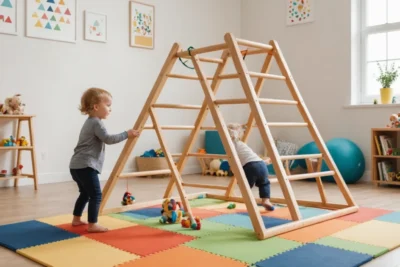
Hard flooring surfaces like hardwood, tile, or concrete require protective matting beneath and around the triangle structure. Foam play mats with minimum 1-inch thickness provide adequate impact absorption for typical climbing falls. However, avoid overly soft surfaces that create instability or make climbing more difficult than intended.
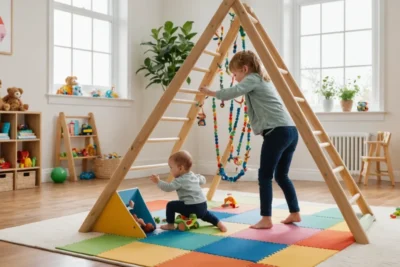
Interlocking foam tiles offer versatile coverage options while maintaining easy cleaning and storage capabilities. Moreover, these mats should extend 3 feet beyond the triangle’s base on all sides to catch children who jump or fall during dismounting. Non-slip mat backing prevents sliding during vigorous climbing activities.
Surface Safety Alert
Proper Assembly and Stability Checks
Triangle assembly requires careful attention to manufacturer specifications and hardware tightening procedures. All bolts and screws must reach proper torque specifications to prevent loosening during use. Subsequently, check joint connections for gaps or movement that indicates incomplete assembly.
The completed triangle should demonstrate rock-solid stability when gently shaken from multiple angles. Any wobbling or shifting indicates assembly issues that require immediate correction before allowing child use. Additionally, inspect all wooden surfaces for splinters, rough edges, or manufacturing defects that could cause injuries.
- Test each rung for secure attachment and weight-bearing capacity
- Verify folding mechanisms operate smoothly without pinch points
- Confirm all safety locks engage properly in extended position
- Check for protruding hardware or sharp edges
Creating a Safe Climbing Environment
The triangle’s surrounding environment significantly impacts climbing safety and learning outcomes. Remove all breakable objects from the climbing zone, including decorative items, electronics, and fragile furniture. Similarly, relocate sharp-cornered furniture or add protective padding to nearby edges.
Lighting conditions affect children’s depth perception and spatial awareness during climbing activities. Therefore, ensure adequate illumination without creating shadows that obscure rung visibility. Natural lighting works best, though supplemental lighting may be necessary in darker rooms or during evening play sessions.
Distance from Walls, Furniture, and Other Hazards
Maintain minimum 4-foot clearance from walls to prevent children from using wall surfaces for additional climbing support. This distance also eliminates the risk of children falling backward against wall-mounted fixtures or decorations. Furthermore, corner placement creates confined spaces that limit emergency access and natural movement patterns.
Heavy furniture poses crushing hazards if children attempt to climb from triangle to nearby surfaces. Consequently, secure or remove unstable furniture pieces that could tip over during climbing activities. Electrical outlets within the climbing zone require safety covers, while cords and cables need secure routing away from play areas.
Regular environment assessments identify new hazards as children develop advanced climbing skills and explore different movement patterns. What seems safe for beginning climbers may present risks as children gain confidence and attempt more complex maneuvers. Therefore, adapt the environment continuously to match evolving climbing abilities and safety requirements.
Introducing Your Child to the Pikler Triangle
The initial introduction to a Pikler triangle determines your child’s long-term relationship with this climbing structure. Rather than encouraging immediate climbing, successful introduction focuses on natural exploration and self-directed discovery. Children develop confidence through gradual familiarization, not forced interaction.
First Introduction Techniques for Different Ages
Infants aged 6-12 months benefit from simple observation and touch exploration around the triangle’s base. Place colorful toys beneath the structure to encourage crawling and reaching movements. Additionally, these young explorers can safely pull themselves up on the lowest rungs while developing standing balance.
Toddlers aged 12-24 months naturally attempt climbing motions when introduced gradually. Start by demonstrating how to place hands and feet on rungs without pressure to ascend. Moreover, allow extended periods of touching, shaking, and examining the triangle structure before any climbing attempts.
Preschoolers aged 2-5 years often approach the triangle with existing climbing experience from playgrounds and furniture. However, introduce the triangle’s unique angles and spacing through guided exploration rather than immediate free climbing. These children can understand basic safety rules and climbing techniques through demonstration.
Starting with Exploration Rather Than Climbing
Initial exploration builds familiarity and reduces anxiety around the new climbing structure. Encourage children to crawl under the triangle, touch different surfaces, and observe the structure from various angles. This exploratory phase typically lasts 3-7 days depending on the child’s temperament and previous climbing experience.
- Allow unrestricted touching and examination of all triangle surfaces
- Place favorite toys on and around the structure to create positive associations
- Demonstrate gentle rocking motions to show the triangle’s stability
- Encourage crawling through and around the triangular space
Children who rush into climbing often develop poor technique and safety awareness. Consequently, patient exploration creates better long-term climbing habits and reduces accident risks. Furthermore, this approach respects each child’s individual comfort level and developmental readiness.
Allowing Natural Progression and Self-Paced Learning
Self-paced learning enables children to develop climbing skills at their optimal developmental rate. Natural progression follows predictable patterns: first touching and exploring, then pulling up, followed by single rung climbing, and finally full ascent attempts. This sequence typically unfolds over 2-4 weeks for most children.
Avoid lifting children onto higher rungs or encouraging climbing beyond their current ability level. Instead, children signal readiness through repeated attempts at the next skill level. For instance, a child who consistently pulls up to standing will naturally attempt placing one foot on the first rung.
Recognition Signs
Individual children progress at vastly different rates based on physical development, temperament, and previous movement experiences. Therefore, comparing siblings or peers creates unnecessary pressure and may interfere with natural learning processes. Each child’s unique timeline deserves respect and patience.
What to Expect During the Initial Weeks of Use
The first week typically involves extensive exploration with minimal climbing attempts. Children spend considerable time examining the triangle’s construction, testing its stability, and incorporating it into imaginative play scenarios. This familiarization period establishes crucial comfort and trust with the new equipment.
Week two often brings first climbing attempts as children gain confidence in the triangle’s stability and their own abilities. Expect frequent starts and stops, with children climbing one or two rungs before descending. Additionally, children may prefer climbing up one side and walking around to descend rather than climbing down the same side.
Weeks three and four typically show increased climbing frequency and height as skills develop. However, expect occasional regression during growth spurts, illness, or major life changes. These temporary setbacks represent normal developmental patterns rather than equipment problems or learning difficulties.
Most children achieve comfortable climbing to the triangle’s peak within 4-8 weeks of introduction. Nevertheless, individual timelines vary significantly, and some children may require several months to reach full climbing confidence. Understanding age-appropriate expectations helps parents maintain realistic goals throughout the introduction process.
Supervision Guidelines and Safety Rules
Effective supervision balances safety with independence, allowing children to explore while maintaining appropriate oversight. Age-appropriate supervision levels ensure children develop confidence without compromising their physical safety during Pikler triangle activities.
Age-Based Supervision Requirements
Children under 18 months require constant visual supervision within arm’s reach. Furthermore, caregivers should position themselves to catch potential falls while avoiding interference with natural movement patterns. These youngest users need immediate access to adult support during their initial explorations.
Toddlers between 18-30 months benefit from close proximity supervision without direct hovering. Meanwhile, adults should remain within the same room and maintain frequent visual contact. This supervision level allows for quick intervention while promoting independent problem-solving skills.
Children over 30 months typically manage independent play sessions with periodic check-ins. However, adults should establish clear boundaries about acceptable climbing heights and activities. Regular supervision intervals of 5-10 minutes provide adequate safety monitoring for this age group.
When to Intervene vs. Step Back
Immediate intervention becomes necessary when children attempt dangerous positions like standing on top rungs or climbing while holding objects. Additionally, adults must step in if children show signs of fatigue, frustration, or reckless behavior that compromises safety.
Conversely, stepping back allows children to work through minor challenges and build problem-solving capabilities. Natural struggle moments help develop spatial awareness, muscle memory, and confidence. Therefore, adults should resist helping unless genuine safety concerns arise.
Red Flag Behaviors
Essential Safety Rules for Children
- One child at a time prevents collisions and ensures adequate space for safe movement
- Feet-first climbing maintains proper orientation and reduces fall risks
- No jumping or bouncing prevents structural damage and injury
- Clear landing zones must remain free of toys, furniture, and obstacles
- Appropriate clothing means no loose garments, jewelry, or slippery socks
Establishing these rules early creates consistent expectations and helps children develop safety awareness. Moreover, regular reinforcement through gentle reminders builds habitual safe practices that extend beyond Pikler triangle use.
Common Safety Mistakes Parents Make
Overprotective hovering represents the most frequent supervision error, preventing children from developing natural risk assessment skills. Similarly, constantly offering help undermines confidence building and interferes with the learning process.
Inadequate equipment inspection creates unnecessary hazards that proper maintenance easily prevents. Additionally, placing the triangle on inappropriate surfaces like hardwood floors without mats increases injury risks during falls.
Rushing developmental timelines leads to premature introduction of challenging activities. Furthermore, ignoring individual readiness cues in favor of age-based expectations can result in negative experiences that discourage future climbing attempts.
Emergency Preparedness and First Aid
Basic first aid knowledge proves essential for addressing minor bumps, scrapes, and bruises that occasionally occur during active play. Ice packs, bandages, and antiseptic wipes should remain easily accessible in play areas.
Understanding signs of serious injury helps parents distinguish between minor incidents and situations requiring medical attention. Consequently, knowledge of concussion symptoms, fracture indicators, and when to seek emergency care provides crucial safety backup.
Creating an emergency action plan ensures quick response during serious incidents. This plan should include emergency contact numbers, nearby hospital locations, and clear communication protocols with other caregivers or family members.
The goal of supervision is not to prevent all falls, but to ensure children can fall safely while learning to assess and manage risks independently.
Activities and Play Ideas
Understanding how to use pikler triangle effectively transforms this climbing structure into a versatile playground that grows with your child. Moreover, creative activities maximize the educational and developmental benefits while keeping children engaged for extended periods.
Basic Climbing and Descending Techniques
Children naturally develop climbing skills through repeated practice on the triangle’s rungs. Initially, toddlers begin by pulling themselves up to standing position using the lower rungs as support. Subsequently, they progress to placing one foot on the first rung while maintaining their grip.
Proper descending technique involves teaching children to climb down facing the triangle rather than turning around. This approach maintains better control and reduces fall risks. Additionally, encouraging slow, deliberate movements helps children develop spatial awareness and body control.
Advanced climbers learn to navigate from one side of the triangle to the other by reaching the peak and carefully transitioning. Furthermore, children discover how to use their whole body for climbing, engaging core muscles and improving coordination through natural movement patterns.
Creative Play Activities Using the Triangle Structure
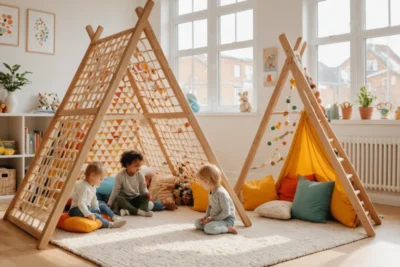
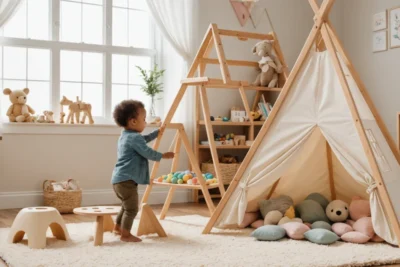
Imaginative play scenarios transform the triangle into castles, mountains, bridges, or houses depending on children’s creativity. For example, draping blankets over the structure creates cozy reading nooks or secret hideouts that encourage quiet play activities.
Physical challenges like “lava games” teach children to navigate the triangle without touching the ground. Similarly, creating obstacle courses that incorporate the triangle with other furniture develops problem-solving skills and spatial reasoning abilities.
- Fort building with blankets and pillows
- Mountain climbing adventures with stuffed animals
- Bridge crossing games with imaginary water below
- Castle siege scenarios with toy knights
- Space station exploration with astronaut costumes
Incorporating Other Toys and Materials
Wooden ramps attached to the triangle create slides and additional climbing challenges that expand play possibilities. Meanwhile, adding textured materials like rope or fabric strips to the rungs provides sensory input and improves grip strength.
Small toys and dolls become adventure companions during climbing expeditions. Additionally, musical instruments placed near the triangle encourage children to create soundtracks for their climbing adventures, integrating auditory development with physical activity.
Sensory bins positioned around the triangle’s base create themed play environments. For instance, placing a water table nearby transforms climbing into a beach adventure, while sandbox materials create desert exploration scenarios.
Seasonal and Themed Play Variations
Seasonal decorations refresh the triangle’s appeal throughout the year while teaching children about changing weather and holidays. Spring themes might include flower garlands and bird decorations, while winter activities could involve snowflake cutouts and cozy blankets.
| Season | Theme Ideas | Materials Needed |
|---|---|---|
| Spring | Garden climbing, butterfly house | Artificial flowers, butterfly stickers |
| Summer | Beach mountain, camping adventure | Beach towels, camping gear |
| Fall | Harvest climbing, leaf collection | Autumn leaves, harvest decorations |
| Winter | Snow mountain, cozy cabin | White fabric, warm blankets |
Holiday themes create special occasions around triangle play. Furthermore, incorporating cultural celebrations exposes children to diverse traditions while maintaining their interest in physical activity and exploration.
Group Play Activities for Multiple Children
Cooperative games teach children to share space and take turns while using the triangle together. For example, “follow the leader” activities help younger children learn from older siblings or friends while developing patience and observation skills.
Team challenges like building the tallest tower using blocks while standing on different rungs encourage collaboration. Similarly, storytelling games where each child adds to an adventure tale while climbing create shared narratives and communication skills.
Turn-taking systems prevent conflicts during group play sessions. Additionally, establishing clear rules about climbing direction and sharing space helps multiple children enjoy the triangle safely. These age-appropriate guidelines ensure positive social interactions during active play.
Group Play Success
Developmental Benefits and Skills Building
The Pikler triangle serves as a comprehensive developmental tool that strengthens multiple skill areas simultaneously. Moreover, children naturally progress through various developmental milestones while engaging in self-directed climbing activities that promote both physical and cognitive growth.
Gross Motor Skills and Physical Coordination
Gross motor development accelerates significantly through triangle climbing activities. Consequently, children strengthen their core muscles, improve bilateral coordination, and enhance their overall body awareness through repetitive climbing movements.
Each climbing session develops hand-eye coordination as children plan their grip placement and foot positioning. Furthermore, the triangular structure requires children to coordinate opposite sides of their body, which strengthens neural pathways essential for future academic skills like writing and reading.
Balance and Spatial Awareness Enhancement
Balance skills improve dramatically as children navigate different angles and heights on the triangle structure. Additionally, proprioceptive awareness develops when children feel their body position in space while climbing, descending, or pausing at various levels.
Spatial reasoning strengthens through three-dimensional navigation experiences. Meanwhile, children learn to judge distances, estimate heights, and understand geometric relationships between their body and the climbing structure, which supports later mathematical thinking.
Strength Building Tip
Confidence and Risk Assessment Development
Self-confidence grows naturally as children master increasingly challenging climbing sequences. Subsequently, each successful climb builds their belief in their physical capabilities and encourages them to attempt new movements and positions.
Risk assessment abilities develop through safe exploration opportunities. Therefore, children learn to evaluate their limits, recognize potential dangers, and make informed decisions about their climbing choices without adult intervention.
Emotional regulation improves when children face climbing challenges and work through frustration independently. Similarly, perseverance skills strengthen as they repeat difficult movements until achieving success.
Cognitive Problem-Solving Abilities
Problem-solving skills emerge as children figure out different routes up and down the triangle structure. Additionally, they develop planning abilities by visualizing their climbing sequence before beginning their ascent.
Executive function skills strengthen through the mental planning required for successful climbing. Furthermore, children practice working memory as they remember successful climbing patterns and apply them to new situations.
- Sequential thinking develops through step-by-step climbing processes
- Cause-and-effect understanding improves through movement consequences
- Creative thinking expands through imaginative play scenarios
- Focus and concentration increase during challenging climbing tasks
Independence and Self-Directed Learning
Independent play skills flourish as children direct their own climbing experiences without constant adult guidance. Consequently, they develop intrinsic motivation and learn to entertain themselves through physical exploration and creative play.
Self-regulation abilities strengthen when children set their own climbing goals and work toward achieving them. Moreover, they learn to listen to their bodies, recognize fatigue, and make decisions about when to rest or continue playing.
Decision-making skills improve through constant choices about climbing direction, speed, and difficulty level. Therefore, children develop autonomy and confidence in their ability to make appropriate choices for their safety and enjoyment.
Research shows that children who engage in self-directed physical play demonstrate 40% better problem-solving abilities compared to those with primarily structured activities.
Troubleshooting Common Challenges
Even the most carefully introduced Pikler triangle can present challenges that require thoughtful solutions. Understanding common obstacles helps parents navigate difficulties while maintaining their child’s positive relationship with climbing and exploration.
Addressing Fear and Climbing Reluctance
Fear responses often emerge when children feel pressured to climb before they’re developmentally ready. Instead of forcing participation, parents should model calm exploration by sitting near the triangle and demonstrating gentle touching or crawling underneath.
Gradual exposure works more effectively than immediate climbing expectations. Therefore, children benefit from observing other family members use the triangle naturally, which reduces anxiety and builds familiarity through observation.
- Place favorite toys on lower rungs to encourage reaching
- Use the triangle as a fort or reading nook initially
- Allow extended exploration time without climbing pressure
- Celebrate small achievements like touching or stepping on the first rung
Patience proves essential because trust development requires consistent positive experiences over time. Consequently, children who initially show reluctance often become confident climbers when given adequate time to process and adapt.
Managing Overconfidence and Risk-Taking
Overconfident climbers present different challenges as they may attempt movements beyond their current abilities. However, natural consequences provide the most effective learning experiences when children can safely discover their limits.
Environmental modifications help channel excessive enthusiasm into safer exploration. Additionally, removing nearby furniture or obstacles reduces injury risks while allowing children to experience appropriate challenges.
Safety Reminder
Redirecting risky behavior involves offering alternative challenges rather than simply saying no. Furthermore, introducing new accessories like ramps or climbing rocks can satisfy their need for increased difficulty while maintaining safety standards.
Rekindling Interest and Engagement
Limited interest often indicates that the current setup no longer matches the child’s developmental needs or preferences. Rotation strategies help maintain novelty and prevent boredom from reducing engagement levels.
Creative modifications transform the triangle into new play opportunities. Moreover, adding fabric drapes creates caves, while positioning it near walls enables different climbing angles and approaches.
- Rotate accessories weekly to maintain novelty
- Combine with other Montessori materials for integrated play
- Create themed play scenarios using the triangle as a base
- Invite friends for collaborative climbing experiences
Observational skills help parents identify when children need increased challenges or different types of stimulation. Therefore, adjusting the environment based on these observations ensures continued engagement and developmental progress.
Resolving Sibling Conflicts and Sharing
Sibling disputes commonly arise when multiple children want to use the triangle simultaneously. Consequently, establishing clear turn-taking systems and collaborative play rules prevents conflicts while teaching important social skills.
Structured sharing approaches work better than arbitrary time limits because they consider each child’s natural play rhythms. Additionally, creating opportunities for cooperative climbing builds teamwork skills while reducing competition.
| Conflict Type | Solution Strategy | Learning Outcome |
|---|---|---|
| Turn-taking disputes | Visual timer system | Time awareness |
| Space sharing | Designated climbing zones | Spatial negotiation |
| Skill level differences | Buddy system pairing | Peer mentoring |
| Equipment access | Rotation schedules | Patience and planning |
Collaborative games encourage siblings to work together rather than compete for triangle access. Furthermore, activities like creating obstacle courses or playing follow-the-leader transform potential conflicts into cooperative learning experiences.
Adapting for Growing Development
Developmental progression requires ongoing adjustments to maintain appropriate challenge levels as children grow and master basic climbing skills. Research indicates that children lose interest in play equipment when it no longer provides adequate stimulation for their advancing abilities.
Modification strategies extend the triangle’s useful lifespan while supporting continued development. Moreover, adding complexity through accessories or repositioning creates new challenges without requiring complete equipment replacement.
Advanced play patterns emerge naturally when children have mastered basic climbing skills. Therefore, parents can introduce elements like balance challenges, coordination games, or imaginative play scenarios to maintain engagement levels.
Transitioning to more complex equipment becomes appropriate when children consistently demonstrate mastery and seek greater challenges. However, maintaining the triangle alongside new equipment often provides comfort and continued learning opportunities through familiar yet evolving play experiences.
Maintenance and Long-term Use
Regular maintenance ensures Pikler triangle safety while extending equipment lifespan through proper care and inspection protocols. Consequently, establishing routine maintenance schedules prevents accidents and maintains structural integrity over years of active use.
Essential Safety Inspections
Weekly safety checks identify potential hazards before they compromise climbing safety or equipment stability. Additionally, thorough inspections examine joint connections, wood surfaces, and hardware components for signs of wear or damage.
- Check all bolts and screws for tightness
- Inspect wooden rungs for cracks or splintering
- Examine joint connections for looseness
- Test overall stability and wobbling
- Look for surface roughness or sharp edges
Immediate attention becomes necessary when inspections reveal loose hardware, cracked wood, or unstable connections. Furthermore, addressing minor issues promptly prevents major repairs and maintains continuous safe play access.
Wooden Frame Care and Cleaning
Natural wood maintenance preserves appearance while protecting against moisture damage and surface deterioration. Moreover, proper cleaning techniques remove dirt and germs without compromising wood finish or structural integrity.
Daily cleaning involves wiping surfaces with damp microfiber cloths to remove fingerprints, dust, and surface debris. However, avoid soaking wood or using harsh chemical cleaners that penetrate grain and cause swelling or discoloration.
Wood Care Tip
Monthly deep cleaning requires gentle wood-safe cleaners applied with soft cloths followed by complete air drying. Subsequently, applying food-safe wood conditioner every six months maintains moisture balance and prevents cracking in dry environments.
Retirement and Replacement Guidelines
Equipment retirement becomes necessary when structural damage compromises safety despite repair attempts or maintenance efforts. Nevertheless, recognizing retirement indicators prevents accidents while ensuring children always have safe climbing equipment available.
Retirement indicators include persistent joint loosening, multiple cracked rungs, or overall instability that maintenance cannot resolve. Additionally, excessive wear patterns or damage from improper use may require complete replacement rather than continued repairs.
Safety always takes priority over sentimental attachment to well-loved climbing equipment.
Replacement timing often coincides with children outgrowing basic climbing challenges and needing more complex equipment. Therefore, transitioning to age-appropriate equipment supports continued development while maintaining safety standards.
Equipment Transition Strategies
Gradual equipment transitions support children’s advancing motor skills while maintaining confidence through familiar climbing experiences. Furthermore, introducing new challenges alongside existing equipment prevents overwhelming children with completely unfamiliar play structures.
Advanced climbing equipment includes climbing domes, rope structures, or modular play systems that offer greater complexity and challenge. However, maintaining triangle access during transitions provides security and allows children to return to comfortable activities when needed.
Skill assessment guides transition timing by observing children’s confidence levels, challenge-seeking behavior, and mastery of existing equipment. Consequently, children who consistently demonstrate advanced climbing skills and seek greater challenges benefit from expanded equipment options.
Storage Solutions and Space Management
Proper storage protects equipment during non-use periods while maximizing available living space in smaller homes. Additionally, strategic storage solutions enable quick setup and takedown for families with limited permanent play areas.
Foldable triangle designs offer convenient storage options that reduce space requirements by up to 70 percent when collapsed. Moreover, wall-mounted storage systems or dedicated closet space keeps equipment accessible while maintaining organized living environments.
- Garage or basement storage with moisture protection
- Bedroom corner placement for easy access
- Living room integration as furniture piece
- Outdoor storage in covered areas
- Compact folding for apartment living
Climate considerations affect storage location choices since extreme temperature fluctuations or humidity levels damage wooden equipment over time. Therefore, selecting stable indoor environments or well-ventilated covered outdoor areas preserves equipment condition during storage periods.
Frequently Asked Questions
What age can babies start using a Pikler triangle?
Most children can begin exploring the Pikler triangle around 6 months when they show signs of mobility like crawling or pulling themselves up. However, actual climbing typically develops between 12-18 months. It’s important to follow your child’s natural development pace rather than pushing them to use it before they’re ready.
How do I set up a Pikler triangle safely?
Safe setup requires several key elements:
- Place proper floor mats underneath and around the triangle
- Ensure stable assembly with all joints properly tightened
- Provide adequate space away from walls, furniture, and other hazards
- Check that the triangle is on level ground
- Maintain at least 6 feet of clearance on all sides
What is Dr. Emmi Pikler’s philosophy behind the triangle?
Dr. Emmi Pikler was a Hungarian pediatrician who developed the philosophy of natural movement development in the 1930s. She believed children naturally develop gross motor skills when given appropriate environments and freedom to move. Her approach emphasizes self-directed exploration rather than adult-directed activities, building intrinsic motivation and risk assessment skills.
How much supervision does my child need while using the triangle?
Supervision levels should be appropriate to your child’s age and development. Stay close for young children (6-18 months) while still allowing self-directed exploration. As children develop confidence and skills, you can gradually increase their independence while maintaining visual supervision. Never force climbing or intervene unless there’s immediate danger.
What are the typical dimensions of a Pikler triangle?
Traditional Pikler triangles typically stand 24-36 inches tall and measure about 32 inches wide at the base. The horizontal rungs are usually spaced 6-8 inches apart vertically to accommodate small hands and feet. These dimensions provide the optimal balance of challenge and safety for developing children.
Should I encourage my child to climb the triangle?
No, you should not encourage or force climbing. The key principle is following your child’s natural pace and allowing them to attempt new movements only when they feel ready. This self-directed approach builds stronger proprioception, spatial awareness, and reduces injury risk since children won’t attempt movements beyond their current capabilities.
How do I maintain and clean a Pikler triangle?
Regular maintenance includes:
- Weekly safety inspections for loose joints or damaged wood
- Cleaning with mild soap and water, avoiding harsh chemicals
- Checking for splinters or rough edges that need sanding
- Tightening bolts and connections as needed
- Storing in a dry area to prevent wood warping
What materials should a quality Pikler triangle be made from?
Quality Pikler triangles should be constructed from smooth hardwood with rounded edges to prevent splinters and injuries. Look for natural wood finishes without toxic chemicals or paints. The construction should feature sturdy joints and hardware that can withstand regular climbing and play.
Can the Pikler triangle be folded for storage?
Many quality Pikler triangles feature a foldable design that allows easy storage when not in use. This is particularly helpful for families with limited space. When folding, ensure all locking mechanisms are properly engaged for safety during both use and storage.
What developmental benefits does the Pikler triangle provide?
The Pikler triangle supports multiple areas of development:
- Gross motor skills through climbing and balancing
- Proprioception and spatial awareness
- Confidence and risk assessment abilities
- Problem-solving skills through movement challenges
- Independence and self-directed learning
How do I introduce the triangle to my child gradually?
Start by allowing your child to explore the triangle freely without any expectations of climbing. Let them touch, crawl under, or simply observe it. As they show interest and readiness, they’ll naturally begin attempting to climb. This gradual introduction builds confidence and allows children to develop their own relationship with the equipment.
What safety hazards should I watch for around the Pikler triangle?
Key safety considerations include:
- Ensuring adequate clearance from walls and furniture
- Using appropriate floor padding or mats
- Checking for loose clothing or jewelry that could catch
- Monitoring for fatigue that might affect coordination
- Keeping the area free of toys or obstacles
You May Also Like
Why Are Pikler Triangles So Expensive? Cost Breakdown 2026
Pikler Triangle Height Guide: Age-Appropriate Sizes & Safety